

When I started my journey as a photographer in bustling Delhi, I made a massive mistake. I spent all my savings on an expensive camera body and used the basic kit lens that came inside the box. My portraits looked flat, the backgrounds were distracting, and my clients were not happy. Then, a veteran wedding photographer told me a secret that changed everything: "Lenses outlast camera bodies; invest in glass, not just plastic electronics." If you are trying to capture stunning portraits under the golden Indian sun, inside a dimly lit wedding hall in Jaipur, or during a moody monsoon shoot in Mumbai, your lens choice matters more than your camera sensor. In this comprehensive guide, I will share my personal experiences, professional insights, and everything you need to know about Camera Lenses For Portrait Photography In India.
What is the Best Portrait Lens for Professional Photography?
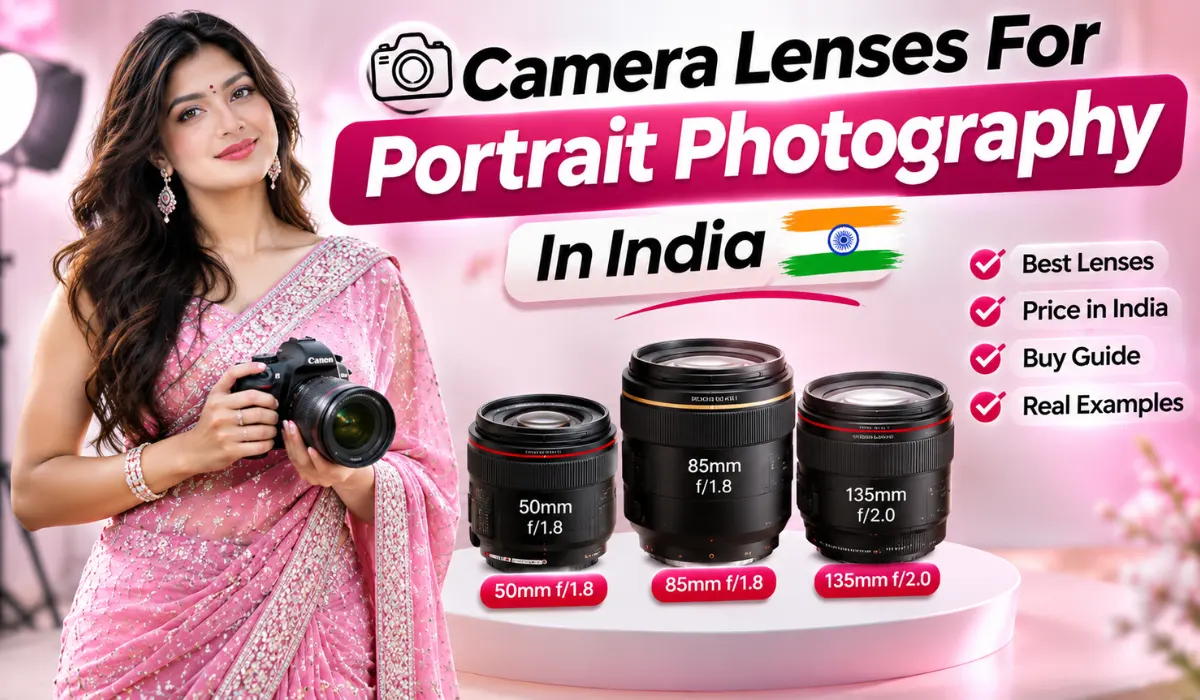
When people ask me, "What is the best portrait lens for professional photography?", I always smile. There is no single magic lens, but there is a magical focal length range: 50mm to 135mm. My personal favorite for everyday street portraits and close-up headshots is the 85mm prime lens. Why? Because it flatters human facial features naturally without making noses look too big or ears look too small.
- The 50mm Lens: Often called the "nifty fifty," it mimics how human eyes see. It is budget-friendly and works wonders in tight spaces.
- The 85mm Lens: Known globally as the "portrait king." It offers gorgeous background compression and makes your subject pop.
- The 135mm Lens: Perfect for outdoor fashion and editorial shoots where you want dreamy, buttery background blur.
Expert Quote: "A great portrait lens doesn't just blur the background; it isolates the soul of your subject while maintaining true-to-life skin tones." — Aarav Sharma, Commercial Portrait Photographer, Mumbai.
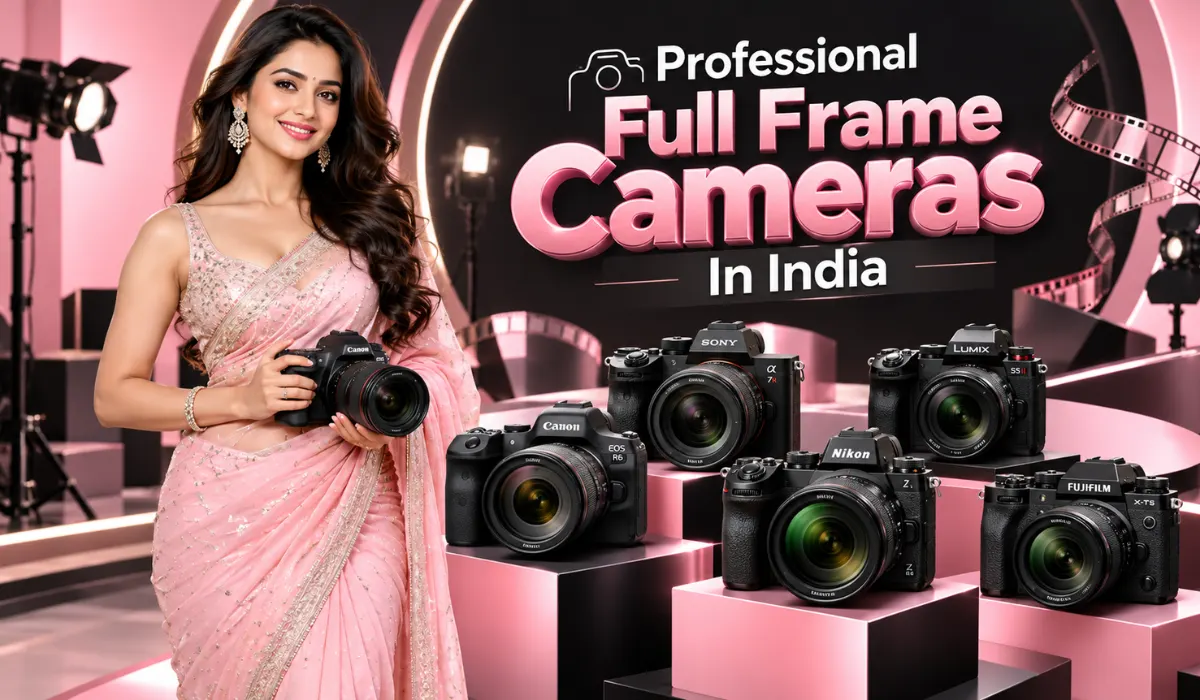
Read Also: Professional Full Frame Cameras In India: Best Models And Prices
Why Are Full-Frame Lenses Preferred for Professional Portraits?
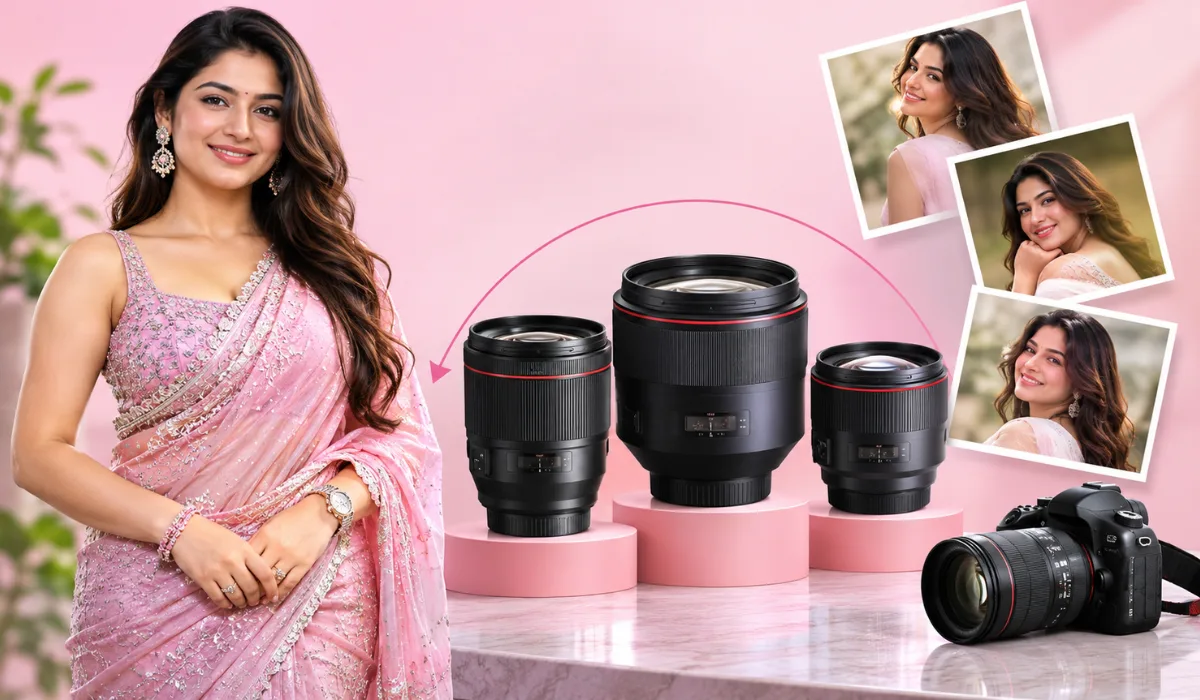
You might wonder: "Why are full-frame lenses preferred for professional portraits?" In my early days, I shot on a crop-sensor (APS-C) camera. While crop sensors are great for beginners and budget-conscious creators in India, full-frame setups change the game completely.
Full-frame lenses capture a wider field of view and handle light much better. When you pair a full-frame sensor with a fast prime lens (like an f/1.8 or f/1.4 aperture), you get a shallower depth of field. This means your subject stays razor-sharp while the background melts away into a creamy, dreamy canvas. Furthermore, full-frame optics retain better dynamic range, capturing rich shadow details in traditional Indian clothing like embroidered sarees or sherwanis.
Top 10 Camera Lenses For Portrait Photography In India
Choosing gear in the Indian market can be overwhelming due to import taxes and regional pricing. Based on performance, durability against dust, and resale value, here are my top 10 recommendations:
- Sony FE 50mm f/1.8: The ultimate budget entry point for Sony mirrorless users in India.
- Canon EF 50mm f/1.8 STM: Affordable, lightweight, and sharp. A staple for every Indian beginner.
- Nikon AF-S NIKKOR 50mm f/1.8G: Incredible sharpness and low-light performance for Nikon DSLR lovers.
- Sigma 85mm f/1.4 DG DN Art: A phenomenal third-party lens giving Sony and L-mount users G-Master-level sharpness at a lower cost.
- Canon RF 85mm f/2 Macro IS STM: Perfect for modern Canon mirrorless users looking for close-up detail and portrait isolation.
- Sony FE 85mm f/1.8: Compact, lightning-fast autofocus, and ideal for outdoor wedding portraits.
- Tamron 28-75mm f/2.8 Di III VXD G2: A versatile zoom workhorse for event photographers who need flexibility on the fly.
- Nikon NIKKOR Z 85mm f/1.8 S: Unmatched optical clarity for Nikon Z mirrorless shooters.
- Fujifilm XF 56mm f/1.2 R WR: The dream lens for Fujifilm crop-sensor users who want medium-format-like background separation.
- Canon EF 70-200mm f/2.8L IS III USM: The legendary wedding zoom used by almost every professional studio team across India for candid storytelling.
How to Get Professional Background Blur Using Portrait Lenses?
Have you ever looked at Instagram photos and wondered, "How to get professional background blur using portrait lenses?" Achieving that gorgeous "bokeh" effect is not just about expensive gear; it is pure physics. Here is my 3-step formula that I use during every outdoor shoot in India:
- Open Up Your Aperture: Set your camera to Aperture Priority (A or Av mode) and pick the lowest possible f-number (like f/1.4, f/1.8, or f/2.8).
- Create Distance: Move your subject far away from the background (e.g., away from a busy Delhi street wall or messy garden foliage). The further the background is, the blurrier it becomes.
- Get Closer to Your Subject: Step closer to your model. The closer your camera is to your subject, the shallower your depth of field will be.
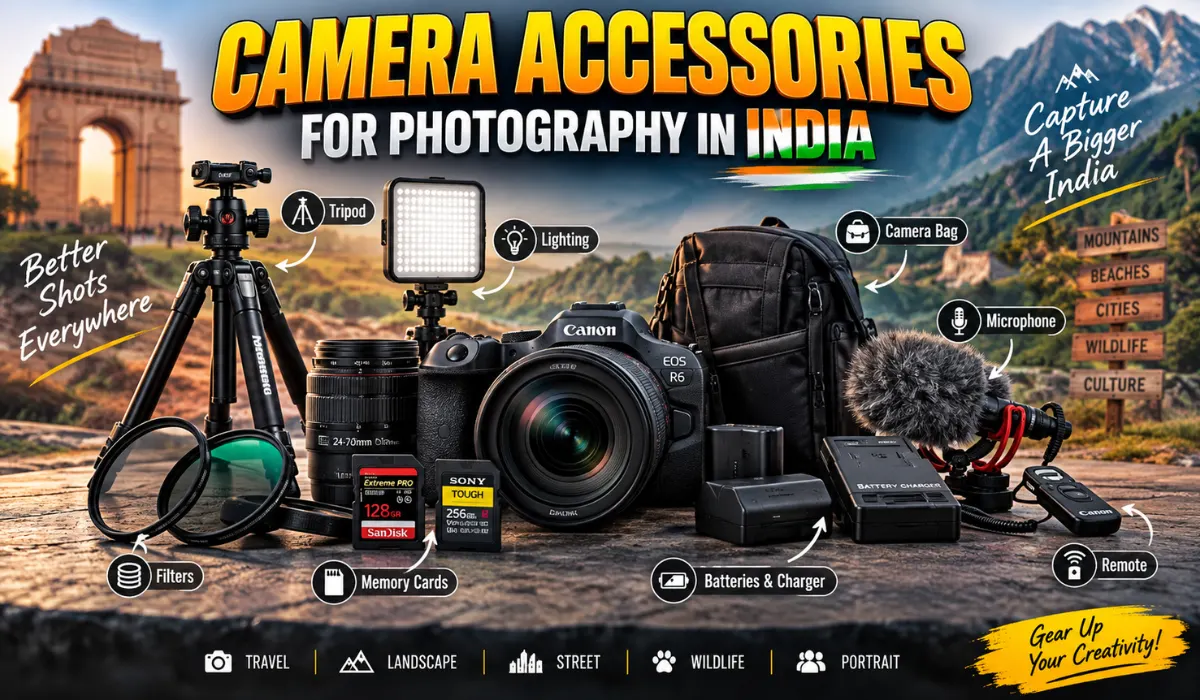
Read Also: Best Camera Accessories for Photography in India: Essential Gear Guide
Nikon Camera Lenses For Portrait Photography In India
If you shoot on Nikon—whether it is an older D750 DSLR or a modern Z6II mirrorless body—Nikon has an incredible legacy in India. My top recommendation for Nikon users is the Nikon 50mm f/1.8 for tight budgets, and the Nikon Z 85mm f/1.8 S for professional work. Nikon glass is famous for rendering realistic skin tones under harsh tropical sunlight. Even during dusty outdoor shoots in Rajasthan, Nikon's weather-sealed S-line lenses hold up brilliantly against dust and moisture.
Camera Lens Focal Length for Portrait Photography
Understanding the camera lens focal length for portrait photography helps you control spatial distortion.
- 35mm: Great for environmental portraits where you want to show context (like a bride getting ready inside an old heritage haveli in Udaipur).
- 50mm: Neutral, natural, and mimics human vision.
- 85mm to 105mm: The sweet spot. Flattens facial features nicely.
- 135mm and above: Extreme compression, isolating the face completely from a distant background.
Portrait Photography Lens with Wide Aperture
A portrait photography lens with wide aperture (such as f/1.4 or f/1.8) lets in a massive amount of light. In India, we often shoot late into the evening during outdoor wedding receptions or sangeet ceremonies where venue lighting can be tricky. A wide aperture allows you to keep your ISO low, preventing grain and digital noise while maintaining crystal-clear subject sharpness.
Bokeh Effect Lenses for Portrait Photography
Everyone loves creamy background circles of light. Bokeh effect lenses for portrait photography usually feature rounded 9-blade or 11-blade apertures. When shooting string lights or street lamps at night behind your subject, these blades turn light sources into gorgeous, soft, magical orbs. Lenses like the 85mm f/1.4 or 135mm f/1.8 are absolute masters of this craft.
Fast Autofocus Lenses for Portrait Photography
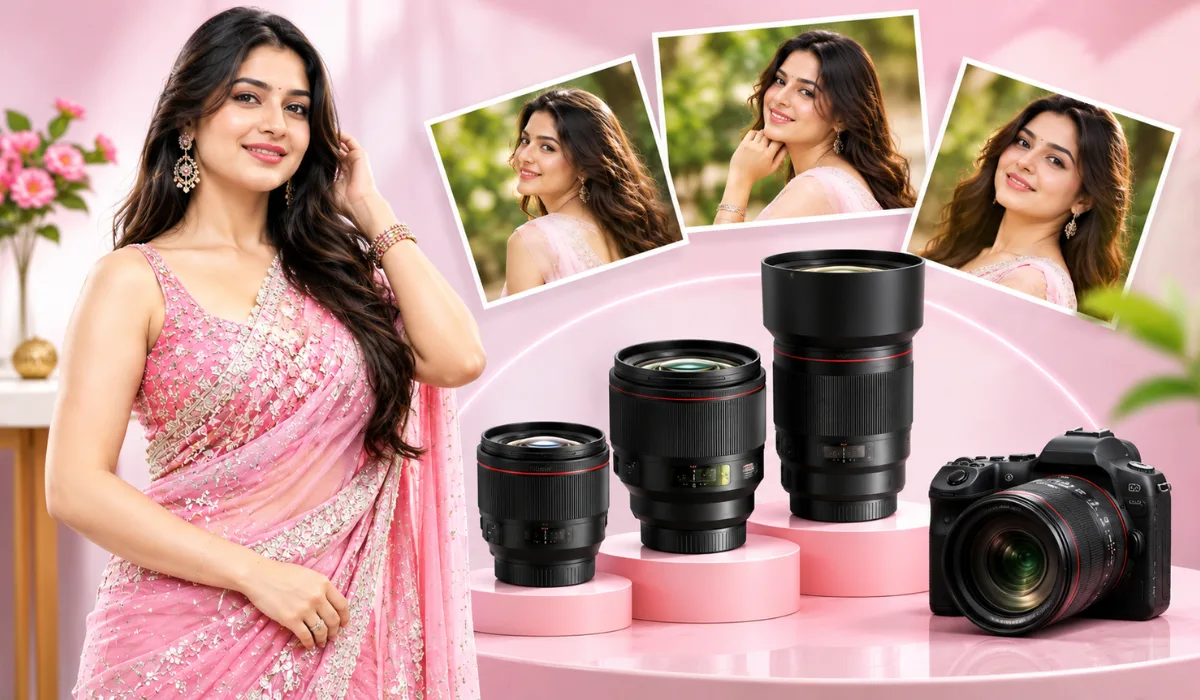
Kids running around at family gatherings or brides walking down the aisle do not wait for you to focus manually. You need fast autofocus lenses for portrait photography. Modern mirrorless lenses powered by Linear Motors (like Sony's XD linear motors or Nikon's stepping motors) lock onto eyes instantly. Eye-AF technology combined with a fast lens ensures you never miss a sharp blink-and-miss expression.
Sharp Portrait Lenses for Professional Photographers
Clients paying premium prices expect razor-sharp eyelashes and clear fabric textures. Sharp portrait lenses for professional photographers resolve fine details even when shot wide open at f/1.4. While sharpness isn't everything, it gives images a high-end commercial look that separates amateur snapshots from professional masterpieces.
Natural Skin Tone Portrait Photography Lenses
Getting skin tones right under warm Indian lighting can sometimes test your patience during post-processing. Choosing natural skin tone portrait photography lenses minimizes your editing time. Brands like Canon and Fujifilm are traditionally praised for straight-out-of-camera skin tones, while Nikon and Sony offer incredible color science depth that can be easily tweaked in Lightroom.
Read Also: Best Camera Accessories for Photography in India: Essential Gear Guide
Expert Tips for Buying Lenses in India
- Check Warranty & Service Centers: Always buy official authorized imports in India (look for local MRP stickers and manufacturer warranty cards) so you can easily service your gear in major hubs like Delhi, Mumbai, Bengaluru, or Chennai.
- Explore Rental Markets: Before spending 80,000 on a prime lens, rent it for a weekend in your city to test if the focal length fits your shooting style.
- Invest in UV Filters: Protect your valuable glass from dust and sudden splashes during outdoor shoots.
Frequently Asked Questions
1. Is a 50mm lens good enough for professional portraits in India?
Yes! A 50mm f/1.8 lens is affordable, sharp, and lightweight. Many top Indian street and lifestyle photographers use a 50mm lens exclusively for their storytelling portraits.
2. Should I buy prime lenses or zoom lenses for portraits?
If you want maximum background blur and sharper images on a budget, choose prime lenses. If you shoot fast-moving events like weddings where you cannot move your feet easily, choose a zoom lens like a 24-70mm f/2.8.
3. Can I use crop-sensor lenses on a full-frame camera?
While you technically can on some mounts, your camera will often crop the image automatically or show heavy black vignetting edges. It is always best to match full-frame lenses with full-frame bodies.
Conclusion
Choosing the right Camera Lenses For Portrait Photography In India depends entirely on your budget, shooting style, and whether you love travel, street, or studio photography. Start with a trusty 50mm or 85mm prime lens, practice your lighting, and watch your photography portfolio transform overnight!