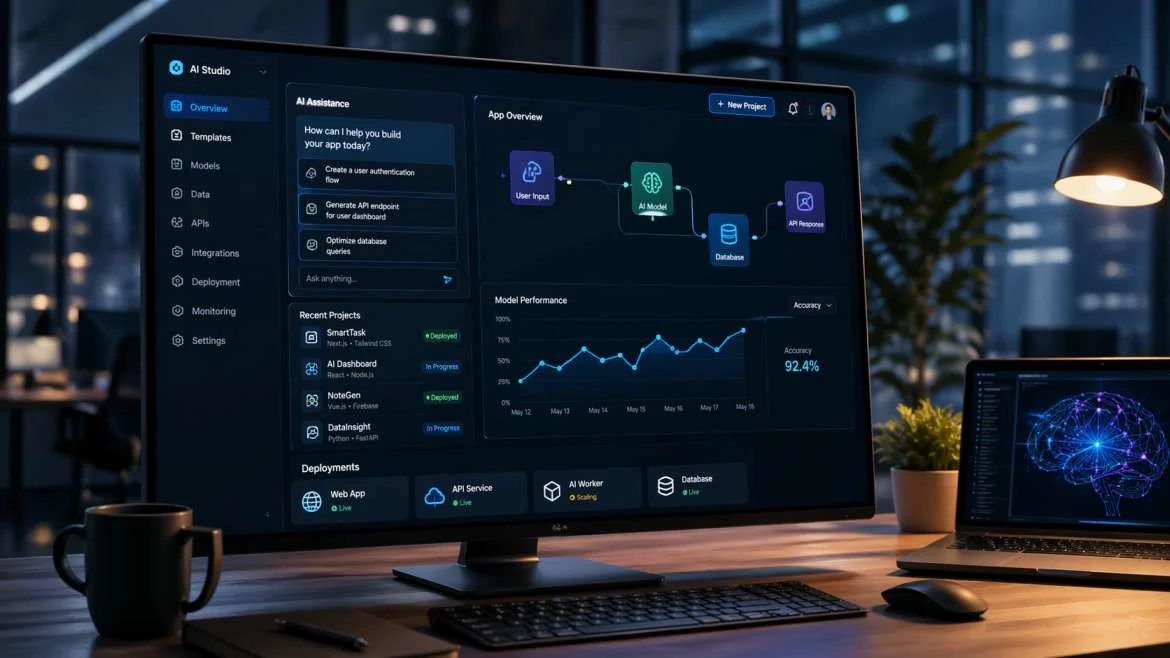
In today’s fast-evolving digital landscape, artificial intelligence (AI) has moved from a futuristic concept to a practical, indispensable tool in business, technology, healthcare, education, and virtually every sector.
From chatbots to self-driving cars, AI is shaping the way we work, communicate, and solve problems. Understanding the fundamentals of AI is no longer optional—it’s a key to unlocking career opportunities, business innovation, and future success.
Whether you’re a student, a professional seeking a career shift, or an entrepreneur, mastering AI basics now sets the stage for long-term success. In this blog, we’ll explore what AI is, why it matters, the key concepts to master, and actionable strategies to start leveraging AI for your career and personal growth.
Why Learning AI Basics is Essential
Artificial intelligence is not just a tech trend—it’s a career-transforming skill. Here’s why learning AI basics is crucial for your future success:
1. High-Demand Skill Across Industries
AI expertise is in demand across sectors like finance, healthcare, marketing, logistics, and education. Organizations are actively seeking individuals who understand AI fundamentals and can apply them to solve real-world problems.
2. Competitive Career Advantage
Even a foundational understanding of AI can set you apart in the job market. Employers value candidates who can analyze data, automate processes, and make data-driven decisions. Early mastery of AI basics provides a competitive edge.
3. Unlocking Entrepreneurial Opportunities
AI opens doors to innovation. Entrepreneurs who understand AI can develop products, services, and solutions that leverage machine learning, automation, and predictive analytics. From AI-powered apps to intelligent marketing solutions, opportunities abound.
4. Enhancing Decision-Making
AI equips you with tools to analyze large datasets, identify trends, and predict outcomes. Mastering the basics allows you to make smarter, evidence-based decisions, whether in business, research, or personal projects.
Understanding the Core Concepts of AI
Before diving into tools and applications, it’s important to grasp the fundamental concepts of AI:
1. What is AI?
Artificial intelligence refers to the simulation of human intelligence in machines. These systems can perform tasks that typically require human cognition, such as learning, reasoning, problem-solving, and decision-making.
-
Narrow AI (Weak AI): Focused on a single task, such as virtual assistants like Siri or Alexa.
-
General AI (Strong AI): Hypothetical AI that can perform any intellectual task humans can do.
2. Machine Learning (ML)
Machine learning is a subset of AI where machines learn from data to improve performance over time without explicit programming.
-
Supervised Learning: Algorithms learn from labeled data (e.g., predicting house prices).
-
Unsupervised Learning: Algorithms identify patterns in unlabeled data (e.g., customer segmentation).
-
Reinforcement Learning: Machines learn by trial and error to maximize rewards (e.g., robotics).
3. Deep Learning
Deep learning is a branch of machine learning that uses neural networks to process large datasets and detect complex patterns. Applications include:
-
Image recognition (e.g., identifying objects in photos)
-
Natural language processing (e.g., chatbots, translation tools)
-
Autonomous vehicles (e.g., self-driving cars)
4. Natural Language Processing (NLP)
NLP enables machines to understand, interpret, and generate human language. Popular applications include:
-
Chatbots and virtual assistants
-
Sentiment analysis for business insights
-
Text summarization and language translation
5. Robotics and Automation
AI powers robotics and automation to perform tasks traditionally done by humans. Examples:
-
Manufacturing robots
-
Automated customer support systems
-
Intelligent drones and autonomous vehicles
6. Predictive Analytics
AI uses historical data to predict future trends, helping businesses and individuals make informed decisions. Applications include stock market analysis, healthcare diagnostics, and supply chain optimization.
Practical Steps to Master AI Basics
Learning AI doesn’t require a PhD. Anyone can start building foundational skills and gain confidence through practical learning. Here’s how:
1. Learn Key Programming Languages
Programming is essential for understanding AI logic and building solutions. Core languages include:
-
Python: Widely used for machine learning and AI development.
-
R: Popular for statistical analysis and data visualization.
-
Java and C++: Useful in robotics and large-scale AI systems.
2. Understand Data Fundamentals
AI thrives on data. Learning how to collect, clean, and analyze datasets is critical. Topics to focus on:
-
Data types and structures
-
Data preprocessing and cleaning
-
Exploratory data analysis (EDA)
3. Explore Machine Learning Algorithms
Familiarize yourself with basic algorithms and their use cases:
-
Linear and logistic regression
-
Decision trees and random forests
-
K-means clustering and principal component analysis (PCA)
4. Hands-On Practice with Tools
Practical experience is key. Tools and platforms to explore:
-
TensorFlow and PyTorch: Deep learning frameworks
-
Scikit-learn: Machine learning library for Python
-
Google Colab: Cloud-based platform for experimenting with Python code
5. Take Online AI Courses
There are countless affordable online courses for beginners:
-
Coursera: AI For Everyone by Andrew Ng
-
edX: Introduction to AI
-
Udemy: Machine Learning A-Z
These courses provide structured learning paths with practical exercises.
6. Build Real Projects
Start with small AI projects to apply your knowledge:
-
Build a chatbot
-
Predict stock prices using historical data
-
Analyze social media sentiment for a brand
Hands-on projects reinforce learning and create a portfolio that demonstrates your skills to employers or clients.
Applying AI Skills to Your Career
Once you grasp AI basics, the next step is applying them to accelerate your career or entrepreneurial journey.
1. For Professionals
-
Automate repetitive tasks in your current role
-
Analyze business data to make informed decisions
-
Enhance presentations with predictive analytics insights
2. For Job Seekers
-
Highlight AI skills on resumes and LinkedIn profiles
-
Pursue entry-level AI or data science roles
-
Showcase projects in your portfolio to demonstrate practical knowledge
3. For Entrepreneurs
-
Integrate AI into products or services
-
Use AI for customer insights, marketing optimization, and operational efficiency
-
Explore AI-driven solutions in emerging markets
4. For Students
-
Gain a head start by learning AI basics early
-
Participate in AI competitions like Kaggle
-
Leverage AI knowledge for research projects and internships
The Future of AI Careers
The demand for AI expertise is projected to grow exponentially over the next decade. According to industry reports:
-
AI specialists, machine learning engineers, and data scientists are among the fastest-growing job categories.
-
Businesses are increasingly using AI for decision-making, marketing, operations, and customer experience.
-
Early adoption of AI skills positions you for leadership roles and entrepreneurial opportunities.
Whether you want to be a data scientist, AI engineer, business analyst, or tech entrepreneur, mastering AI basics now lays the foundation for long-term success.
Overcoming Common Barriers
Many beginners feel overwhelmed when starting with AI. Here’s how to overcome common barriers:
1. Feeling Intimidated by Technical Complexity
AI concepts may seem complex, but breaking them into small, digestible topics makes learning manageable. Focus on one area at a time—programming, machine learning, NLP, or data analysis.
2. Lack of Practical Experience
Theory alone isn’t enough. Start with hands-on projects, online labs, or Kaggle competitions to gain real-world experience.
3. Limited Time
Use flexible learning options such as online courses, video tutorials, and coding bootcamps to fit AI learning into your schedule. Even 30–60 minutes per day can make a big difference over time.
4. Fear of Falling Behind
AI is evolving, but the fundamentals remain consistent. Master core concepts first, then gradually explore advanced topics like deep learning or reinforcement learning.
Action Plan to Master AI Basics Today
Here’s a simple roadmap to start your AI journey:
-
Set Clear Goals: Define why you want to learn AI—career advancement, entrepreneurship, or personal growth.
-
Start with Python: Learn basic programming concepts and syntax.
-
Learn Data Fundamentals: Understand how to collect, clean, and analyze data.
-
Explore Machine Learning: Start with supervised and unsupervised learning algorithms.
-
Build Small Projects: Apply your knowledge to real-world problems.
-
Join Online Communities: Engage with forums like Reddit AI, Stack Overflow, or AI Slack groups for support and networking.
-
Advance Gradually: Explore deep learning, NLP, or AI ethics once you are comfortable with the basics.
Consistency is key. By dedicating time each day and building progressively, you can master AI basics and position yourself for success within months.
Conclusion
Artificial intelligence is no longer a niche skill—it’s a core competency for the future. Learning AI basics equips you with the knowledge, tools, and confidence to thrive in a rapidly changing world. Whether you aim to advance your career, launch a business, or innovate in your field, mastering AI fundamentals now is a strategic investment in your future success.
The journey begins with simple steps: understanding AI concepts, learning programming, analyzing data, experimenting with machine learning, and building real projects. By committing to consistent learning and hands-on practice, you can transform yourself into a skilled AI practitioner capable of navigating the digital economy with confidence.
Remember, the future belongs to those who embrace technology and adapt to change. AI is more than a tool—it’s a gateway to innovation, opportunity, and success. Start mastering AI basics today, and unlock a world of possibilities that will define your career and your future.