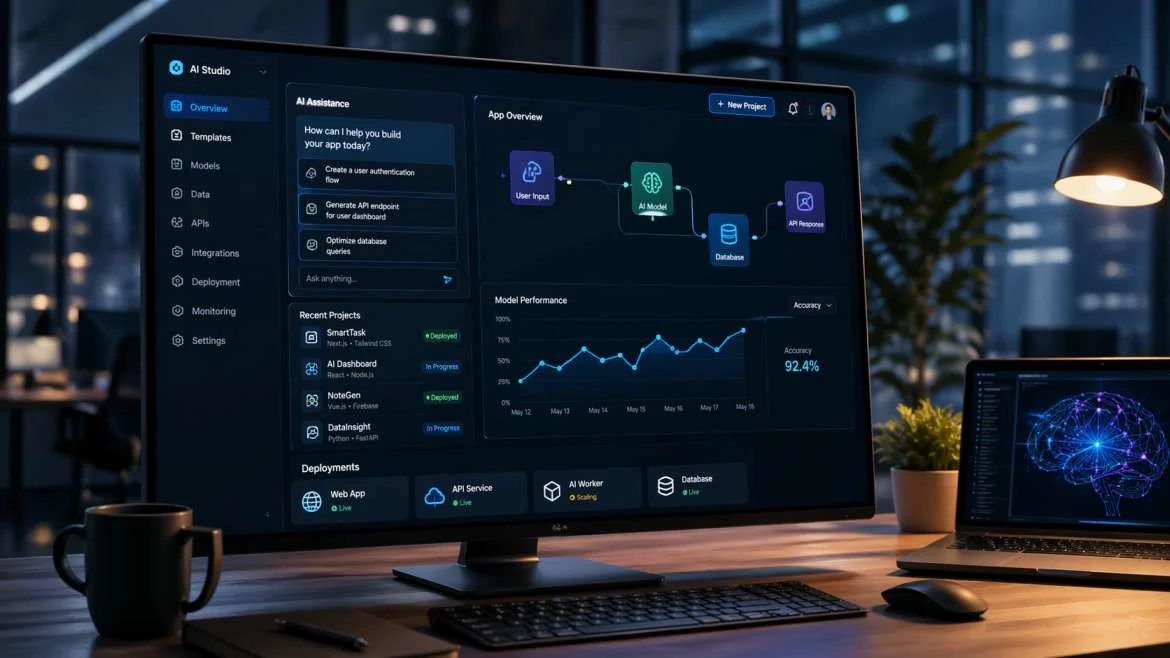
Imagine you have a magical helper robot that never sleeps. It can sort your toys, organize your room, remind you of homework, and even help you plan your birthday party. That’s kind of what AI automation tools do for small businesses. AI stands for Artificial Intelligence, which means machines or software that can think, learn, and make decisions like humans. Automation means these tools do tasks automatically without needing a person to do everything manually.
For small business owners, AI automation tools are like having a team of super-smart robots that help save time, reduce mistakes, and grow the business faster. In this guide, we’ll explore how AI automation works, why small businesses need it, and the best tools to use—all explained in a way even kids can understand.
1. Why Small Businesses Need AI Automation
Running a small business can be like juggling many tasks at once:
-
Talking to customers
-
Managing inventory
-
Posting on social media
-
Sending emails
-
Tracking finances
AI automation tools help by taking care of repetitive tasks, giving business owners more time to focus on important things like creating new products or helping customers.
Kid-Friendly Analogy: Imagine you have 10 chores to do every day. If a robot could do half of them for you, you’d have more time to play, learn, or create something fun. That’s what AI automation does for business owners.
2. How AI Automation Works
AI automation works through three main steps:
-
Data Collection: Tools gather information from websites, social media, emails, and sales.
-
Learning: AI learns patterns from this data, like which customers buy most or what products are popular.
-
Action: AI performs tasks automatically, such as sending emails, posting on social media, or updating inventory.
Kid Example: Imagine a robot that watches how often you water plants. It learns the best times to water and automatically waters them for you.
3. Benefits of AI Automation for Small Business
Using AI automation tools offers many advantages:
-
Save Time: Automates repetitive tasks so business owners can focus on growth.
-
Reduce Mistakes: AI follows instructions perfectly, reducing human errors.
-
Better Customer Experience: AI can answer questions instantly and provide personalized recommendations.
-
Increase Sales: Smart tools help identify the best products and promotions.
-
Cost Efficiency: Reduces the need for extra staff to do repetitive tasks.
Kid Analogy: It’s like having a robot help with homework and chores so you have more time to play games or read books.
4. AI Automation Tools for Customer Service
Customer service is important for small businesses, and AI can help in many ways:
Examples:
-
Chatbots: Answer customer questions instantly on websites or social media.
-
AI Email Assistants: Automatically respond to emails and inquiries.
-
Personalized Recommendations: Suggest products based on customer preferences.
Kid-Friendly Analogy: Think of a friendly robot in a store that always knows what you like and helps you find it quickly.
5. AI Tools for Marketing
Marketing is how businesses tell people about their products or services. AI tools make this faster and smarter:
Examples:
-
Social Media Automation: Automatically post updates and track engagement.
-
Email Marketing Automation: Send newsletters or special offers to customers.
-
Analytics Tools: Analyze which ads and posts work best.
Kid Example: Imagine a robot that posts your drawings online and tells you which friends liked them the most.
6. AI Tools for Accounting and Finance
Small businesses need to manage money carefully. AI automation helps with:
-
Tracking income and expenses
-
Creating invoices automatically
-
Forecasting future sales and expenses
-
Detecting unusual transactions
Kid Analogy: Think of a robot that counts your allowance, tracks how much you spend on candy, and warns you if you spend too much.
7. AI Tools for Inventory Management
AI helps keep track of products and supplies efficiently:
-
Automatically update stock levels
-
Predict which products will sell next
-
Notify when it’s time to reorder items
Kid Example: Imagine a toy chest that counts your toys and tells you when you need more pieces to finish a set.
8. AI Tools for E-commerce
For small online businesses, AI automation tools are essential:
-
Personalized product recommendations for customers
-
Predictive analytics for sales trends
-
Automated customer follow-ups and reviews
Kid-Friendly Analogy: Imagine a robot shopkeeper that remembers what every customer likes and suggests their favorite toys automatically.
9. AI Tools for Scheduling and Productivity
AI automation helps small business owners manage time efficiently:
-
Schedule meetings and appointments automatically
-
Remind team members of deadlines
-
Track project progress and productivity
Kid Example: A robot personal assistant that reminds you to do homework, feed your pet, and practice your favorite sport—all on time!
10. Popular AI Automation Tools for Small Businesses
Here are some top AI automation tools:
-
HubSpot: Automates marketing, sales, and customer service tasks.
-
Zapier: Connects apps and automates workflows between them.
-
Trello + AI Assistants: Helps organize tasks and projects with AI suggestions.
-
Hootsuite or Buffer: Schedule social media posts automatically.
-
QuickBooks + AI: Tracks finances, generates reports, and detects errors.
-
Shopify + AI Plugins: Automates online store recommendations and customer follow-ups.
Kid-Friendly Analogy: These tools are like different robot helpers, each with a special power: one handles emails, one posts online, one tracks money, and one manages your toys perfectly.
11. AI Tools for Small Business Growth
AI tools not only save time but also help grow businesses:
-
Customer Insights: AI shows which products sell best.
-
Predictive Analytics: AI forecasts trends and future demands.
-
Personalized Marketing: Sends the right message to the right customer.
Kid Example: Imagine a robot helping you choose which game to play next based on what you enjoyed most. Businesses do the same with products!
12. Security and AI Automation
AI automation tools can also protect businesses:
-
Detect unusual activities in sales or banking
-
Protect customer data with AI security systems
-
Monitor networks for cyber threats
Kid Analogy: A robot guard watches over your treasure chest, making sure no one takes your toys without permission.
13. AI Tools for Team Collaboration
Small business teams can work smarter with AI:
-
Smart task assignments based on team strengths
-
Automated reminders and progress tracking
-
Virtual assistants that organize files and schedules
Kid Example: Imagine a robot teacher who knows what each student is best at and helps them complete group projects faster.
14. How to Choose the Right AI Tools
Not all AI tools are right for every small business. Consider:
-
Budget: How much can you spend?
-
Ease of Use: Can you or your team use it easily?
-
Compatibility: Does it work with your existing tools?
-
Scalability: Can it grow with your business?
Kid-Friendly Analogy: Picking the right robot helper is like choosing a pet—you want one that fits your home, your schedule, and your needs.
15. Common Mistakes in AI Automation
Small business owners should avoid mistakes like:
-
Automating too many tasks without monitoring
-
Ignoring data privacy and security
-
Relying solely on AI without human oversight
-
Choosing expensive tools that are too complex
Kid Example: Giving your robot helper all chores without checking can cause mistakes, like mixing up your schoolwork with your toys.
16. Benefits of Combining AI with Human Skills
AI is powerful, but humans are still important:
-
Creativity and empathy come from humans
-
AI handles repetitive tasks
-
Humans make big-picture decisions
Kid Analogy: A robot can help bake cookies perfectly, but you decide the flavor and decoration. Both working together make the best results!
17. How AI Automation Saves Money
-
Reduces need for extra staff
-
Cuts down errors that cost money
-
Saves time on repetitive tasks
Kid Example: If a robot organizes your candy collection, you don’t need to spend extra allowance buying replacements for lost candy.
18. Future of AI Automation for Small Business
AI is growing fast, and its future for small businesses is exciting:
-
Smarter customer service and personalization
-
Advanced predictive analytics for planning
-
AI assistants that can handle more complex tasks
-
Integration with virtual reality and augmented reality tools
Kid Example: Imagine a robot that not only organizes your toys but also builds new ones automatically based on your favorite designs!
19. Tips for Small Businesses Using AI Automation
-
Start small: automate a few tasks first
-
Track results and improve gradually
-
Train your team to use tools effectively
-
Keep humans in the loop for creative decisions
-
Protect data and privacy
Kid-Friendly Analogy: Start by letting your robot helper organize your bookshelf first before letting it organize your entire playroom.
Conclusion: AI Automation Is a Superpower
AI automation tools are like giving small businesses a superpower:
-
Save time and money
-
Improve customer service
-
Increase sales and growth
-
Protect data and operations
-
Help teams work smarter
Kid-Friendly Analogy: Imagine a magical robot that helps you do chores, play games, and learn new skills. That’s how AI automation works for small businesses. It helps owners focus on creativity, growth, and making customers happy.
Key Idea: AI automation doesn’t replace humans—it helps humans do better by handling repetitive, boring, or time-consuming tasks. For small businesses, it’s like having an army of robot helpers that make the business stronger, smarter, and faster.