Let's be clear. Talking about "top travel destinations for 2020" in the year 2025 feels like reading a menu from a restaurant that burned down. It’s a historical artifact, a snapshot of a world paused. The lists that came out in late 2019—full of optimism for the Tokyo Olympics, Mozart anniversaries in Salzburg, and eco-tourism in the Galápagos—weren't just plans. They were premonitions of a year of cancelled flights and quiet streets.
But that's exactly why we should look back. Not to plan a trip, but to learn a profound lesson about travel itself. The real secret destination of 2020 wasn't a place on a map. It was a state of mind we were forced to discover. Adventure didn't disappear; it changed its address.
Let's unpack what 2020's "top destinations" really reveal about how we travel now.
The 2019 Vision vs. The 2020 Reality
What Was Promised (The 2019 Lists):
- Kyoto, Japan: For the Olympic spillover, ancient culture meets modern buzz.
- Salzburg, Austria: A Mozart celebration, grand European elegance.
- Galápagos, Ecuador: The ultimate "see-it-before-it-changes" eco-adventure.
- Dubrovnik, Croatia: Game of Thrones fantasy meets Adriatic glamour.
- Maine, USA: The rise of the domestic, "slow travel" road trip.
These were about aspiration, spectacle, and curated experience. They were the crescendo of 2010s Instagram travel—collecting iconic places.
What We Actually Got (The 2020 Reality):
The "top destinations" became:
- Your Living Room: The adventure of sourdough starters and jigsaw puzzles.
- The Local Park: The expedition to identify every tree and bird within a 2-mile radius.
- The Hiking Trail 45 Minutes Away: That you'd driven past for years and never explored.
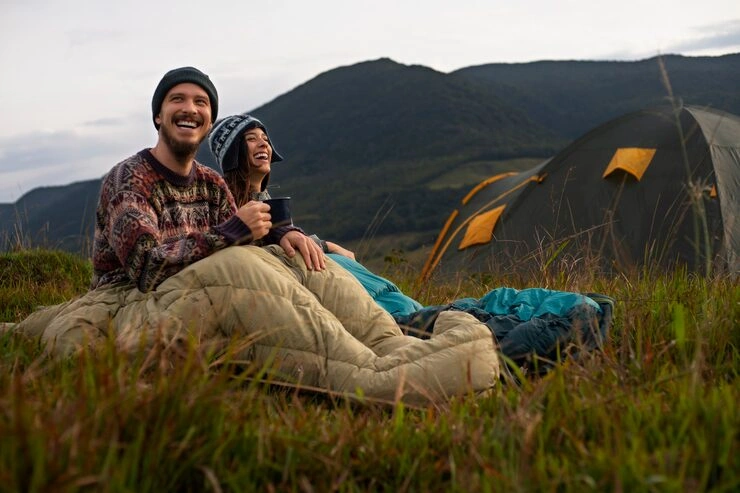
- Your Own Backyard (Literally): Camping under stars you finally noticed because the city lights were dimmer.
This was about presence, hyper-locality, and essential movement. Adventure became a necessity for sanity, not a luxury for photos.
The Secret That Was Revealed: Adventure is a Lens, Not a Location
2020 ripped away the assumption that adventure requires a passport. It proved that wonder and challenge are available anywhere, if you change your perspective.
The "Local Expedition" Mindset: People didn't just walk; they foraged for wild edibles on local trails. They didn't just bike; they completed every street in their neighborhood (a "micronation" challenge). They turned grocery shopping into a culinary exploration of unfamiliar ingredients. Adventure became a game you played with your immediate surroundings.
The Value of Space Over Place: The most coveted destination attribute overnight became "uncrowded." A hidden beach, a remote forest service road, a mid-week cabin—these weren't just nice-to-haves; they were the entire point. We learned to crave emptiness, silence, and room to breathe.
The Deep Dive Over The Checklist: With international travel impossible, you couldn't "do" Italy in 10 days. But you could deeply explore your own state. You could spend a week truly understanding the history, food, and backroads of a region 100 miles away. Depth replaced breadth.
What This Means for Your Travel Today (The 2020 Legacy)
The lists from 2020 are useless as a guidebook. But as a philosophical guide, they're invaluable. Here’s how to apply the "2020 secret" to your travels now:
- Seek the "Second City" or "Quiet Corner": Apply the 2020 "space over place" rule.
- Instead of: Amsterdam
- Go to: Utrecht or Leiden (same canals, 1/10th the tourists).
- Instead of: The main drag of Sedona.
- Go to: The Verde Valley or the town of Jerome.
- The adventure is in the discovery, not the confirmation of a postcard.
- Embrace the Shoulder Season as the Main Season: 2020 taught us that timing is everything. The best weather isn't worth peak crowds and prices.
- Go to Portugal in late October. The sea is warm, the crowds are gone, the pace is slow.
- Visit the Alps in June. The wildflowers are out, the hiking trails are open, and you have mountain huts almost to yourself before the summer rush.
- Define Adventure by Activity, Not Geography: Start your planning with a verb.
- Old way: "I want to go to Scotland."
- 2020-Inspired way: "I want to coastline forage for shellfish and seaweed, then cook them over a fire." Then you look for the best place to do that (maybe it's the Scottish coast, maybe it's Nova Scotia, maybe it's the Pacific Northwest).
- Other adventure-verbs: Volunteer on a farm, learn to freedive, hike a pilgrimage trail, take a wilderness first aid course.
- Carry the "Micro-Adventure" Habit Home: Don't reserve wonder for vacation. Keep exploring your own area with intentionality. Have a "no-plan Saturday" where you drive in a random direction for an hour and see what you find. Be a tourist in your own city.
The Real "Top Destination" Revealed
The secret top travel destination revealed in 2020 was "Appreciation."
Appreciation for the ability to move freely.
Appreciation for a simple meal in a café.
Appreciation for the smile of a stranger in a new town.
Appreciation for the vast, complicated, beautiful world we nearly lost access to.
That destination is still open. It requires no visa. Its currency is gratitude and curiosity. And it makes every trip—whether to a nearby state park or a far-flung continent—richer, deeper, and more meaningful.
The 2020 adventure wasn't the one we booked. It was the one that found us. And the lesson is clear: the greatest travel tool you own isn't your passport or your credit card. It's your mindset. Pack that first.
FAQs: 2020 Travel Destinations & Lessons
Why even talk about 2020 travel destinations now?
As a pivotal moment in travel history. It serves as a "control group" that showed us what happens when global travel stops. It highlighted what we truly value (connection, nature, space) versus what we thought we valued (iconic checkmarks, luxury). Analyzing it helps us make more intentional, fulfilling travel choices moving forward.
Did any 2020 "top destinations" actually become popular later?
Yes, but in a mutated form. The domestic, outdoor, and road trip destinations (like Maine, national parks, RV travel) that were on 2019 lists exploded in 2021-2022 and have remained intensely popular. The trend of seeking space and nature was accelerated by a decade in two years. Conversely, overtourism in iconic European cities has roared back, but now with a more conscious undercurrent of tourists seeking ways to visit responsibly.
What was the biggest positive change to come out of 2020 for travelers?
A widespread rejection of insane itineraries. The "7 countries in 10 days" pace now feels not just exhausting, but disrespectful—to the places and to oneself. There's a greater acceptance of slower travel, longer stays in one place, and the value of simply being somewhere rather than racing through it.
How do I avoid contributing to overtourism now?
Use the 2020 principles:
- Go Off-Peak: This is the single most effective action.
- Spread the Wealth: Stay in neighborhoods outside the historic center. Eat at restaurants where the menu isn't in six languages.
- Stay Longer: A one-week rental has less environmental and community impact than three separate weekend trips.
- Choose Alternatives: Actively research the "second city" or region near the famous spot.
Is the era of big, aspirational international trips over?
Not at all. But the purpose of those trips has evolved. They're now less about status or a checklist and more about genuine cultural immersion, learning, or transformative experiences (like a walking safari, a cooking intensive, or a language stay). The "why" matters more now.
What's the #1 takeaway for planning future travel?
Intentionality. Before you book anything, ask: "What do I want to feel during and after this trip? Rested? Challenged? Culturally enriched?" Let the answer guide your destination, pace, and activities. Plan for experience, not just logistics.