Today's time is very fast. The world of business is changing every minute. Customers want an immediate response. The team needs to move in the right direction. The pressure on managers is increasing every day. In such an environment, if the information is received late, then there can be loss. That is why today real-time alerts have become an important part of management.
Real-time alerts give moment data to managers. As soon as an issue happens, the system sends an alert. This permits the director to make choices in a timely way. This quick reaction makes any business move forward.
What are real-time alerts?
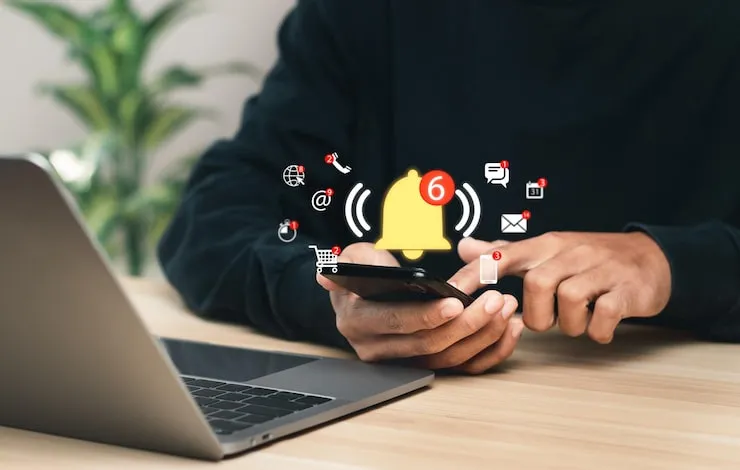
Real-time alerts mean instant information. As soon as an important event occurs, the manager receives a message, notification or email at the same time. There is no delay in it.
The first report was received at the end of the day. At times, the data came weeks later. By then, the damage had been done. But now real-time alerts bridge this gap. Alerts can come in many forms.
- Mobile notifications
- Email alerts
- Pop-up on the Dashboard
- System Warning
- They have only one purpose. Alert the manager immediately.
Why is a quick reaction necessary in today's time?
Today's clients are very smart. They do not like to be late. If the reply is no, they move on to another brand. In such a situation, the supervisor has to keep an eye on each situation. A quick response is also important because:
- A small problem is solved before it becomes a big problem.
- The customer's trust is maintained
- The team is working in the right direction.
- Control is achieved before damage is done.
- Real-time alerts give the manager the same power.
How do real-time alerts work?
The real-time alerts system monitors the data continuously. As soon as a certain threshold is crossed, an alert is triggered.
Suppose the server of a website has slowed down. The system will send an alert immediately. The manager can tell the IT team immediately. Similarly, an alert is received when the sales fall, the stock runs out or the team's deadline is missed. Three things are important in this process:
- Data collection
- Analyse
- Instant notification
All three of them together give information to the manager on time.
The Benefits of Real-Time Alerts for Managers
Real-time alerts don't just provide information. It changes the way managers think and work.
Help in making quick decisions
When the information is received immediately, the manager does not waste time thinking. He can take immediate action.
From this:
- Decisions are made quickly.
- The impact of the error is reduced
- The team receives clear instructions.
- A quick decision is often the best decision.
Problems stop before they become big ones
If a small mistake is caught in time, then there is no big loss. Real-time alerts do the same thing.
Such as:
- Minor malfunctions in the machine
- Absence of staff
- A slight error in the system
- The manager can take action as soon as the alert is received.
Better control of the team
Real-time alerts let the manager know what the team is doing. What work is being done? Which task is getting delayed?
From this:
- Micro-management is reduced
- Increased confidence
- The speed of work is correct.
- The team also works more responsibly.
Saving time
There is no need to check the report repeatedly. The system itself tells where to pay attention.
The manager's time:
- Putting in the planning
- It takes to create a strategy
- To guide the team
- This will boost production.
The use of real-time alerts in different sectors
Real-time alerts come in handy in every sector. Only the need and the method are different.
Business and sales
As soon as the sales fall, an alert is received. The notification comes as soon as the stock decreases.
From this:
- Offers can be launched immediately
- Supply can be ordered on time.
- The customer does not have to return empty-handed.
In the health sector
Doctors and medical staff are aware of the patient's condition.
Such as:
- Increased heart rate
- Drop in blood pressure
- Error in report
- These alerts often save lives.
In the manufacturing industry
An alert is received when the machine malfunctions.
From this:
- It prevents the production from stopping.
- Maintenance is carried out in a timely manner
- Costs are under control
Remote work and office management
Today, many teams work remotely. Real-time alerts keep the manager connected.
Such as:
- Task delay alert
- Attendance Notification
- Project Update
- It keeps control even at a distance.
How do real-time alerts reduce a manager's stress?
When you have to check everything yourself, the stress increases. But when the system itself gives an alert, the mind remains light.
The manager knows that:
- If anything goes wrong, you'll be notified.
- He is ready for any situation.
- Everything is under control
- This will increase your confidence.
How to choose the right real-time alert system?
All systems are not the same. It is important to choose the right system.
Points to note:
- Easy to use
- Don't send fake messages
- Run on both mobile and desktop
- Customization is available
- The right system makes the manager's job easier.
A few cautions with real-time alerts
Alerts are good, but too many alerts can be problematic.
Therefore:
- Take necessary precautions
- Don't get notified about every little thing.
- Check settings from time to time
Maintaining balance is very important.
The role of real-time alerts in the future
There will be real-time alerts and smarts in the coming times. With AI and automation, these will suggest better decisions.
In the future:
There will also be a solution with an alert.
Risk will be communicated in advance
Management will be easier.
It will be a great support system for managers.
Conclusion
Real-time alerts are not just a technology today. They have become the eyes and ears of managers. This saves time. This prevents damage. This will help you make the right decision.
A manager who uses real-time alerts correctly is always one step ahead. This is the real key to success in today's fast-paced world.