The Spanish region of Extremadura is famous for being dry. But during one of the driest Junes on record in 2019, a stunning historical monument that hadn't been seen for 50 years re-emerged from the waterline in the Iberian Peninsula. Referred to as the 'Spanish Stonehenge', the dolmen of Guadalperal is a megalithic circle which is claimed to be as old as 5000BC. However, the dolmen was submerged by Valdecanas reservoir in 1963 when a dam was built.
Submerged Forest, Wales, UK
Torrential weather at the turn of the year in 2014 stripped Sand Bay on Cardigan Bay of thousands of tons of sand to reveal a 4,000-year-old petrified ancient forest on the shores. The wood covered a span of a few miles and contained every type of tree: researchers recorded that it stopped growing 4,000 years ago (via radiocarbon dating), and the woods consist of several species of trees such as pine, birch, oak, and alder. Scientists and archaeologists already knew about the existence of the forest, but the extreme storm caused unusual new finds to occur.
Sunken warships, Serbia
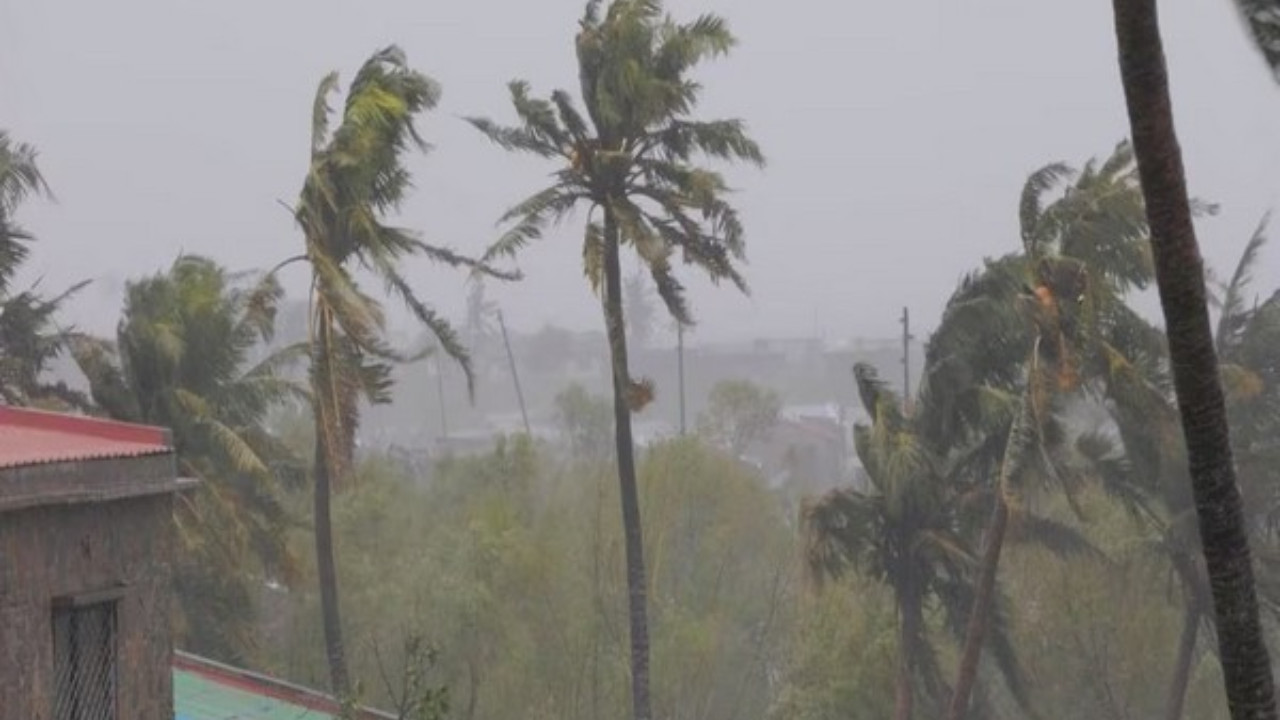
The year's drought summer of 2022: In central Europe, the severe drought led to extremely low water levels on rivers, reaching a 10-year high on the Danube, as the Serbian city of Prahova became home to an intriguing spectacle on the dry river bed; the rusting derelictions of two dozen Nazi warships lay visible, partially submerged to differing degrees along the Danube. The Nazi forces originally included these ships as a component part of the Black Sea Fleet; however, upon realizing that Russian troops were advancing along the river in 1944, they sunk the ships.
Kemune Palace, Iraq
The falling levels of the water in the Mosul Dam reservoir in Kurdistan, Iraq, near the town of Kemune, after a prolonged drought in 2018, revealed a well-preserved brick palace that dates back to the days of the Mitanni Empire. Based in Mesopotamia in the 15th and 14th centuries BC, the Mitanni served as a significant partner of the Ancient Egyptians, but their lifestyle remains inadequately documented because the only Mitanni sites that have been explored to date have yielded merely a few written accounts.
Iron Age shoe, Norway
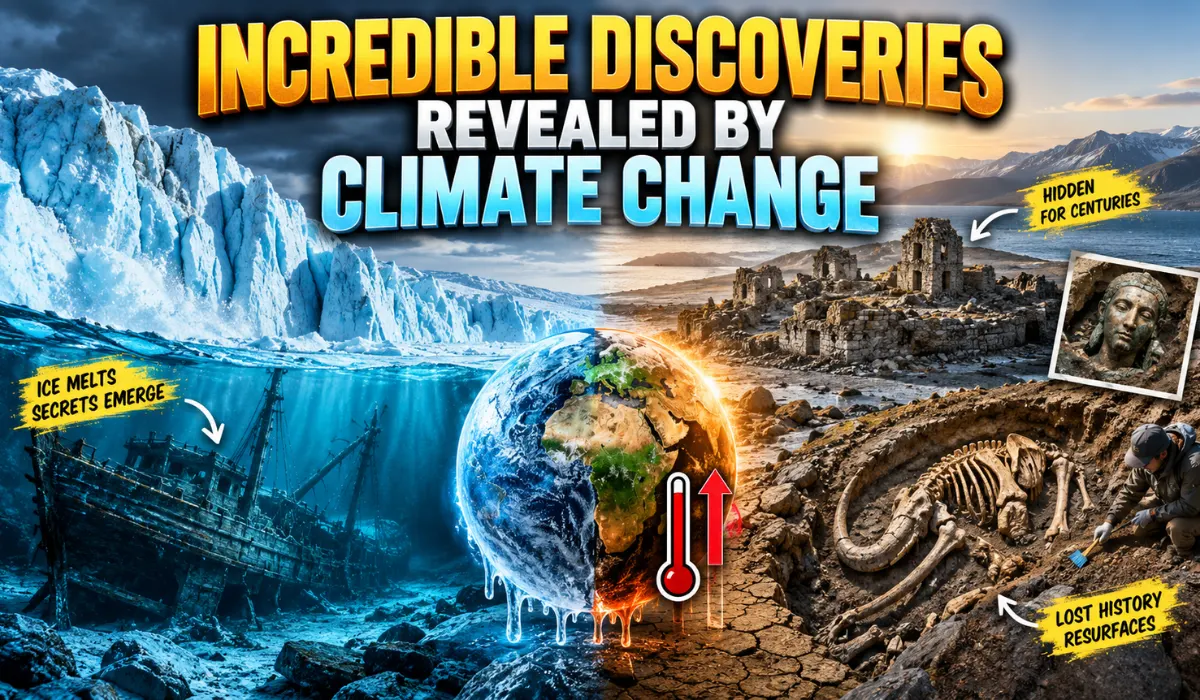
Since time immemorial our climate has been changing dramatically, due to the glacier melts not only are we having ice cap decreases but every now and again some antique lost to ice, permafrost, since many years are re-thawed to surface. In 2019 at the Lent Breen glacier in Norway's mountains, a hiker found an intricate bundle of ancient rawhide and some lace appearing from an ice cliff. The glacial archaeologist working on the project Secrets of the ice called right to this remote spot before a sudden snowstorm might forever bury the intriguing item again.
Pre-Viking skis, Norway
The Secrets of the Ice project has also excavated a hoard of other treasures from Norway’s melting glaciers, such as these 1,300-year-old skis. The team uncovered the first Iron Age ski in 2014, while they dug out the second ski after further glacial melt in 2021 – in far better condition as it was buried much deeper under the ice. Archaeologists have theorized that, since many objects related to reindeer hunting have been found in the area, the skis may have belonged to a hunter.
Nunalleq artefacts, Alaska, USA
Similar to glacial melting on the global increase of temperature, frozen soil of the arctic regions of the world is as well. In the Yukon of Alaska, the University of Aberdeen archaeologists have been excavating freshly thawed ground at Nunalleq, the Yupik ancient village, lying in the southwest 400mi (644km) to Anchorage, Alaska. As there is a race against time once thawing occurs to save The Yupik artifacts from further deterioration.
Nero’s Bridge, Italy
In 2022, Italy suffers its worst drought in 70 years, and the water level in the river Tiber reaches dangerous lows. At such low levels, a pier of a Roman bridge exposes itself to public view for the first time. "Nero's Bridge" (almost directly under Rome's Ponte Vittorio Emanuele II of the 19th century) was built in the first century AD.
Corinthian columns, Israel
Following a devastating May 2023 storm, sea-swimmer Gideon Harris caught an unexpected sight through his diving mask. Lying on the sea floor and unveiled from among the drifting sand, several intricately carved marble artefacts awaited discovery. After he contacted the Israel Antiquities Authority, they dispatched divers to dig up the site. The marble columns dated back to around 1800 years ago, with each column measuring 19.6 feet in height. Carved from the finest marble, they featured exquisite floral Corinthian detail. So, what were they doing deep below the waves?
FAQ's
Q1: What kinds of ancient items are emerging from melting glaciers?
Retreating ice patches are exposing exceptionally well-preserved organic artifacts, including 1,300-year-old wooden skis complete with original bindings in Norway, ancient leather clothing, textiles, and ancient hunting weapons like arrows and spears.
Q2: How does melting ice help us understand ancient human lifestyles?
The ice acts like a natural deep freezer, locking fragile organic materials in time. This allows researchers to study prehistoric hunting methods, high-altitude transport routes, and how ancient populations adapted to past climate shifts.
Q3: Where are the most significant glacial archaeology discoveries happening?
Major finds are concentrated in high-altitude and high-latitude regions experiencing rapid ice melt, particularly the Innlandet region of Norway, the Alps (famous for the discovery of Ötzi the Iceman), the Canadian Rockies, and the Yukon territory.
Q4: Why is there an urgent rush by scientists to find these artifacts?
Once frozen artifacts melt out and become exposed to the open air, oxygen, and moisture, the elements cause them to degrade and decompose very rapidly. Scientists must recover them quickly before they are lost forever.
Q5: What else besides human artifacts do melting ice patches reveal?
Beyond human tools and clothing, retreating ice uncovers ancient biological remains such as preserved animal bones, antlers, and ancient DNA that map out historical wildlife populations and past ecological shifts.