


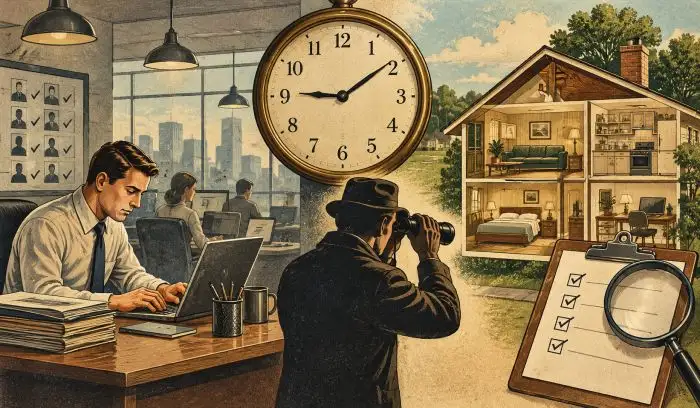
Workplace rules have not always stayed inside offices or factories. In the past, some employers tried to control what workers did after work. These rules affected many parts of daily life, from inspecting employees' homes to setting weight limits and curfews.
The wild things bosses once controlled off the clock show how much power some companies had over their workers. In some cases, employees were even restricted in where they could shop, drink, or live. These unusual workplace practices show how workers' rights have changed over time and why personal freedom matters today.
Henry Ford's Home Inspectors Decided Workers' Bonus Pay:
Company's founder, Henry Ford, announced his famous pay rate of $5 a day in 1914. All regular workers would get a $2.34 base wage. But the remaining $2.66 linked to "profit sharing" had to be earned by passing an inspection of a worker's house by an inspector from the Ford Motor Company Sociological Department.
The inspector came unannounced to inspect their house for cleanliness, to make sure that they had bank savings, that their children attended school, and that workers were sober when they left work at night. If workers failed to make improvements within 6 months, they would be fired and not get the extra $2.66.
Airlines Weighed Stewardesses to Keep Their Jobs:
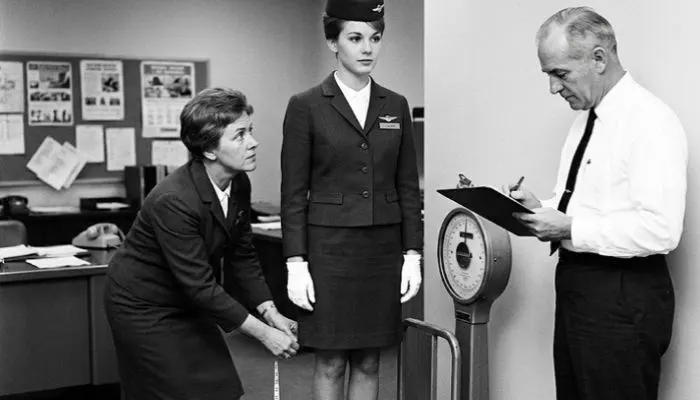
The airlines United, Pan American, American, and others did not merely treat stewardesses as "waitresses." They weighed stewardesses out of service to a chart that matched height and weight: a 5-foot-3 stewardess could weigh 118 pounds, the tallest - 5-8 - could weigh 135 pounds.
If you passed that limit, they sent you off duty and did not pay you. If you failed to return to your assigned weight, they let you go. And for years, it was not an issue of contention.
Harvey Girls Lived Under A 10 PM Curfew and a Housemother's Watch
The airlines United, Pan American, American, and others did not merely treat stewardesses as "waitresses." They weighed stewardesses out of service to a chart that matched height and weight: a 5-foot-3 stewardess could weigh 118 pounds, the tallest - 5-8 - could weigh 135 pounds.
If you passed that limit, they sent you off duty and did not pay you. If you failed to return to your assigned weight, they let you go. And for years, it was not an issue of contention.
Read More: Philippines Air Force Crash Four Pilots Killed After Two Trainer Aircraft Collide MidAir
Hollywood Studios Wrote Actors' Private Lives into their Contracts
Hollywood's first scandal broke in 1921 when the comedy star Roscoe "Fatty" Arbuckle faced manslaughter charges, but a jury acquitted him of the crime. Universal Pictures included the first formal morality clause in talent contracts in response to the event, and other companies followed suit within a year.
Studios could then terminate employment if an actor's off-screen conduct resulted in "disrepute," and private investigators tracked celebrities.
Miners Walked Unpaid Miles Just to Reach the Coal
Foremost among those who gained their first benefits with the passage of the 1935 law was the typical coal and metal miner who previously worked entirely free on the round trip from the mine opening at the surface to the coal seam. Coal miners had to carry their gear for up to several miles through dark, gaseous underground passages before and after their 45-minute to one-and-a-half-hour journey.
It wasn't until United Mine Workers of America (UMWA) president John L. Lewis picked up the fight that the Supreme Court made two decisions in the mid-1940s that ruled in the miners' favor.
Railroads Banned Train Crews from Saloons, On Duty or Off
The railroad organization established Rule G, a ban on drinking on the job in 1897, and went even further by forbidding train crew members, including engineers, conductors, and brakemen, from hanging out in bars off duty. The railroads even dispatched private investigators to all railway town bars, and they could dismiss anyone found drinking when not on duty on the spot, no matter their seniority.
Company Towns Paid Workers in Money Good Only at One Store
Employers in remote textile, coal, and timber towns across Appalachia and the South - from the 1880s through the 1930s - sometimes paid part of a worker's wages in scrip, or company scrip, rather than real U.S. currency.
Scrip could only be used in a company store that typically marked up prices by between a quarter and half again more than local merchants, who competed with the company. If you used your scrip to pay another shopkeeper, cashed it in, or bought your groceries somewhere else, your employer might dock your pay, fire you, or evict you from company housing.
A Pottery Plant's Dressing Room Reached the Supreme Court
Before 1946, managers at Mt. Clemens Pottery in Michigan and other factories told workers to arrive 15 to 30 minutes early to change and put on shoes, and wait by their stations for the boss to blow the whistle or risk being refused admission and not paid for their time and there could be a heavy penalty if they were late.
In Anderson v. Mt. Clemens Pottery, the Supreme Court decided that this was work for which compensation had to be provided, leading in 1947 to the passage of the Portal-to-Portal Act.
FAQs
1. What are some wild things bosses once controlled off the clock?
Some employers controlled workers' home life, clothing, weight, shopping choices, drinking habits, and living arrangements. These rules often extended beyond normal working hours.
2. Why did companies control workers' personal lives in the past?
Some companies believed that controlling workers' habits would improve productivity, protect their reputation, and reduce workplace problems. However, these rules often limited personal freedom.
3. Did Henry Ford inspect workers' homes?
Yes. Ford Motor Company's Sociological Department inspected some workers' homes and personal habits to decide whether they qualified for additional pay under its profit-sharing programme.
4. What were company stores and company scrip?
Company stores were shops owned or operated by employers in certain company towns. Company scrip was a form of payment that workers could use at designated stores instead of regular money.
5. How have workers' rights changed over time?
Workers' rights have developed through labour laws, court decisions, and union efforts. Modern workplace protections in many countries place limits on employers, although the exact rules vary by location.