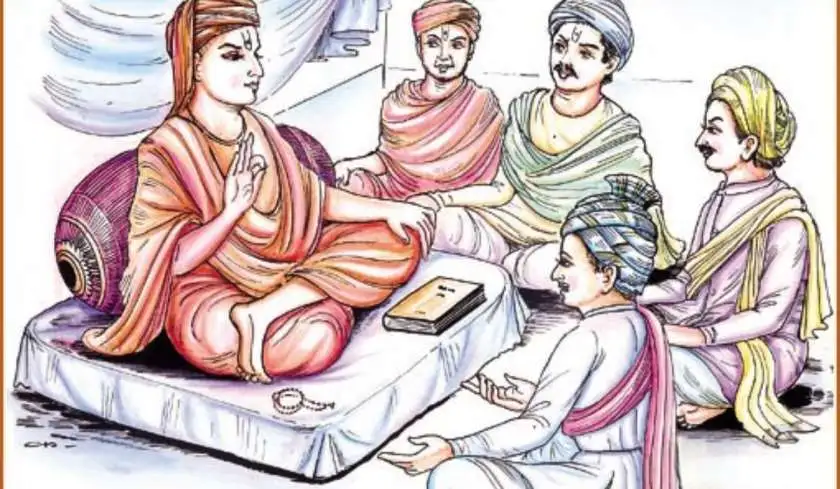
Not all revolutions come with noise. Some arrive quietly—through a humble smile, a helping hand, or the way someone chooses kindness when the world chooses pride. He wasn’t born into royalty. He didn’t wear robes of power. His circle of relatives had been simple artisans—tailors with the aid of an alternate—living in a time whilst India changed into divided by caste, ritual, and social silence.
But Pragji didn’t just stitch clothes—he stitched people’s hearts back together. He would grow into Bhagatji Maharaj, a name that today stands for love without judgment, devotion without limits, and courage without ego.
Childhood in Mahuva: A Simple Start
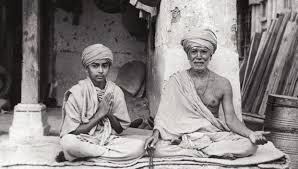
In 1829, Pragji Bhakta was born into a lowly yet illustrious Vishwakarma family. From a young age, he showed an unprecedented depth of ideas. While other children played, Pragji often sat in corners, eyes closed, quietly whispering the name of God. He wasn’t taught by big priests or scholars. Life was his classroom. His work as a tailor grounded him in humility. And his time spent in local temples and with saints gave him a deep thirst for truth.
His caste label, considered “low” by society, could have boxed him in. But he never saw people in boxes.
The Turning Point: Meeting Gunatitanand Swami
It was merely a meeting of two spirits, not a spectacular occasion. Gunatitanand Swami became a direct student of Bhagwan Swaminarayan and a great religious follower. He swept the ashram floor. He stitched the saint’s torn clothes. He cooked food with care and listened with open ears. Gunatitanand Swami saw what many missed: This young man wasn’t ordinary. He had the purity and strength of a saint. Under his guidance, Pragji Bhakta’s heart bloomed.
Breaking the Caste System
Let’s pause here. Imagine the India of the 1800s. If you were from a so-called lower caste, you couldn’t enter many temples. You weren’t allowed to learn certain scriptures.They wanted you to stay "in your place." But Bhagatji Maharaj refused to stay in any place someone else built for him. He didn’t protest with anger. He walked into temples with love. He taught sacred knowledge to anyone who wanted to learn—not just the privileged.He stated, among other things, that "a pure heart is more sacred than a holy birth." People opposed him. Some insulted him.. They saw that he wasn’t breaking religion—he was cleaning the dust off its mirror.
Teachings That Still Speak Today
Bhagatji Maharaj didn’t write books. He didn’t open universities.
Here’s what he stood for:
- Serve with love, not ego. Sweep the temple floor as if you were sweeping your own soul.
- All souls are equal. Caste, wealth, status—God doesn't care about any of it.
- Stay close to a true saint. A true guru is like a light in a dark forest.
- Turn work into worship. Even a tailor’s needle becomes holy when used with devotion.
- See God in others. Not just in idols or temples, but in the smile of the poor, the silence of the sad, and the hands of the honest.
He lived these words. He didn’t preach to them.
Akshar-Purushottam: A Spiritual Awakening
Bhagatji Maharaj was a member of the first to unfold a profound imaginative and prescient known as the Akshar-Purushottam Darshan—a key pillar of the Swaminarayan way of life.
In easy phrases:
- Purushottam means the Supreme God, beyond time and form.
- Akshar is His eternal servant, a perfect devotee who reflects God’s qualities.
By walking with a saint who is Akshar, we can slowly become like Akshar too—pure, fearless, peaceful—and closer to God than ever before. This was no longer religion for the elite. It was spirituality for every soul with a hungry heart.
The People’s Saint
By now, Bhagatji Maharaj had come to be extra than a devotee. He became a religious lighthouse, drawing seekers from all castes, backgrounds, and corners of Gujarat. He had no formal title. But his character became his authority. He never sat on thrones. He sat among the people. He still stitched clothes for saints and cleaned temple courtyards. When offered garlands, he would pass them to others.
Choosing a Successor: Yogiji Maharaj
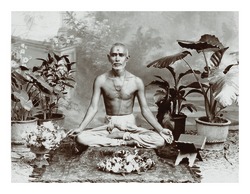
He went on to carry forward the torch and build what nowadays has come to be a global religious movement. In many ways, Bhagatji Maharaj still walks among us—through the actions of Yogiji Maharaj, Pramukh Swami Maharaj, and the millions of devotees who carry his values.
Impact on Gujarat and the World
Bhagatji Maharaj didn’t just change hearts. He changed Gujarat’s religious landscape. Temples became more open. Caste walls began to crack. Spiritual wisdom no longer wore the robes of one class—it began to wear smiles, simplicity, and shared food.
Celebrating His Life: Jayanti and More
Each year, on his birth anniversary—Bhagatji Maharaj Jayanti—devotees come together in thousands.
What the celebration includes:
- Sharing meals with the poor
- Cleaning villages and temples
- Reading stories from his life
- Spiritual speeches by saints and youth groups
Places That Still Carry their Presence
Want to feel his spirit? You can visit:
- Mahuva – His birthplace, filled with peace and prayers
- Junagadh – Where he served his guru
- Gondal, Sarangpur, and Gadhada – Temples where his teachings still bloom in daily rituals
Walk through those lanes, and you might just feel the wind carry his voice.
Final Thoughts: The Legacy of a Loving Soul
Bhagatji Maharaj didn’t build empires. He built humble lives into powerful lights. He didn’t shout from rooftops. He served in silence. But in that silence, he healed heaps, taught thousands and thousands, and stood taller than any wall society ever tried to build.
Key Takeaways
- Served Gunatitanand Swami with deep devotion
- Broke caste barriers with love and courage
- Spread Akshar-Purushottam philosophy
- Inspired Yogiji Maharaj and millions beyond
- Left a legacy of love, simplicity, and fearless reform