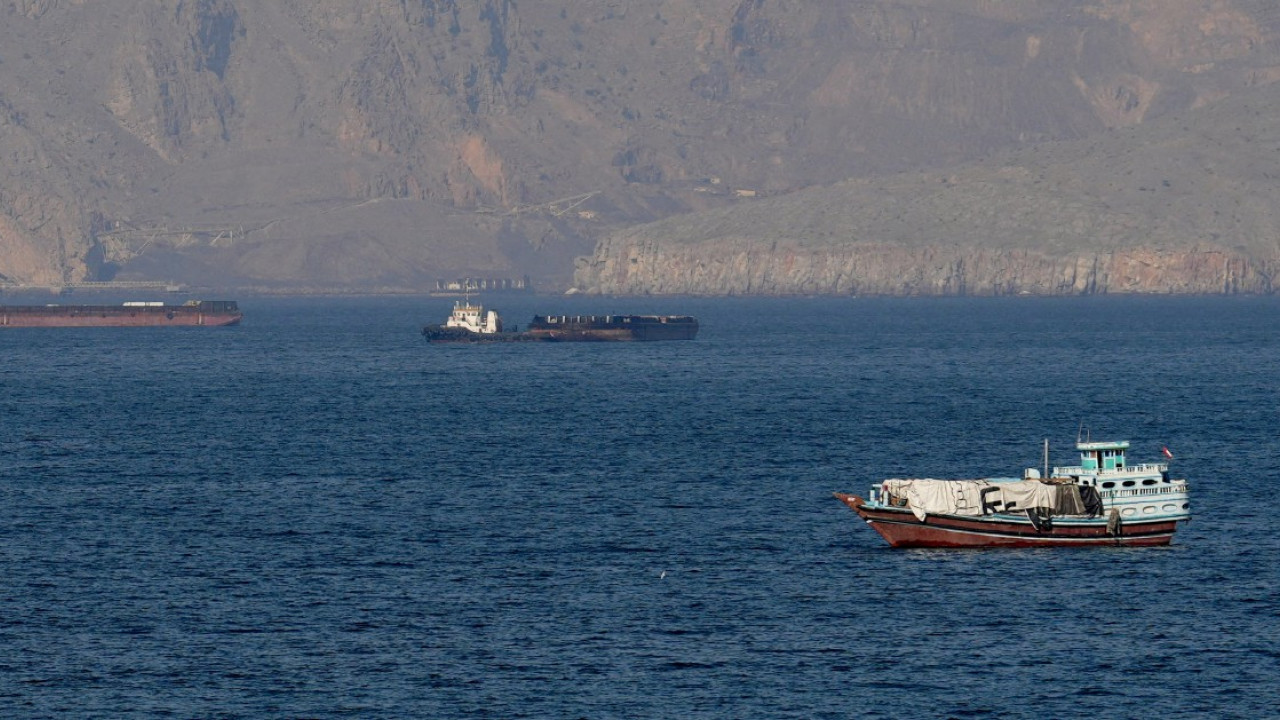
There are a few destinations where headscarf and windbreaker just will not be enough, where super-fast, extremely wild winds rage across regularly. Such as the place which measures in at 12 on the Beaufort wind force scale, a scale running from 0-12, and whose scale reading starts with 5 which is a fresh breeze of 19-24mph (30-38km/h), through to 12, which describes a hurricane of 72mph (116km/h) and over.
St John’s, Canada, 98mph
The provincial capital of Newfoundland and Labrador is said to be the windiest city in the country. That coastal city with small, colourful houses dotted on the cliffs at The Battery has average wind speeds of about 13 mph (21 km/h), and average yearly maximum gusts average at 19 mph (31 km/h).
Commonwealth Bay, Antarctica, 127mph
This far-flung spot has the highest average annual wind speed in the world with winds being lashed about at a dizzying 50 mph (80 km/h). Fastest in history on record was at Cape Denison in 1995, at 127 mph (204 km/h). Winds of 168 mph (270 km/h) were seen by early 20th century researchers during the Australasian Antarctic Expedition, although they aren’t classified as recorded wind speeds.
Cape Blanco, Oregon, USA, 145mph
Whipping a headland along Oregon's southwest coast in winter, this spot can see winds of up to 70 miles per hour (113km/h) every few years. But the infamous October 1962 Columbus Day storm made the situation much more extreme, when the spot clocked in at a truly staggering 145 miles per hour (233km/h) gust.
Cape Blanco, Oregon, USA, 145mph
That was the strongest wind of any storm in the country that also blew over much of the Pacific Northwest coast and the Washington state coast. But Cape Blanco has a windy reputation regardless of storm conditions. In 1870, when they constructed its lighthouse, it contained an exceptionally powerful radio beacon for the fact that the raging winds there have led to many shipwrecks in the area.
Wellington, New Zealand, 154mph
While the moniker 'Windy City' may be owned by Chicago, it is actually the dubious honour of being the world's windiest city that is held by the capital of New Zealand, with an average annual wind speed of 29 mph (47 km/h) – fast enough to make us all squint. Things got seriously windy one winter, though. In 1962, a howling 154 mph (248 km/h) wind speed was recorded in Wellington
Shetland Islands, UK, 173mph
This group of islands, which nestles between Scotland’s most northern tip and the Faroe Islands, the Met Office has designated as the windiest place in the UK. It's not surprisingly achieved an impressively brisk average of 15 miles per hour of wind each year, but reports indicate that it has suffered gusts even more violent than 173 mph. In the past, the Muckle Flugga lighthouse, sitting out on its own rocky island, recorded these intense gusts, but officials have not verified them as official data.
Aviemore, UK, 173mph
Home of the country’s second most powerful wind is popular with lovers of Scotland’s high mountains. On a snow-capped peak 1,245m up, the wind in March 1986 screamed through Cairn Gorm – ’The Blue Hill’, and you can’t imagine exposed cheeks or fingers would have been any other colour at that velocity.
Mount Everest, China and Nepal, 175mph
China and Nepal share ownership of this formidable peak which has never shied away from the extreme. It is not just the highest mountain in the world in terms of sea level it is arguably the best known mountain in the world and has the power to inspire even the most mundane traveller to a place in their itinerary. However, a climb of 29,029 feet (8,848m) with all the related altitude effects is something else entirely and with blizzards thrown in and the ability to travel at 175 mph (282km/h) there is no option.
Kirkwood, California, USA, 209mph
A state record might have been set at Kirkwood Mountain, a resort 50 miles south of Lake Tahoe, California, in February 2020. A gust that shrieked 209 miles per hour (336km/h) was measured at the summit, nearly 2.8 kilometers above the earth. A state record set a short distance away at Ward Peak, west of the lake, has not yet been challenged; gusts up to 199 miles per hour (320km/h) were recorded there in November 2017.
Mount Washington, New Hampshire, USA, 231mph
The summit - known as Agiocochook - had the highest wind speed recorded for more than 60 years before someone overtook its status in 1934, when the mountain’s observatory registered an eye-watering 231mph (372km/h). The mountain is a towering natural barrier right in the path of numerous storms passing through the region.
FAQ's
1. What is the overall windiest place on Earth?
Commonwealth Bay, Antarctica holds the title for the overall windiest place on Earth. It experiences cold katabatic winds—dense, icy air rushing rapidly downhill toward the coast—generating an average annual wind speed of 50 mph (80 km/h) and frequent gusts over 150 mph (240 km/h).
2. Where was the strongest non-tornado wind speed ever recorded?
Barrow Island, Australia. On April 10, 1996, an automated weather station on the island recorded a record-breaking wind gust of 253 mph (408 km/h) during Tropical Cyclone Olivia.
3. Which city is considered the windiest in the world?
Wellington, New Zealand. Positioned right on the Cook Strait—a narrow gap between New Zealand's North and South Islands—the city acts as a wind tunnel for strong westerly winds known as the "Roaring Forties". Wellington averages gale-force wind gusts (42+ mph) over 200 days a year.
4. Why are mountain summits like Mount Washington so windy?
Mount Washington (New Hampshire, USA) sits at the intersection of three major storm tracks. High altitude, steep slopes, and surrounding geography squeeze and accelerate incoming air masses. It held the world record for the strongest wind gust on land for 62 years, reaching 231 mph (372 km/h) in 1934.
5. What creates extreme wind conditions in these locations?
Extreme winds are primarily created when geography compresses and accelerates air pathways—such as sea straits or mountain passes—or when intense temperature gradients force dense air down steep elevations (katabatic winds). Severe tropical storms and typhoons also produce temporary spikes in surface wind speeds.