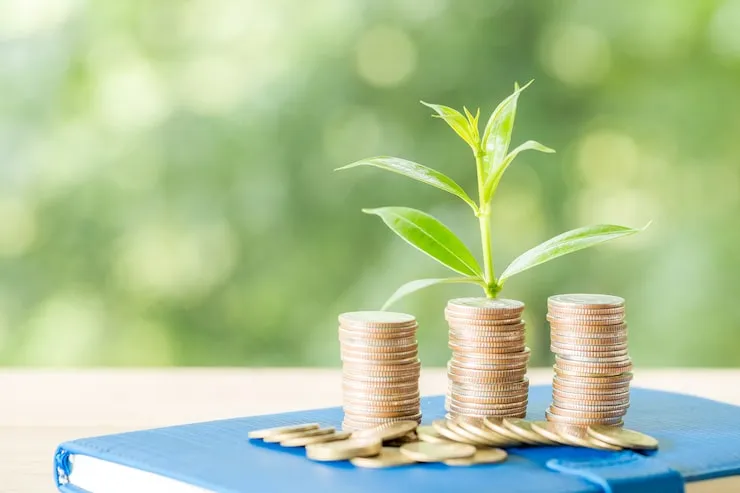
Let’s talk about a superpower for your money: earning more while it sits in the bank. This High-Yield Savings Guide will explain how.
Most people keep cash in a regular savings account. These often pay very little interest. Interest is the money the bank pays you for holding your cash.
A high-yield savings account is different. It works the same way but pays a much higher interest rate. This means your money grows faster without any extra work from you.
Think of it like a garden. A regular account is a seed that grows slowly. A high-yield account is the same seed, but with better soil and sunlight. It grows bigger and faster.
What is a High-Yield Savings Account?
Simply put, it’s a special type of savings account. Banks offer much better annual percentage yields (APY). APY is the total interest you earn in a year.
These accounts are typically offered by online banks. Because they don’t have expensive branch locations, they pass the savings to you with higher rates.
Your money is just as safe as in a big traditional bank. They are FDIC-insured up to $250,000. This means the government protects your cash if the bank ever has trouble.
Why You Need This Account: The Power of Compound Interest
This is the magic trick. Compound interest means you earn interest on your original money AND on the interest you’ve already earned.
Let’s say you put $1,000 in an account with a 5% APY.
-
Year 1: You earn $50. Now you have $1,050.
-
Year 2: You earn 5% on $1,050, which is $52.50. Now you have $1,102.50.
Your money starts making its own money. Over time, this creates a powerful snowball effect for your savings.
It’s the perfect place for your emergency fund, money for a big trip, or a down payment fund. It’s not for daily spending, but for goals 1-5 years away.
How to Find the Best High-Yield Savings Account: A Step-by-Step Plan
Not all accounts are equal. Follow this simple checklist from this High-Yield Savings Guide.
-
Compare the APY. This is the most important number. Look for accounts consistently offering rates much higher than the national average. Use comparison websites to see who’s on top.
-
Watch for Fees. The best accounts have no monthly maintenance fees and no minimum balance fees. Fees eat your interest, so avoid them.
-
Check Access Rules. How do you put money in and take it out? Ensure they offer easy electronic transfers or mobile check deposit. Some accounts limit withdrawals.
-
Review the Bank’s Reputation. Read customer reviews. Is their website or app easy to use? Good customer service matters.
-
Understand the Fine Print. Some banks offer a great “introductory rate” that drops later. Look for accounts with a history of strong rates.
Common Myths About High-Yield Savings
Many people hesitate because of myths. Let’s clear them up.
-
Myth: “It’s too risky.” Truth: If the bank is FDIC-insured, it’s just as safe as your current bank.
-
Myth: “I need thousands to start.” Truth: Many great accounts have no minimum deposit to open. You can start with $10.
-
Myth: “It’s a huge hassle to switch.” Truth: Opening an account online takes about 10 minutes. Linking it to your main bank is straightforward.
Making Your Money Work: Smart Savings Strategies
Just opening an account isn’t enough. You need a strategy.
-
Automate Your Savings. Set up a recurring transfer from your checking account every payday. Even $25 a week adds up. This is “paying yourself first.”
-
Use Buckets for Goals. Mentally separate your savings. Label parts of your balance as “Car Fund,” “Vacation,” or “Rainy Day Fund.”
-
Reinvest Your Interest. Don’t pull out the interest you earn. Leave it to compound and grow even faster.
-
Do Regular Check-ups. Every few months, check your rate. If it drops significantly, it might be time to move your money to a better account.
High-Yield Savings vs. Other Places for Your Cash
Where else can you keep money?
-
Traditional Savings Account: Very low rates. Not ideal for growing money.
-
Checking Account: Pays little to no interest. Meant for daily spending.
-
Certificates of Deposit (CDs): Offer fixed rates for a set time (like 6 months or 2 years). Your money is locked up, but rates can be good. A CD ladder strategy can help you access cash regularly.
-
Money Market Accounts: Often have check-writing privileges but may require a higher minimum balance.
For money you need safe, liquid, and growing, a high-yield savings account is often the best choice.
Your Action Plan: Getting Started This Week
Ready? Here’s what to do next:
-
Look at your budget. Decide how much you can save each month.
-
Pick one goal. Start with your emergency fund (aim for 3-6 months of expenses).
-
Research for 20 minutes. Use a financial website to pick a top-rated online bank.
-
Open the account. Have your ID, Social Security number, and existing bank details ready.
-
Set up automation. Make saving effortless.
Starting is the hardest part. Once it’s set up, you can relax and watch your savings grow.
Frequently Asked Questions (FAQs)
Is my money safe in an online bank?
Absolutely. As long as the bank is FDIC-insured (or NCUA-insured for credit unions), your money is protected up to $250,000 per account type, per bank. This is the same protection big street banks have.
How often is interest paid?
Most high-yield savings accounts pay interest monthly. This is great because then that interest starts earning interest right away the next month.
Are there taxes on the interest I earn?
Yes. The interest you earn is considered income. You will receive a 1099-INT form from the bank at tax time to report it. It’s still your money—you just share a small part with the government.
Can I lose my money?
No, not due to market changes. The balance does not go down unless you withdraw money or the bank charges a fee (which you can avoid by picking a no-fee account). The FDIC insurance protects you if the bank fails.
What’s the difference between APR and APY?
APR (Annual Percentage Rate) is the interest rate without compounding. APY (Annual Percentage Yield) INCLUDES compounding. Always look at the APY—it shows your real earnings.
Expert Insight
We asked a certified financial planner for their view:
“In today’s financial landscape, not using a high-yield savings account is like leaving free money on the table. It should be the foundational ‘hub’ for your short-term cash. The combination of safety, liquidity, and a competitive yield is unmatched for goals within a five-year window. Automating contributions is the key behavior that leads to success.”