Photography is a specialized field Focus is at the center of the photograph. It is possible to fix an underexposed image in post-processing and remove a distracting object from a photo However, you'll not "fix" a missed focus. That's the main difference between a masterpiece of professional quality as opposed to a blurry snap. Focusing on camera isn't only doing the job; it's the ability to control what the eye of the viewer is focused on. If you're taking pictures of a football match that is fast-paced or even a slow-motion still of a rose that has been drenched Mastering these skills enhances your photography.
The Basis manual and Autofocus. Autofocus
Before we dive into the complexities of configurations, it is necessary to tackle the old issue: are we talking about manual or automatic?
Manual Focus (MF)
The manual focus process is where the process began. When you turn the focus ring of your lens, you move the glass components in order to make a sharper area. Even though autofocus is extremely efficient nowadays, manual focus still remains more effective in certain situations:
- Macro photography: In the case of tiny depths of fields, autofocus usually "hunts" (moves back and forward with no locking).
- Low Light Sensors require contrast in order to be able to focus. If it's too dark, the camera may quit.
- Astrophotography Cameras aren't able to focus on distant stars.
Autofocus (AF)
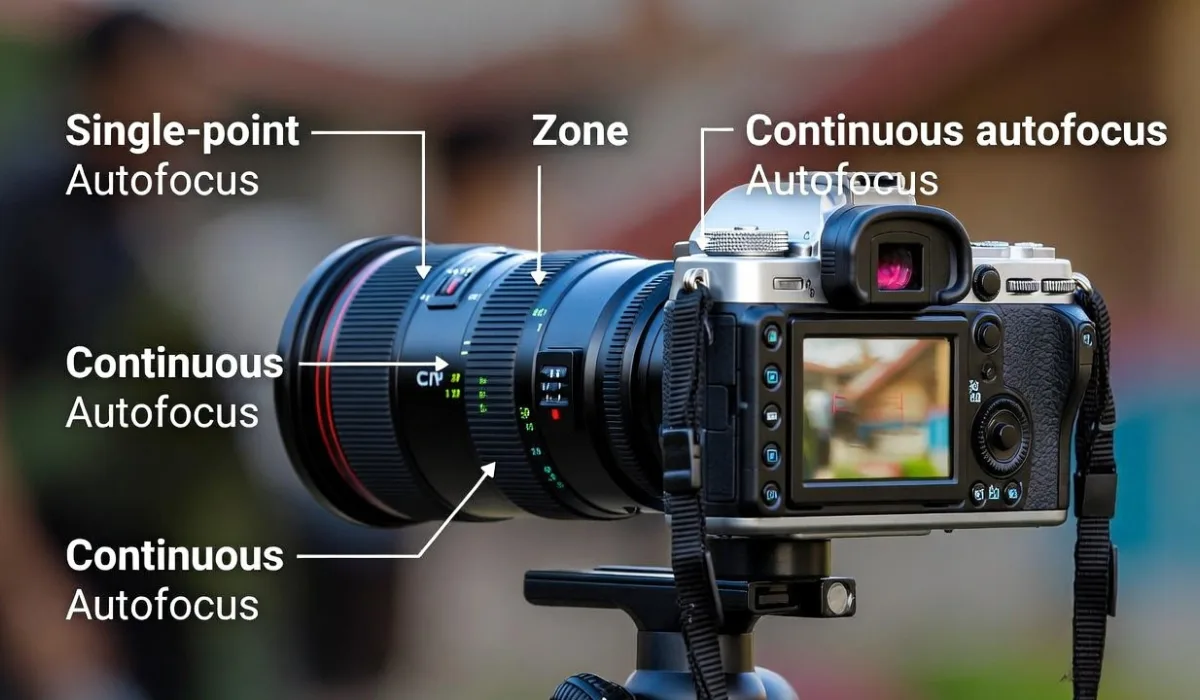
Modern AF technology is a technological marvel. They employ specific sensors as well as the main imaging sensor for calculating the distance in milliseconds. In 90% of the time photography, AF is your best partner, but only if you are aware of what mode you should use.
Read also: Andhra Pradesh Students Opt for DSLR Courses and Training
Deciphering Autofocus Modes
Each camera manufacturer comes with its own terms of reference (Canon's "AI Servo" vs. Nikon's "AF-C"), but they typically are divided into three categories:
Single-Shot AF (AF-S / One-Shot)
It is designed for subjects that are stationary. If you hold the shutter half way and the camera will lock focus and stays in focus until you capture the image or you release the button. This is great for taking architectural, landscape, or poses for portraits.
Continuous AF (AF-C / AI Servo)
It's this is the "tracking" mode. If you keep the shutter at a halfway point it will constantly adjust its focus. When your subject is moving towards the camera or from it the camera's lens is always in sync. This is useful for nature, sports and kids who can't sit still.
Hybrid AF (AF-A / AI Focus)
It is a "brainy" mode where the camera will decide the best option for you. If the subject remains still in the frame, it behaves as a Single-Shot. When the subject is moving the camera switches to Continuous. Although it is convenient Professional photographers generally avoid this as it could be unstable.
Selecting Focus Areas Point vs. Zone
The choice of what your camera views an object is as crucial as the moment you focus.
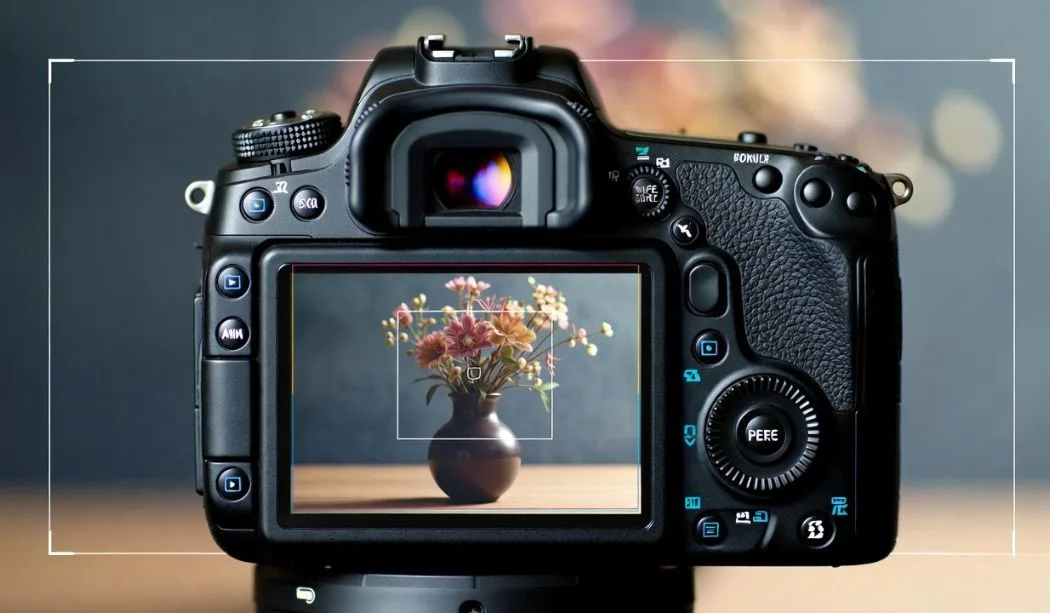
- Single Point Affinity: You choose one particular dot to display in the viewfinder. It is the most precise method of shooting. If you're photographing portraits, place this ring directly over the eye of your subject.
- Group AF/Zone AF: The camera is looking at an extremely small number of targets. This can be useful for situations when a single point could be difficult to focus in the direction of a moving object.
- Wide/Auto Area AF The camera scans all of the frame, and attempts to determine what's most significant (usually the nearest object). Be careful with this, since cameras can't read minds.
Advanced Techniques for Maximum Sharpness
Back-Button Focus
In default, the camera will focus when you hit the shutter button half way. Focusing with the back button separates these two actions. Focus is assigned to a button located on the rear of the camera (usually identified as"AF-ON) while using shutter for taking the photo.
The reason is that This prevents your camera from shifting focus every when you snap a picture. Focus once then release the focus then fire off 10 frames with no lens shifting. This lets you change to "stationary" and "moving" style of focus, without having to change the settings in your menu.
Focus Recompose
If your subject is located at just the edges of the frame, and there is no focus point then you may use the Focus Recompose feature. Make use of the central spot (usually the most precise) to ensure that you are in the right place with your subject. Hold the shutter button at half-press to move the camera towards your preferred arrangement before shooting.
Attention: Take caution when using apertures that are very small (like f/1.8) because any slight tilt in the camera could alter the focus plane and distract the focus point.
Focus Peaking
It's a blessing for manual focus users. Focus Peaking highlights the sharpest regions of your images using a vibrant color (usually yellow or red) within the electronic viewfinder, or on your LCD display. This is a must-have instrument for mirrorless photographers as well as videographers.
The Role of Aperture in Focus
It's not just a single line; it's also the plane. Its depth of field (DoF) determines how much of the picture in the direction of and behind your focal point is clear.
- The Shallow DoF (f/1.4 to f/2.8): Only one sliver is visible. This can be great to isolate an object from a background.
- The Deep DoF (f/8 - 16f): Most of the scenery including the foreground up to the horizon, is focus. This is the norm in landscape photography.
If you're struggling to bring a subject into focus, the best solution doesn't lie in a more effective focus method, but rather shutting the aperture (using an aperture with a larger f-number) in order to create an increased "margin of error."
Focus in Specific Genres
Portraits
It is said that the "Golden Rule" of portraits is to concentrate at the eyes. Specifically, the eyes closest towards the camera. Modern mirrorless cameras come with Eye-AF that makes use of AI to track and locate the human (and animals') eyes in real-time. This has transformed portraiture, which allows photographers to concentrate more on the emotion of their subjects and less technical aspects.
Landscapes and the Hyperfocal Distance
In the landscape, you typically like everything crisp. Instead of focusing on distant mountains (which renders the foreground blurry) or on the rocks at your feet (which makes the mountains appear blurred) instead, focus on what is known as the Hyperfocal distance. It's a mathematical figure that gives you the highest depth of field that you can achieve for your selected lens length and aperture.
Macro and Focus Stacking
If you're just inches from bugs and the field of view is so small that you could see the insect's eyes within focus, however its legs would be blurred. For this reason problem, photographers employ Focus stacking. Photographers take multiple photos with the aim of shifting the focal point of to the front of the object towards the back. You later merge them using programs like Photoshop to produce a perfectly crisp picture.
Common Pitfalls and How to Avoid Them
- "Shutter Slap" Blur: Sometimes, what appears to be missing focus actually is the result of camera shaking. If the shutter speed you are using is not fast enough, the natural movement of your hands can blur the picture. One good general rule is that of the "Reciprocal Rule": your shutter speed must be at the minimum 1 cent per pixel of textfocallength$1.
- Affecting Contrastless Surfaces: A camera cannot be focused on a pure white wall or an unobstructed blue sky. It requires an edge, or texture. If you're struggling to keep on to your subject, look for a bright edge with the same size that the object.
- Dirty Lens Contacts: If you're AF seems to be slow or "glitchy," check the gold pins that are on the back of your lens. An easy wipe using an uncleaned microfiber cloth will frequently fix issues with communication with the body. body.
Conclusion: Practice Makes Permanent
It's a physical ability in the same way as it is a technical one. It's all about memory, knowing the location of the AF-ON button not looking, and understanding how the lens you have chosen breathes and shifts. One of the best ways to master this technique is to practice. Use a single day of Manual Focus to train your eye. Next, use solely Back-Button Focus to train your thumb. Sooner or later, these strategies are going to become routine which will allow you to put aside"the "how" and start focusing on the "what"--the tale you're trying to convey.