The picture is always the same in the history books: breadlines, dust storms, despairing men in worn-out suits. The story of the Great Depression is told as a story of loss—of money, of jobs, of masculine pride.
But there’s a parallel story running right beside it, one of quiet, desperate, brilliant resilience. It’s the story of women. And they weren’t just surviving. In ways the history books often miss, they were finding ways to thrive triumphantly.
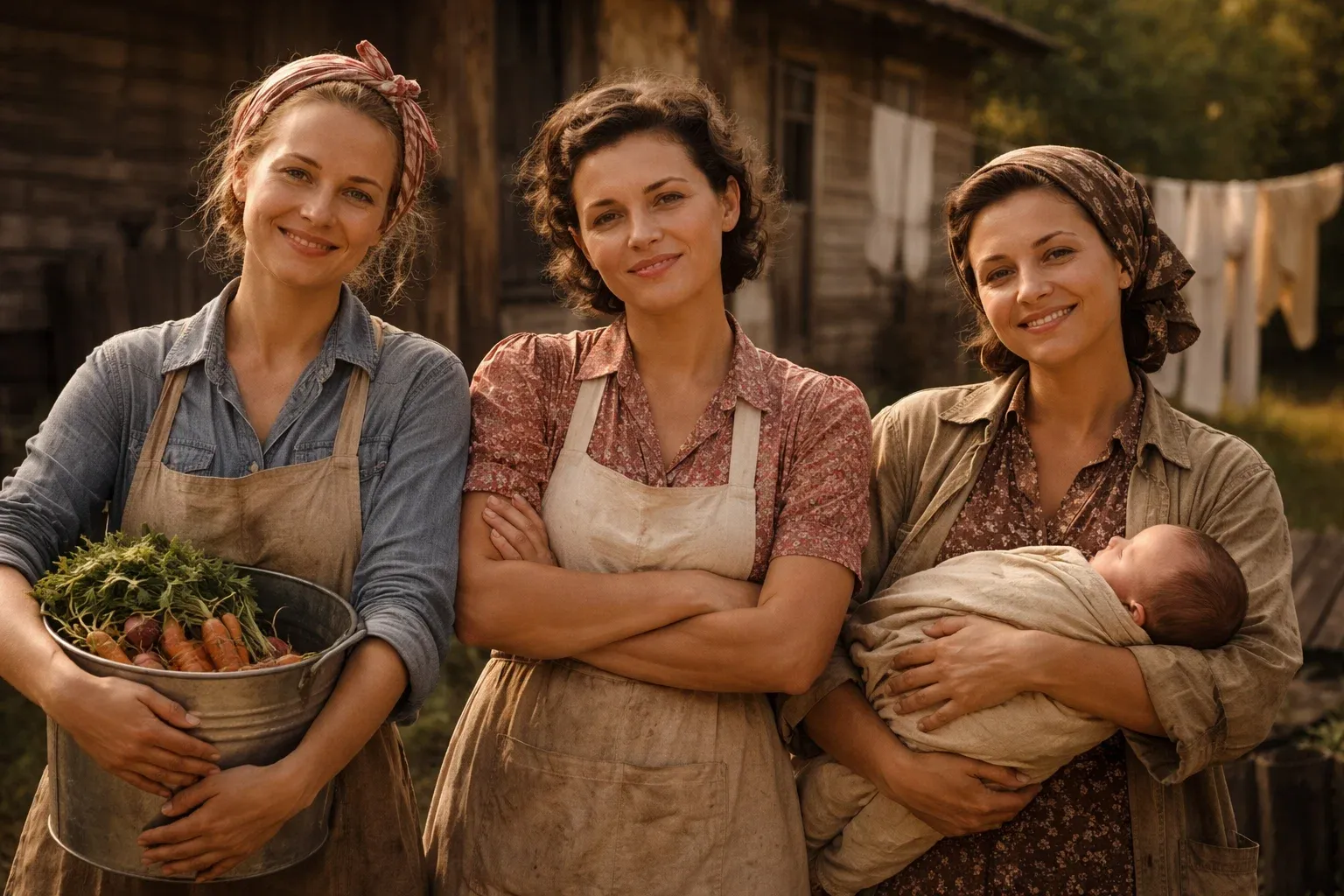
While the public narrative focused on the fallen “breadwinner,” women were engineering the family’s survival. They weren't waiting to be saved. They were doing the saving. My own grandmother, a farmer’s wife in Oklahoma, never called herself a survivor.
But she could stretch a single chicken into three meals, sew flour-sack dresses that looked store-bought, and barter eggs for penicillin. Her strength wasn’t documented in unemployment figures. It was woven into the fabric of our family. That’s the hidden strength we need to remember.
The "Make-Do" Mindset: Innovation Born of Scarcity
Thriving didn’t mean getting rich. It meant creating value from nothing. This was a masterclass in resourcefulness that puts our modern “life hacks” to shame.
- The Flour-Sack Economy: Companies started printing their flour and feed sacks with cheerful, colorful patterns. Why? Because women were already using the sturdy cotton sacks to make clothes, quilts, and curtains. The companies adapted to their ingenuity. A woman’s eye could look at an empty sack and see a child’s Sunday dress. This wasn’t poverty; it was creative production.
- The Kitchen Cabinet: The “Depression Kitchen” was a laboratory. Leftovers didn’t exist. A boiled potato became potato soup one day, fried potato cakes the next, and a thickening agent for stew the day after. Women exchanged recipes for “mock” foods: mock apple pie made from crackers, mock whipped cream from gelatin. They weren't just cooking; they were chemists of necessity.
- Home as a Production Hub: Canning, sewing, mending, soap-making, and gardening shifted from domestic chores to critical economic activities. A productive garden or a well-stocked pantry wasn't a hobby; it was a financial asset. Women managed these micro-economies, turning time and skill into tangible security.
The Invisible Workforce: Jobs No One Counted
When we hear “25% unemployment,” that only counted those seeking work in traditional industries. It didn’t count the women taking in boarders, doing laundry for single men, selling baked goods, or offering secretarial services from their front parlors.
They entered the formal workforce in stealth, often in roles deemed “acceptable” but underpaid: clerical work, teaching, nursing. These jobs were less likely to vanish completely. And in taking them, women kept countless families afloat. They became the silent, stabilizing force in a crumbling economy, providing a trickle of cash that meant the difference between eating and not.
The Emotional Scaffolding: Holding the Center
The hidden labor was emotional. While a man might grapple with the shame of lost status, a woman was often tasked with manufacturing normalcy.
She was the one insisting on routine, on clean clothes (however patched), on some semblance of a holiday meal. This wasn’t about keeping up appearances out of vanity. It was a psychological strategy.
By maintaining rituals—a story before bed, a song while washing dishes—she built a scaffold of stability for her family to cling to. She managed the fear, absorbed the anxiety, and projected a sense that the world, though shaken, had not fully come apart. This emotional management was a form of leadership, though it was never called that.
The Networks of Mutual Aid: The Original Social Safety Net
Before large-scale government programs, women built informal, hyper-local safety nets. They shared.
- They shared food: a pot of soup for a sick neighbor, a jar of preserves for a family who’d hit a worse patch.
- They shared skills: one woman would mend clothes for another who would watch her children in return.
- They shared information: where to find work, which landlord was forgiving on rent, which doctor would accept trade.
These networks operated on trust and reciprocity, not cash. They created a community-based resilience that was often more effective and dignified than waiting in a charity line. It was a triumph of collective action, organized quietly across backyard fences.
The Legacy of Pragmatic Optimism
The women of the Depression didn’t have the luxury of nihilism. Their strength wasn't a fierce, romantic grit. It was a pragmatic optimism—a focus on the next right thing, the next small step.
- “What can I control?” (The garden, the mending, the mood at dinner).
- “What do we have?” (Not what do we lack).
- “What can I make from it?”
This mindset allowed them to navigate relentless uncertainty without being paralyzed by it. They triumphed not by winning big, but by refusing to be completely defeated, day after day. They found agency in the sphere they still commanded: the home, the community, the family’s spirit.
In remembering their hidden strength, we don’t romanticize hardship. We honor a specific kind of genius—the genius of adaptability, of creating abundance from scarcity, and of holding a future together with nothing but grit, grace, and a few colorful flour sacks. That’s a triumphant legacy that has everything to do with how we face our own uncertain times.
FAQs
Q: Weren't women also deeply suffering during the Depression? Weren't they hungry and desperate too?
A: Absolutely. To say they "thrived" is not to say they lived in comfort or without immense pain. They suffered hunger, fear, and loss just as men did, often while carrying the added burden of caretaking. The point is that within that suffering, they exercised agency and creativity that has been historically overlooked. Their story is one of resilience within the crisis, not immunity to it.
Q: Did the Depression actually improve women's status in society?
A: In the short term, it created contradictions. Women were often praised for their sacrifice and resourcefulness in the home, but criticized for "taking men's jobs" if they worked outside it. Long-term, it demonstrated women's capability as earners and managers in a way that couldn't be unseen, subtly paving the way for the broader shifts in gender roles that came later, during and after WWII.
Q: What about women who were alone—widows, single mothers, unmarried women?
A: They faced the steepest climb, with no fallback of a second income. Their survival often depended entirely on those informal networks and their own wits. Many turned their homes into boarding houses or took in piecework. Their stories are the sharpest examples of the "hidden workforce" and the extreme end of the "make-do" mindset.
Q: How is this relevant to people today?
A: The relevance isn't in expecting similar hardship, but in learning from the mindset. Their skills—resource management, emotional resilience, building community networks, finding creativity in constraints—are timeless tools for navigating any personal or economic uncertainty. It's a lesson in focusing on agency over circumstance.
Q: Were there differences in how this played out for women of color?
A: Profoundly. For Black, Hispanic, and Native American women, the Depression was layered on top of systemic racism and discrimination. They often worked in the most precarious, lowest-paid domestic and agricultural jobs. Their networks of mutual aid were even more critical, as they were frequently excluded from both formal employment and government relief programs. Their story is one of surviving multiple, intersecting crises.
Q: What's one tangible skill from that era that's been lost?
A: The deep knowledge of food preservation and transformation. Not just following a canning recipe, but the intuitive understanding of how to use every part of an ingredient and how to preserve food safely without modern appliances. It was a daily, essential science that turned seasonal abundance into year-round security.