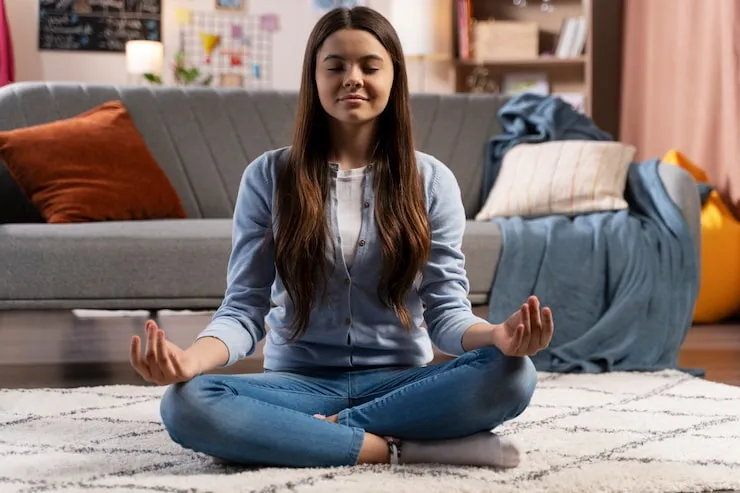
I still remember the evening I pack on my bed, physically, tired, but mentally, restless, and on my phone while my thoughts refused to slowdown. Work deadlines, unfinished conversation, future worries, and random memories all crowded by mine at once. I had heard people speak calmly about meditation before, but it always sounded distant and difficult.
That night out of pure frustration, I search for meditation for beginners that how to start daily practice and wondered if something so simple could actually quiet the noise inside my head and help me feel at peace again.
Later as I read more about meditation for beginners that how to start daily practice, I realise meditation was not about becoming a different person. It was about learning to sit quietly with myself for a few minutes each day without distraction.
The first awkward attempt
The next morning, I decided to try. I sat cross leg on the floor closed my eyes and waited for calmness to arrive. Instead, my mind become louder. I thought about emails, breakfast for my message, old songs and random memories. After two minutes, I opened my eyes and I felt like I failed at something that looks so easy. That is when I understood an important truth.
Starting with just two minutes
Later on when I change my approach than Instead of trying for long session, I set a timer for just two minutes. Two minute felt small and manageable. I sat quietly focus on my breath and whenever my mind wandered, I gently brought my attention back. Those two minute did not feel magical, but they feel peaceful in a subtle way.
You may also :- Mental Health Benefits of Regular Physical Activity
Discovering the power of breath
I learnt that breathing is the simplest for the meditation. Slow inhale. Slow exhale. When I paid attention to my breath, my thoughts had less space to take over it. It felt like giving my mind something soft to hold onto.
Choosing the right time
At first when I tried meditating at night than I often felt sleepy or distracted. Then I shifted to mornings . Sitting quietly before checking my phone changed the tone of my entire day. I felt calm while dealing with daily task and conversations.
Creating a small meditation corner
I did not need a fancy set. Just a mat near the window. That is small corner. Slowly become my quiet a space. Surprisingly I sitting in the same place every day made it easier to slip into meditation mode.
Understanding that thoughts, never stop
One of the biggest lesson I learnt was that thoughts never completely disappear. Earlier, I believe meditation meant having a blank mind. Later, I realise it meant having a gentle mind. Thoughts come and went, but I stop reacting to them.
The first sign of change
After about a week, I noticed something outside meditation. I reacted less to small problem. I did not get irritated easily. I pause before responding. That is when I realise meditation was affecting my behaviour without me noticing.
Better sleep without trying
A few days later, my sleep improve. I fell asleep faster and woke up feeling lighter. My mind was not racing at night anymore. I felt relax without forcing it.
Handling a stress in a new way
Work stress did not appear, but my response change. I felt less overwhelmed and more focus. Meditation did not remove problems. It changed how I experienced to them.
Missing a day and feeling the difference
One day, I skip meditation because I was in Hurry. That they felt unusually, chaotic and mentally heavy. That is when I am understood the value of the consistency.
Making meditation is a daily habit
I meditation to brushing my teeth. Something I do every day without thinking. This made it automatic. No motivation needed. Just routine.
Letting go of perfect
Sunday felt peaceful. Some days feel restless. I stop judging whether my meditation was good or bad. Showing up matter more than doing it perfectly.
Adding soft sound sometimes
I sometimes play nature sound in the background. It helped me relax, faster and stressful days. But most days silence was enough.
Meditation during travel
Even while travelling, I found five minutes in hotel rooms or quiet corners. It helped me stay grounded in unfamiliar places.
Emotional changes, I did not expect
I notice I smile more. I feel like emotionally. Small issues stop bothering me deeply. Meditation created a space between me and my reaction.
The relationship with myself improve
This was the most unexpected part. Sitting quietly every day, help me understand my own thought and emotions better so after this I became more patient with myself.
Learning to sit with discomfort
Some sessions brought up uncomfortable thoughts. Earlier, I would distract myself. Now, I simply observe them without panic. That acceptance felt powerful.
How meditation improve my focus
I could work longer without feeling mentally exhausted. My attention is an improve naturally.
Why starting it small matters?
If I had started with 20 minutes, I would have quit. Starting a small mate at sustainable. Turning it into a ritual. A glass of water. My Mac. Two minutes of silence. This simple ritual become a peaceful start to my day.
Conclusion
Looking back , I realise how simple meditation for beginners that how to start daily practice truly is. It does not require perfection, long hours or special skill. It only requires showing up for a few quiet minutes each day. Once I embrace meditation for beginners – how to start daily practice, I found calmness, better sleep, clear, focus, and gentle way to handle daily stress all form something that cost nothing but a little time and attention.
Frequently asked questions
How long should beginners meditate?
Start with 2 to 5 minutes. Increase slowly as it feels comfortable.
That what, if my mind keeps wandering?
That is normal. Generally, bring your attention back to your breath.
Is the morning best time to meditate?
Morning works well, but any quiet time is fine.
Do I need music or an app?
No. Silence and breathing enough.
How soon will I see results?
Many people notice a small changes within a week of consistent practice.