North of Reno and sitting at the fringe of the Black Rock Desert, Fly Geyser is actually man-made - and the result of a fortunate mistake at that. For decades, this particular parcel of land (which the Burning Man Project has since acquired) has been the site of a geothermal spring that an oil company unleashed back in 1964 by drilling too close, resulting in this continuously boiling geyser that's been accumulating cone-shaped carbonate formations of green, red and yellow for years.
The Petrifying Well, Knaresborough, North Yorkshire, England, UK
The Petrifying Well doesn't really feel like its name implies - unless it's a bit too threatening that you will become a rock thanks to all the minerals in the water. Ever since the 1600s, so many visitors have been attracted to this site with the aim of looking at objects including teddies in various states of being 'petrified' thanks to all this water. It supposedly takes around three months for one of the stuffed animals to be fully fossilized, and they can be purchased in the site's gift shop! The cave is part of the same woodlands park as Mother Shipton's Cave, where infamous witch Ursula Southhell was allegedly born.
Mystery Castle, Phoenix, Arizona, USA
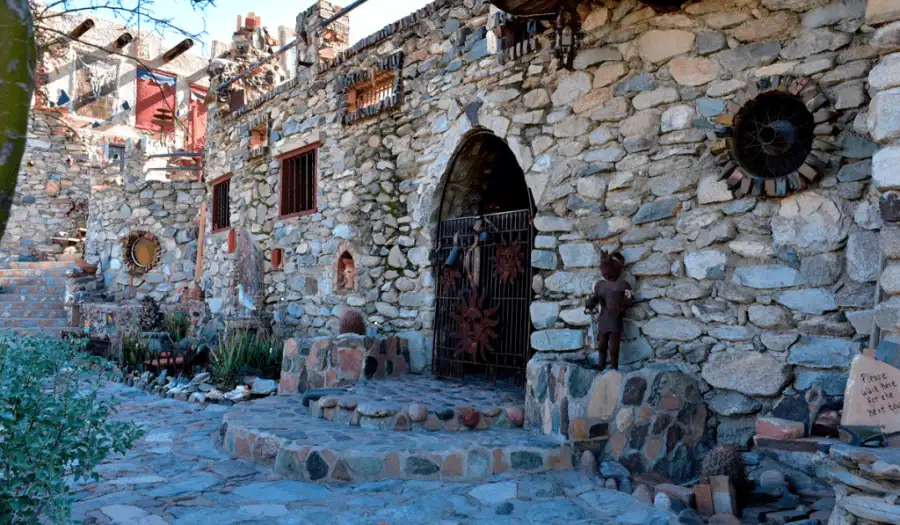
Much like nature has its share of curiosities, the human race has produced its own crop of unexpected marvels. Boyce Luther Gulley constructed the eccentricively-pieced together Mystery Castle piece by stone, after he was diagnosed with terminal TB and subsequently decided that he wanted to fulfill his young daughter’s dream of living in a castle. Gulley, unfortunately, passed away before he could summon his family from their Seattle home in Washington, however Mary Lou continued to live in the Mystery Castle up until her passing in 2010.
Lake Hillier, Middle Island, Western Australia
If anyone was still questioning nature's genius, we direct you to this milky pink lake. A pink lake. Located on Middle Island, one of several islands comprising the Recherche Archipelago off the coast of Western Australia, Lake Hillier first appeared in 1802, and researchers think that its vibrant pink color results from high salinity levels and the activity of the salt-loving organism Dunaliella salina (an algae). But the exact cause is yet to be definitively confirmed…
Badab-e Surt, Orost, Iran
Sure, there are many stunning artificial pools dotted throughout the globe, but it's highly unlikely even the most innovative designers could conceive anything so striking. This natural wonderland, formed over thousands of years and still growing, showcases deposits of calcium and heat caused by thermal water to form what's called travertine. The iron oxides from the water give this spot a striking rusty tint.
Aoshima, Japan
Calling all canines: this island is not for you. If you happen to visit the Japanese archipelago you’re spoiled for choice with a number of locales where cats considerably out-number their human companions. Take, for example, Aoshima Island-a short ferry ride away from Japan’s eastern coast-that boasts no less than 100 locals (and thousands of furries).
People originally shipped cats to Aoshima to take down mice who feed on the worms that produce silk Descendants now run the show, have their own shrine and cat-shaped chalets available for hire.
Dimmuborgir, Iceland
Otherwise called The Black Fortress, the lava-fields not far from Lake Myvatn could house an opening to hell’s kingdom. They could also be the home of the Yule Lads; the 13 sons of a troll named Gryla, who exit during Christmas to sow mayhem everywhere. Whether you believe in a literal underworld, or in trolls or Yule Lads, you cannot argue that the strikingly attractive terrain of lava-formed mounds, caves and rocks filmed in Game of Thrones will draw you in and cast its charm over you.
Catemaco, Mexico
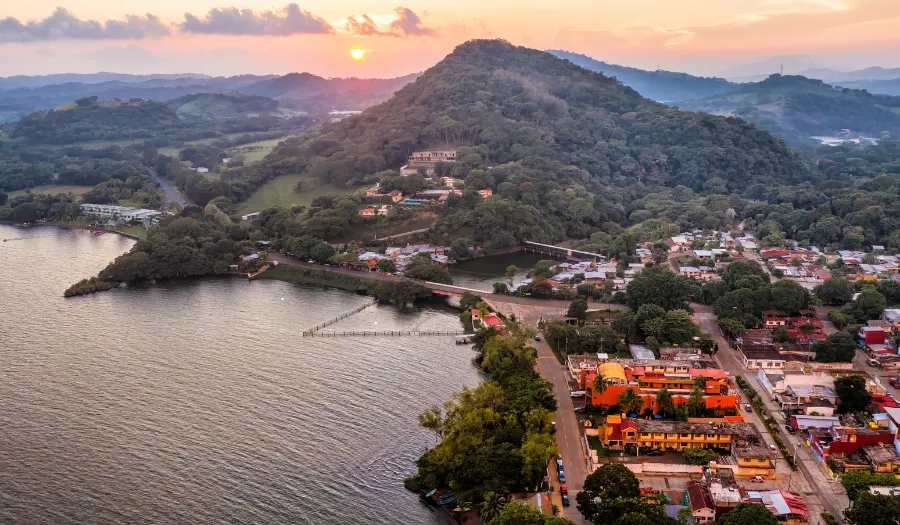
Lakeside town, fishing hub, land of the sorcerers…Catemaco, a town nestling around a lagoon in the Mexican province of Veracruz, enfolded by jungle clad mountains, really does pack a punch. It is entrancing on so many levels with travellers drawn to meet brujos (sorcerers), participate in spiritual healing and see ancient ceremonies. Suggestions indicate that African and Afro-Cubans settled here during the Spanish conquest, thus merging Catholicism, voodoo, Santeria ‘the Way of the Saints’ and Native American beliefs.
Old Enchanted Balete Tree, Siquijor, Philippines
With a staggering age of circa 400 years, this Old Enchanted Balete Tree located in the Philippines Siquijor Province is supposed to be the biggest and the most old one. The presence of magical legends and the habitat of mythical creatures among its branches is thus not surprising. You may take a rest near an old tree, but you could just as well enjoy the water coming out of the tree's roots into a concrete pond where you can swim with fish nibbling at your toes.
FAQ's
1. What makes Antarctica's "Blood Falls" bleed?
It looks like a gruesome crime scene against the white ice, but the cause is completely geological. A subterranean lake trapped under the Taylor Glacier contains highly concentrated saltwater packed with iron. When this water seeps through fissures and hits the air, the iron oxidizes instantly—essentially rusting and turning a vivid crimson color.
2. Is Mexico's Island of the Dolls actually haunted?
Located in the canals of Xochimilco, Isla de las Muñecas is covered in hundreds of decaying, severed toys hanging from trees. The island’s former caretaker, Don Julián Santana, began collecting them after finding a drowned girl and a floating doll in the canal. He hung the toys to appease her spirit. While skeptics call it a manifestation of isolation and superstition, locals insist the dolls whisper to each other at night.
3. How did the "Door to Hell" start burning?
The Darvaza Gas Crater in Turkmenistan is a massive, 230-foot-wide desert pit that has been burning for decades. In 1971, Soviet engineers accidentally collapsed a natural gas cavern while drilling. To prevent toxic methane from spreading to nearby villages, they set it on fire, expecting it to burn out in a few weeks. It has been continuously ablaze ever since.
4. Can you survive a visit to Brazil's Snake Island?
Ilha da Queimada Grande, located off the coast of São Paulo, is completely off-limits to humans, and for good reason. It is the exclusive home of the golden lancehead viper, one of the most venomous snakes on Earth. Estimates suggest there is roughly one lethal snake for every square meter of land, making it a death trap. Only the Brazilian Navy and authorized researchers are permitted to step foot on the island.
5. Why do rocks move on their own in Death Valley?
For decades, the "sailing stones" of Racetrack Playa left long, winding tracks in the desert mud without any human or animal intervention. The mystery was solved in 2014 using GPS trackers and time-lapse photography. During rare winter nights, a thin sheet of ice forms on the lakebed. When the sun breaks the ice into floating panels the next morning, light winds push the ice sheets, dragging the heavy stones across the slick, muddy surface underneath.