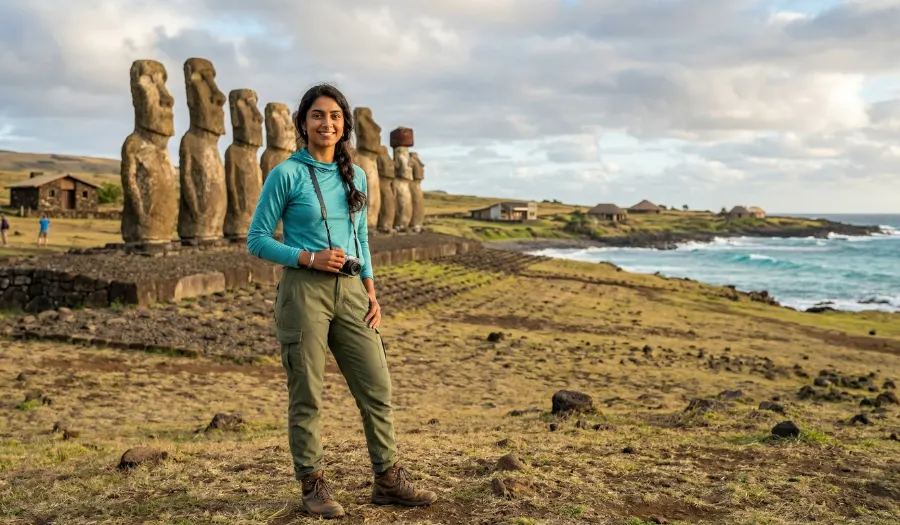
The South Pacific contains a distant volcanic island which features numerous moai stone heads that reach heights exceeding nine meters. The heads date back more than 1,000 years. The island's Indigenous oral traditions are maintained by its Indigenous people who participate in ongoing debates with anthropologists and historians about the reasons and methods used to create the heads and the reasons for their construction halt. Easter Island contains other mysteries beyond the head sculptures. The island holds many secrets which we will explore now.
Easter Island was shaped by a volcano
The southwestern part of the island developed through volcanic activity from Rano Kau, which existed as one of three volcanic mountains on the island. Rano Raraku served as the primary source of stone for constructing moai, which the image shows as a volcanic crater. "If it weren't for volcanic eruptions yielding basalt, obsidian, tuff and other stones, the magical moai would not exist," CNN Travel reported in 2019.
The island is the most remote inhabited location on the planet
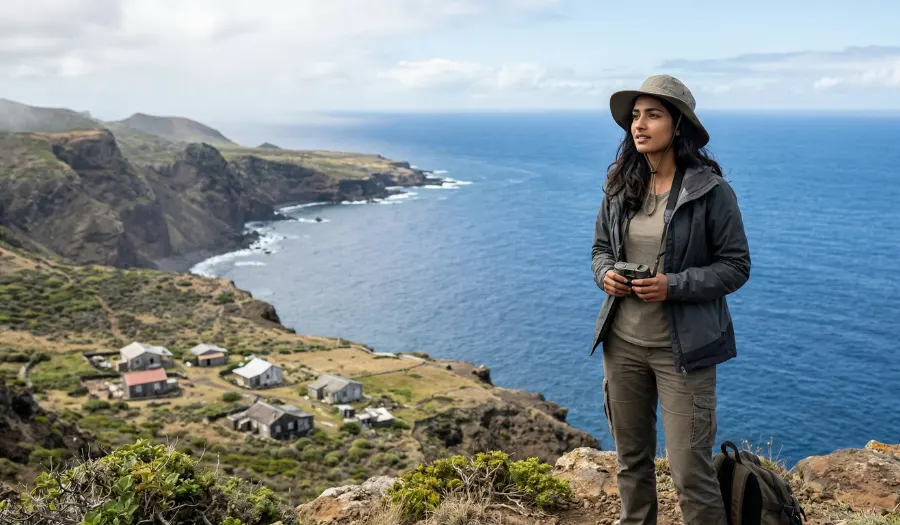
The Encyclopedia Britannica states that Easter Island probably represents the most distant inhabited place on our planet. The encyclopedia states that Easter Island which is administered by the Chilean government stands as the most remote location on Earth because it exists 2088 kilometers from Pitcairn Island and 3767 kilometers from Santiago Chile. The island has become more reachable to the outside world because airlines established regular flight services during the past thirty years.
The island was uninhabited for most of history
Easter Island remained empty of human habitation throughout most of its historical timeline. The History Channel states that the first human settlers arrived on Easter Island from the Marquesas Islands which are located in modern-day French Polynesia around the year 700 CE. They would have sailed more than 3,600 kilometres (2,200 miles) before coming ashore on one of the island’s few sandy beaches. Despite the Polynesians' strong navigational abilities, we still lack knowledge about how the first Polynesian settlers reached the island and whether they possessed prior knowledge about its existence.
The statues were most likely built for ancestor worship:
The world recognizes Easter Island for its massive stone statues which are called moai and show stylized human heads. According to Encyclopedia Britannica, the oldest statues on the island were constructed between 700 and 850 CE; the newest were built in the early 18th century, around the time the first European explorers arrived. The Metropolitan Museum of Art states that the moai statues represent ancestral chiefs who were believed to be direct descendants of gods and whose supernatural powers could be used to help humanity.
The making of the “moai”
The statues walked across the island according to island legends or priests who had learned telekinesis used their powers to take the statues to their designated sites. The Metropolitan Museum of Art provides an explanation that is more down-to-earth but just as enthralling: as many as 15 carvers would cut a block of rock out of the quarry at Rano Raraku and begin carving its head and face using picks made from basalt. The workers moved the statue down the quarry slope by using a rope and lever system which they used to complete the carving work. The sculpture “was then moved to its final destination using a wooden sled or rollers. The modern technique re-creations demonstrate that about 40 workers were required to transport a moai of standard size. The island has experienced deforestation because the logs are needed to transport the moai.
Thirteen-ton hats
The moai received their final touch when carvers arrived at their designated locations. According to Encyclopedia Britannica, the moai were given “inlaid eyes of white coral with a dark stone disk for the pupil” and some received a heavy red stone topknot, called a pukao, sculpted from stone that was sourced from another quarry. The pukao could weigh 13 tons, and researchers are investigating how the islanders lifted them on top of the statues; according to NPR, one theory holds that they were rolled up specially constructed ramps.
The largest “moai” is as tall as four giraffes
Some moai statues reached heights of three to six meters but certain statues reached greater heights than that. According to Encyclopedia Britannica the largest moai which remains standing today reaches a height of 11.3 meters while the largest unfinished moai stands at 20.7 meters tall. The average adult male giraffe reaches a height of approximately 5.5 meters which equals 18 feet. The largest statue required one solid block for its creation that weighed 74,500 kilograms while the pukao decoration which stood on its head weighed 10,000 kg. A Honda Civic has a weight that equals 1,290 kg or 2,850 pounds.