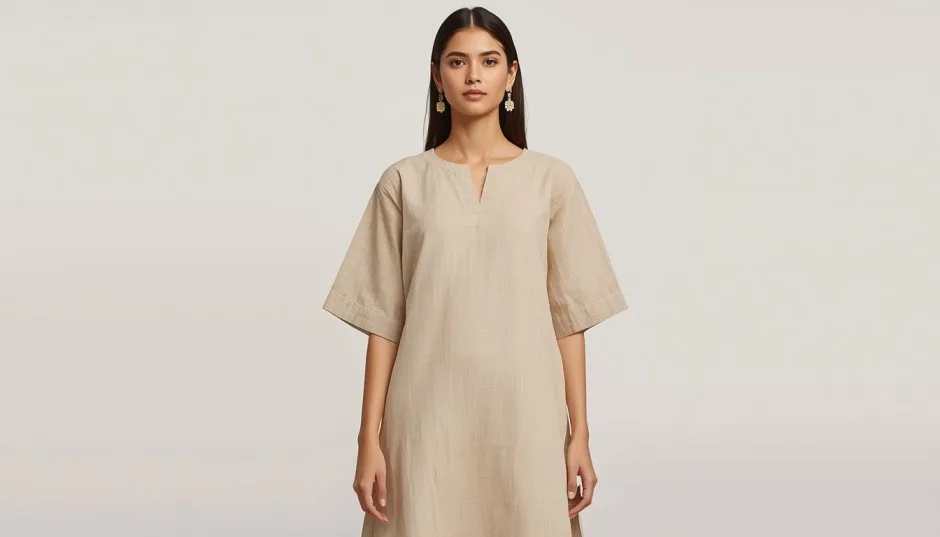
I bought my first kurta cotton khadi dress for women last year from a small handloom store in Delhi. The moment I wore it, something clicked. The fabric felt different. Not scratchy like I expected. Soft. Breezy. Almost alive. That is the thing about khadi. It breathes with you.
Now in 2026, khadi is having a real moment. Not the "Gandhi cap" kind of moment. The fashion kind. I have seen pure cotton khadi dress for women pop up everywhere—from college campuses to office corridors to Sunday brunch spots.
The cotton khadi dress for women price has also become more reasonable. Good quality pieces start around 1,200. Premium handspun ones go up to 5,000. This guide shares 10 ways I have styled my khadi pieces. Some worked. Some failed. I tell you both. Let us get into it.
Know What You Are Actually Buying?
Before styling, you need to understand khadi. Not all "khadi" is real khadi.
Read Also: Streetwear and Athleisure Trends: Why Global Sales Are Surging?
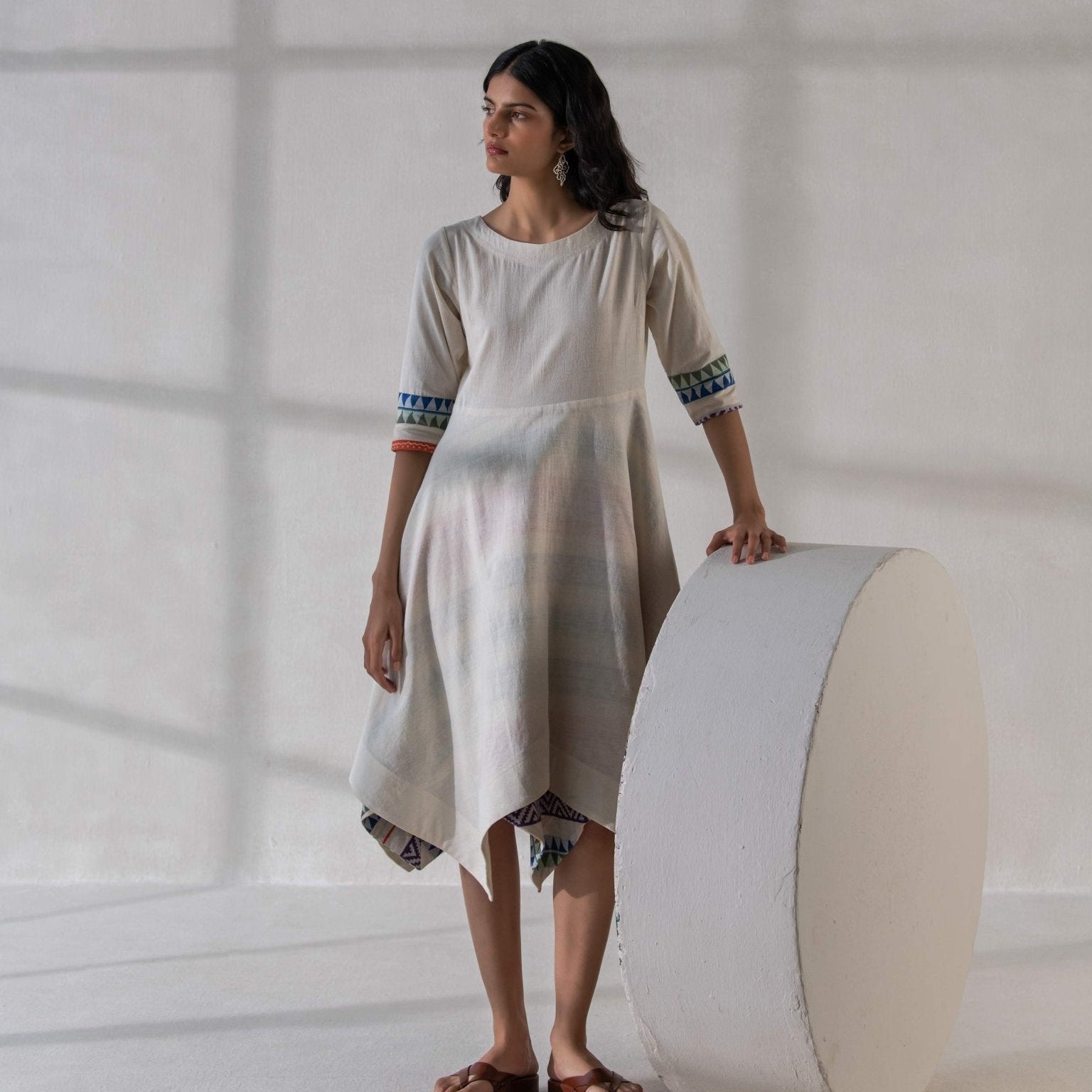
Real khadi is handspun on a charkha and handwoven on a handloom . Mill-made cotton looks smooth and uniform. Khadi has small irregularities called "slubs." Those tiny bumps are not defects. They are proof that a human made your dress.
Why this matters for styling: Because khadi breathes, you can layer it without sweating. Because it has texture, plain accessories look intentional. Use this knowledge when you shop.
Quick authentication check: Look for uneven yarn thickness. Feel for a matte, slightly coarse finish. Check the selvedge (the fabric edge). Handloom selvedges are slightly uneven. Machine-made edges are perfectly straight with tiny perforations .
1. The Everyday College Look (Jeans + Kurta)
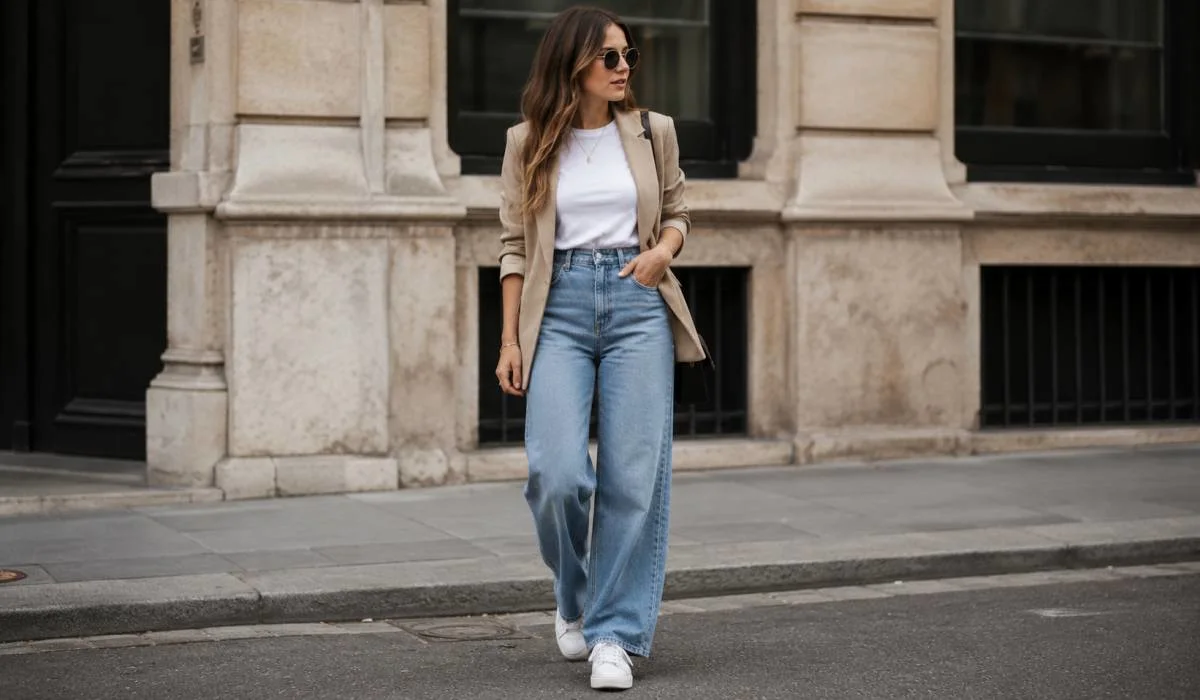
This is my lazy Sunday uniform. A short kurta cotton khadi dress for women paired with blue mom jeans.
The exact formula: Pick a khadi kurta that ends near your hips. Not longer. Slim or boyfriend jeans work best—loose jeans with a structured kurta look sloppy. Add white sneakers or Kolhapuri chappals.
What I learned: Do not wear a dupatta. Just do not. It gets stuck in bag straps. It flies off in the wind. For college, skip it entirely.
Best for: Daily wear, long college days, casual coffee runs.
Avoid for: Formal meetings or rainy days (khadi takes time to dry).
2. Office Ready: Straight Kurta with Trousers
I wore this to a client meeting last month. Got three compliments. One person asked if my outfit was "imported." I laughed and said it is from a weaver in Bengal.
The look: A straight-cut khadi kurta in a neutral color—beige, olive, or navy. Pair with white or beige linen trousers . Add a thin leather belt around your waist to give shape. The loose khadi fabric needs that definition.
Shoes: Closed-toe juttis or block heels. Sneakers look too casual here.
Pro tip: Cuff your sleeves once or twice.
Cotton khadi dress for women price for office wear: Expect 2,000-3,500 for good quality. Check the GSM (grams per square meter). 120-150 GSM works for office. Below 100 GSM is too sheer.
3. The Co-ord Set Shortcut (Zero Styling Effort)
Gen Z figured this out. Matching khadi co-ord sets are trending hard in 2026.
What to buy: A khadi shirt and matching palazzo or culotte set. The fabric does the work. You just put it on.
Why this works for khadi specifically: Khadi has a natural matte finish. When you wear matching top and bottom, the uniform texture creates a "made for you" look. You do not need jewelry. You do not need a dupatta.
What to avoid: Do not buy co-ord sets with heavy embroidery. Khadi's beauty is in its simplicity. Let the handspun texture speak.
4. The "Hero Element" Rule for Festive Days
Festivals need a little drama. But khadi is subtle by nature. Here is the trick I use.
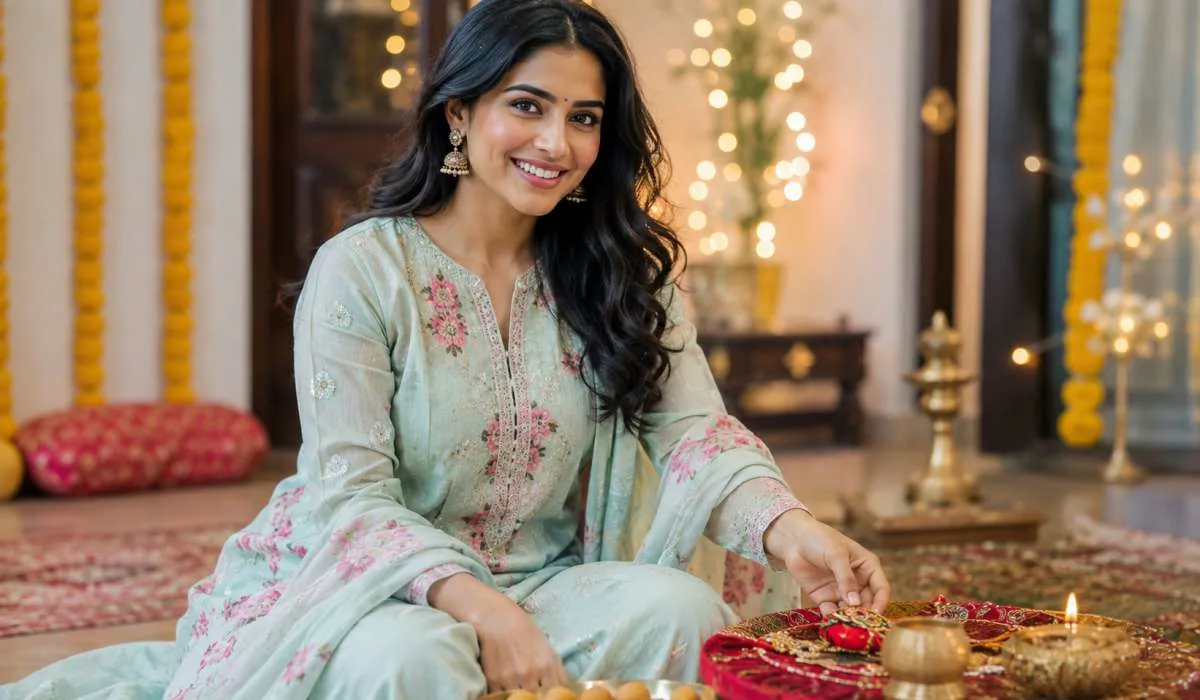
Pick ONE hero element. The outfit itself is the hero if it has a bold print or natural indigo dye. Or wear simple khadi and let your earrings be the hero.
Natural indigo on khadi looks spectacular. The dye absorbs differently into handspun yarn. It creates depth that machine-made indigo cannot copy.
What actually works: A plain white or rust khadi kurta with statement silver jhumkas. That is it. Nothing else. The contrast between simple fabric and bold jewelry looks intentional. And rich.
What fails: Heavy necklaces + heavy earrings + embroidered dupatta on khadi. The fabric gets overwhelmed. You look like a decoration shop exploded.
5. Layering for Spring 2026 (Khadi Waistcoat Moment)
Spring in India is tricky. Morning feels cold. Afternoon feels like summer. Layering solves this.
The best layering piece for khadi: A khadi waistcoat or a short denim jacket.
How to wear it: Put on your regular khadi kurta. Add a fitted khadi waistcoat on top. The two textures—one as the base, one as the layer—create depth without bulk.
For cooler evenings: Throw a light wool stole over one shoulder. Keep the other shoulder bare. That asymmetry looks modern.
What I learned the hard way: Do not layer synthetic fabrics over khadi. Polyester creates static. The khadi clings to it weirdly. Stick to cotton, linen, or wool layers only.
6. The Sneaker Revolution (Young and Cool)
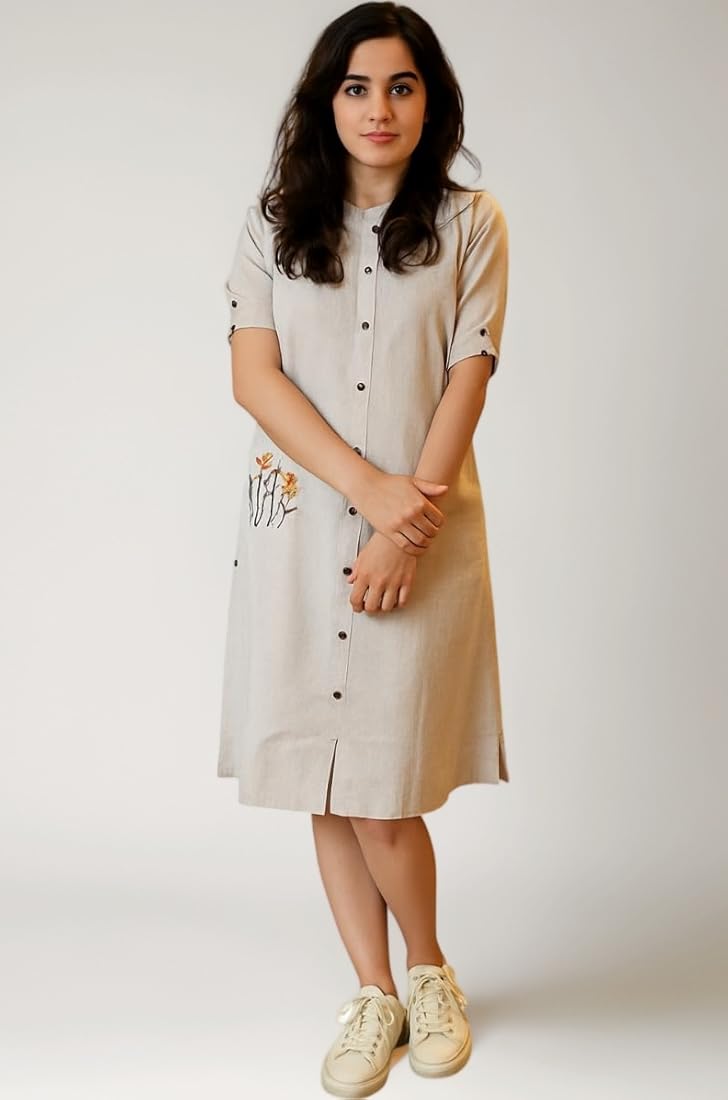
This one surprised me. Khadi kurtas with chunky sneakers look incredible.
You Must Also Like: 2026 Women's Fashion Trends: The Ultimate Style Guide
The equation: A mid-calf length khadi kurta (A-line or straight cut) + white calfskin shoes + a crossbody pack. No gems but a watch.
Why this works in 2026: Conventional mold has ended up casual. The line between "ethnic" and "regular" is gone. Tennis shoes flag that you are youthful and you do not take yourself as well genuinely.
Where to wear: Sunday brunch. Museum visits. Travel days at the airport.
Warning: This only works with crisp, well-ironed khadi. Wrinkled khadi + sneakers looks like pajamas. Iron properly or steam the fabric .
7. Belted Khadi (Instant Shape)
Khadi dresses can look boxy. That is the nature of handwoven fabric. But a belt fixes everything.
How to do it: Take your lose khadi kurta or dress. Add a thin leather belt at your natural waist. Pull it snug but not tight. The fabric will blouse slightly above and below the belt.
The effect: You go from "wearing a sack" to "intentional oversized silhouette." Instagram-worthy difference.
Belt choice matters: Oxidized silver belt for casual days. Tan leather belt for office. Avoid thick corset belts—khadi is too delicate for that tension.
Best khadi styles for belting: A-line kurtas, long khadi dresses, and oversized shirts. Avoid belting straight-cut kurtas that end at the hip. The proportion looks wrong.
8. The High-Low Hem Trend
Asymmetrical hemlines arrived in 2025 and stayed for 2026. Khadi takes this trend beautifully.
What to look for: A kurta cotton khadi dress for women with a high-low hem. Shorter in the front (above the knee). Longer in the back (mid-calf).
Why khadi works: Heavy fabrics feel clunky with asymmetrical cuts. Flimsy fabrics look cheap. Khadi is in the sweet spot—structured enough to hold the shape, light enough to move when you walk.
How to style: Wear with leggings or skinny jeans underneath. The shorter front shows your bottom half. Keep that bottom half simple so the hem gets attention.
Where to buy: Smaller handloom brands on Instagram. Big retailers are slow to adopt asymmetrical cuts for khadi. The independent designers are doing interesting work here.
9. Silk Khadi for Evening Events
Here is a secret most people do not know. Khadi also comes in silk. Silk cotton khadi dress for women blends the breathability of khadi with the sheen of silk.
What silk khadi feels like: Smoother than pure cotton khadi. Still has those handspun irregularities. But catches light beautifully.
When to wear: Evening events. Dinner parties. Festivals where cotton feels too casual but pure silk feels too heavy.
Estimating reality: Silk khadi costs more. A great cotton khadi dress for ladies cost is 1,500-3,000. Silk khadi begins at 4,000 and goes up to 8,000 depending on the silk quality.
Is it worth it? For one or two special occasion pieces, yes. For daily wear, stick to pure cotton khadi.
Care warning: Silk khadi needs gentle washing. Hand wash only. No wringing. Dry in shade.
10. The Monochrome Power Move
This is the advanced styling technique. Wear khadi in one color from head to toe.
How to execute: Khadi kurta + khadi palazzo + khadi dupatta. All in the exact same shade. Olive green works best. Followed by rust. Then charcoal grey.
Why this works: Khadi's matte texture creates visual interest even without color variation. A monochrome khadi outfit looks expensive and editorial.
Where to wear: Art gallery openings. Family photoshoots. Days when you want to look like you have your life together.
The risk: If the shades do not match perfectly, it looks like a mistake. Always buy the full set from the same brand. Do not mix different dye lots. Khadi takes dye unevenly by nature. Two "black" pieces from two sellers will look different.
Buying Guide: What to Look For?
Before you buy any pure cotton khadi dress for women, check these three things.
1. GSM (grams per square meter)
-
90-115 GSM: Lightweight. Good for shirts and summer dresses. Can be slightly sheer.
-
120-150 GSM: Everyday weight. Office-ready. Not see-through.
-
160-200 GSM: Heavy. Good for jackets and structured pieces.
2. Slubs (those tiny bumps)
Real khadi has them. If the fabric is perfectly smooth, it is mill-made cotton pretending to be khadi. Walk away.
3. Price reality check
-
Below 1,000: Likely not real khadi. Or very low GSM (sheer).
-
1,200-2,500: Good range for pure cotton khadi dresses from direct brands.
-
3,000+: Premium handspun. Often includes natural dyes. Worth it for special pieces.
Care Tips That Actually Matter
Khadi is durable. But it has quirks.
Washing: Hand wash in cold water. Use mild detergent. Do not scrub roughly. The handspun fibers are more delicate than mill cotton.
Drying: Never put khadi in a dryer. Dry in shade. Direct sunlight fades natural dyes unevenly.
Ironing: Iron while slightly damp. Use medium heat. Khadi wrinkles easily but also irons easily. A quick steam works wonders.
The Final Thoughts
Fashion is shifting. Fast fashion is losing its charm. People want clothes that last, that breathe, that have a story. Khadi delivers all three. The kurta cotton khadi dress for women you buy today will look better in 2027 after multiple washes.
The fabric softens. The colors mellow. It ages like denim. Not like fast fashion garbage. Also, wearing khadi supports real people. Spinners. Weavers. Dyeing artisans.
Your 2,000 dress kept someone employed for several days. That feels better than buying a 500 polyester kurta that pills after three washes.
Start with one piece. A straight-cut kurta in beige or rust. Style it with jeans first. Then with trousers. Then try the sneaker look. You will figure out what works for your body and your life.
Khadi is not restrictive. That is the whole point. The fabric moves with you. Your style should too.
Quick Reference Card:
| Style | Best For | Footwear | Difficulty |
|---|---|---|---|
| Jeans + Kurta | College, daily wear | Sneakers, Kolhapuris | Easy |
| Office kurta + trousers | Work, meetings | Juttis, block heels | Medium |
| Co-ord set | Festivals, family events | Juttis, flats | Very easy |
| Belted khadi | Any day you want shape | Anything works | Easy |
| With sneakers | Brunch, travel | White sneakers only | Easy |
| Silk khadi | Evening, dinner | Heels, dressy flats | Medium |
| Monochrome set | Art events, photoshoot | Coordinated footwear | Advanced |
| Layered with waistcoat | Spring weather | Boots, juttis | Medium |