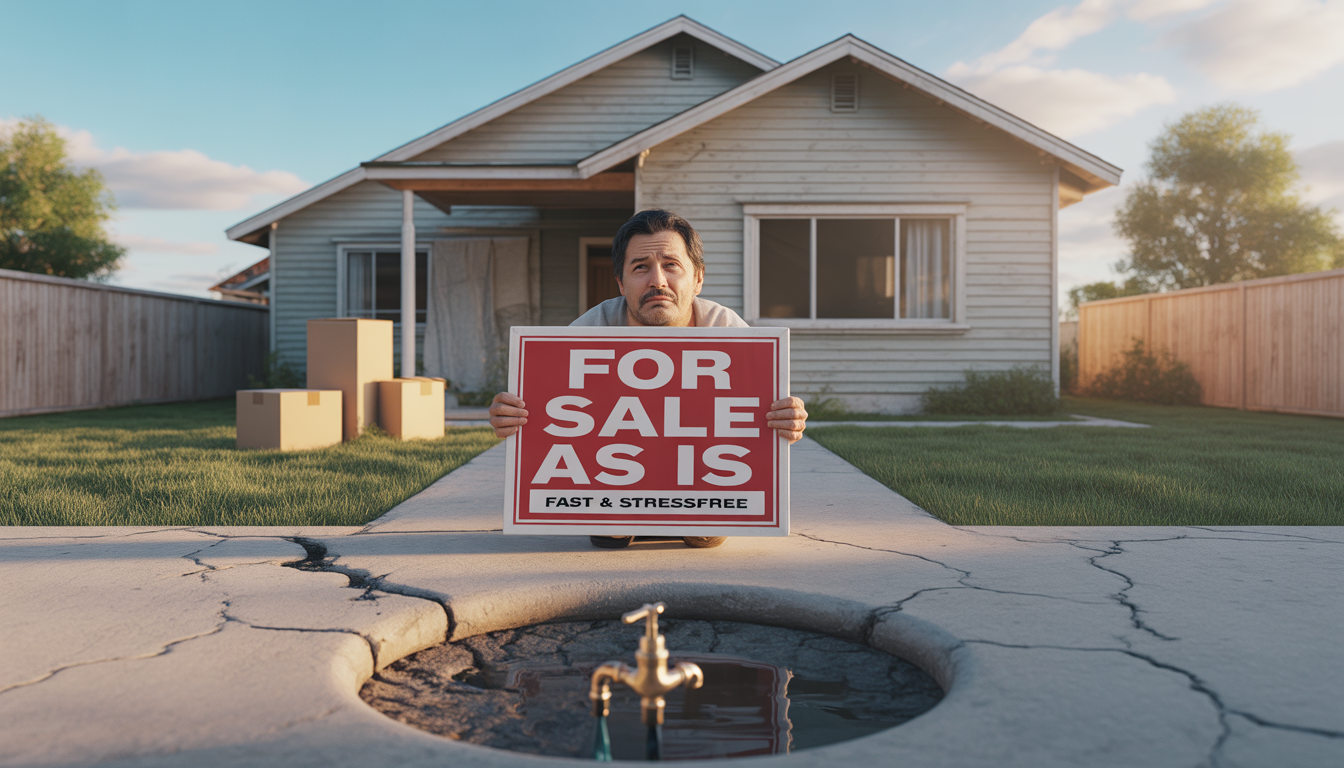
Picture this: You walk into your kitchen, and that leaky faucet mocks you. There’s peeling paint in the hallway. Maybe an odd smell in the basement. You want to move, but the idea of fixing all that? Overwhelming. Here’s the good news—selling a house as is means you skip those repairs, ditch the stress, and can be packing your boxes way sooner than you think. If you want to sell house as is, you’ve got more choices today than ever. Let’s make it simple: you don’t have to pour money into repairs you’ll never enjoy. Here’s how it works, what to expect, and the smartest ways to get it done fast.
What Does “Sell House As Is” Actually Mean?
Selling “as is” means you’re offering your home in its current condition. No promises to fix leaks, touch up paint, or swap that old carpet before closing. Buyers get what they see. You’re super upfront, which actually saves everyone time.
- You’re not hiding problems—buyers know what they’re getting.
- You set the expectation from day one: no repairs, no credits, no hassle.
- Typically, you’ll price the home to reflect the needed work.
It’s honest and direct, but yes, your price might be a bit lower than a shiny, move-in-ready home. If you care most about speed and simplicity, you’ll love this route.
Why Do People Sell Home Without Repairs?
Plenty of reasons. Maybe you inherited a house that needs TLC, or the place has gotten away from you while life happened. Some sellers need cash quickly, or they just don’t want the hassle of finding contractors and managing projects. Here are real situations:
- Inherited homes after a family loss
- Jobs moving you across the country—fast
- Landlords tired of fixing renter damage
- Budget is tight and repairs just aren’t possible
Bottom line? Life’s busy. If you need out quickly or have zero interest in paint samples and plumber appointments, sell house as is makes sense.
How To Sell Property As Is: Your Practical Step-by-Step
1. Decide How You Want to Sell
- Traditional agent: Some agents specialize in as-is properties. You’ll likely list for less, but they handle the heavy lifting. Ask if they have experience with this type of sale.
- Sell to an investor: There are companies and local investors who buy homes “as is.” You won’t be fixing anything. It’s usually the fastest route, but shop around for the best offer.
- For Sale By Owner: If you’re comfortable marketing on your own and can handle paperwork, this is the DIY path.
2. Be Honest About The House’s Condition
You’ll need to share any big issues you know about, like foundation trouble or a roof leak. Don’t try to hide things—a buyer’s inspection will spot most issues anyway.
3. Set The Right Price
- Look at what similar as-is homes sold for in your area
- Factor in big repairs buyers will need to make
- Be realistic—don’t expect top dollar if the place needs work, but don’t just take the first lowball offer
4. Make It Look Presentable
You don’t need a remodel. Seriously. But clearing out clutter, mowing the lawn, and opening windows for fresh air? That helps a lot. Aim for “not scary”—not Perfect Pinterest. A broom and air freshener go a long way.
5. Negotiate Clearly
If a buyer tries to sneak in repair requests after their inspection, remind them it’s an as-is sale. Stand your ground. If they walk, move on. Cash buyers and investors expect you won’t fix anything. Traditional buyers might ask for a price cut instead of repairs—be prepared for that.
Selling House Without Fixing: What Are The Pros And Cons?
- Pros:
- You get to skip the time, money, and headache of repairs
- Faster sale process—especially with investors or cash offers
- No last-minute surprises when a buyer’s inspection finds new problems
- Cons:
- You’ll probably get a lower offer than if you made major upgrades
- Some buyers (and some banks) won’t touch homes that need too much work
- You might have to wait for the right buyer if the repairs are big
Can You Really Sell House Quickly With No Repairs?
Absolutely. Investors love “fixer-uppers” for good reason—they’re ready to renovate and sell or rent out. Some companies can close in as little as 7-10 days if you accept their offer. Even with an agent, pricing aggressively brings in buyers fast. If there’s demand in your area, homes with “good bones” but not much curb appeal can move quickly.
True Story: Liz and the Leaky Roof
Liz didn’t even know how to start repairs, let alone pay for them. She called three investor companies, got written offers the same week, and picked the one that let her choose her move-out day. Zero repairs, no paintbrush, no stress. Sure, she got a little less cash—but the relief was worth it.
Common Mistakes When Selling House As Is
- Going silent about known problems (honesty is key)
- Overpricing—hoping someone will ignore repairs (they won’t)
- Saying yes to the very first low offer—always shop around, even if you’re in a hurry
- Thinking you don’t need any cleaning or prep at all (buyers still want safe and livable)
What Surprises Most Sellers?
- How many buyers actually prefer to buy “as is” because they want a project, a deal, or something they can make their own
- That even in rough shape, homes will sell—sometimes faster than you think
Quick Tips to Sell House As Is, Fast
- Tell the truth about the condition in your listing
- Get several offers (don’t jump at the first)
- Clean up, keep it safe, and secure the property
- Stick to “no repairs”—don’t get talked into them last-minute
Final Takeaway
Selling your home as-is isn’t waving a magic wand, but it’s hands-down the quickest, lowest-stress option for lots of sellers. Price it right, be honest, don’t waste time on repairs you’ll never see, and you’ll be moving on to your next place before you know it.
FAQs: Real Answers About Selling Your House As Is
- Can I sell my house as is if it’s in really bad shape?
Yes, you can. Even homes with big problems get sold all the time. You might have a smaller pool of buyers—usually investors or house flippers—but if the price is right, someone will bite. Be ready for lower offers, and make sure you explain what needs fixing up front. - How fast can I close if I sell property as is?
If you sell to an investor or cash buyer, you could close in as little as a week. With a traditional buyer using a mortgage, it usually takes 30-45 days. The less fixing needed, the faster you can move out. - Will banks lend money on a house that needs lots of repairs?
Sometimes, but not always. Most banks want homes to be in decent shape before handing out loans. If your place has big issues—like foundation or roof trouble—it can scare them away. That’s why many as-is sales go to cash buyers who don’t need bank approval. - Do I have to tell buyers about problems if I’m selling as is?
Yes, you do. Hiding things can backfire and even land you in legal trouble. Be open about anything major you know about. Most buyers will bring in an inspector anyway; honesty earns trust and makes the process smoother. - Can I get a good price selling house without fixing?
You might not get top dollar, but you can get a fair price if you price right and shop for multiple offers. Sometimes, avoiding months of repairs and costs is worth more than squeezing every last dollar out of the sale. - What proof do buyers usually want before buying as is?
Most will want a quick inspection to check for big, expensive problems. Some might ask for photos. Be ready to show what the house looks like so there’s no surprises later. The more honest you are, the less likely a deal will fall apart at the last minute.