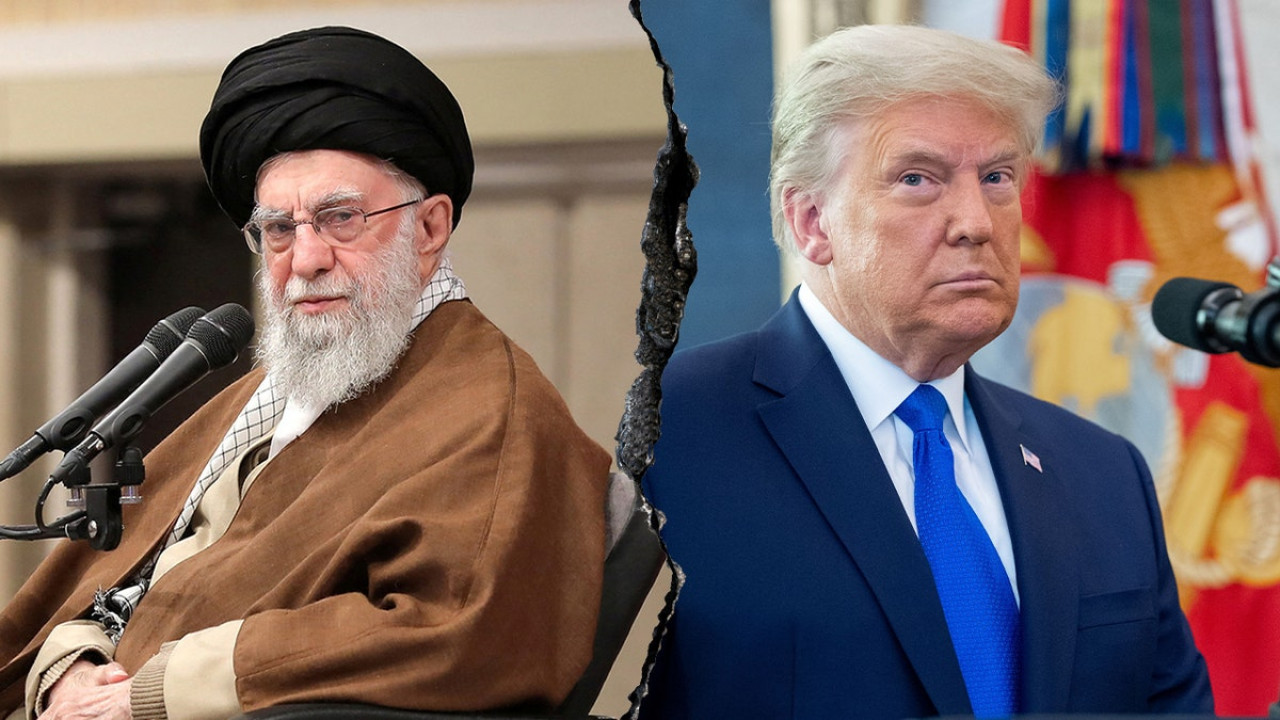
World News:Amid escalating tensions between the U.S. and Iran, former President Donald Trump has made a startling claim that he prevented a planned assassination attempt on Iran’s Supreme Leader Ayatollah Khamenei. Trump stated that during his administration, he called off a military strike that could have resulted in Khamenei’s "horrific death," aiming to avoid widespread chaos and civilian casualties in the region. His revelation has sparked intense debate and skepticism among experts and politicians, raising questions about U.S. decision-making and the broader implications for Middle East diplomacy.
Unexpected Twist in Tense Relations
In a surprising revelation, Trump claimed he halted a planned military strike that would have killed Khamenei in retaliation for Iranian aggression. The former president said the decision was made to prevent regional chaos and massive civilian casualties. Speaking at a campaign rally, Trump framed it as an act of restraint and strategy, not weakness. He claimed the Pentagon had green-lit the operation, but he pulled back at the last minute. The remark has sparked global curiosity and domestic debate about its accuracy and timing.
Iran Dismisses Trump’s Claims
Tehran has swiftly responded, dismissing Trump’s comments as baseless and politically motivated. Iranian officials accused Trump of fabricating events to boost his election campaign. State media labeled his statement as “psychological warfare” and “delusional bravado.” They also warned that any such strike, had it occurred, would’ve led to catastrophic retaliation. Iran continues to portray itself as a resilient power unfazed by American rhetoric. However, experts believe such claims further strain already fragile diplomatic channels.
Election Strategy or Truth Bomb?
Analysts suggest Trump’s dramatic claim may be part of a larger political strategy as he eyes re-election. By portraying himself as a leader who controlled chaos, he may be appealing to voters who prefer strength mixed with caution. The timing of the statement—amid renewed Middle East instability—adds to speculation. Political commentators argue it could reshape foreign policy discussions in the U.S. campaign. Others warn it risks damaging America’s diplomatic credibility on sensitive global matters.
Military Officials Stay Silent
So far, the Pentagon and U.S. intelligence agencies have neither confirmed nor denied Trump’s account. The absence of official comment has fueled both skepticism and intrigue. Retired defense officials have cautiously noted that operational decisions of such magnitude would be documented, if true. Some insiders believe the plan may have existed in preliminary stages, but was never formalized. The ambiguity leaves room for both political spin and genuine concern about what might have been.
Regional Stability at Risk Again
This revelation comes amid a fresh wave of tensions in the Gulf region, involving Israel, Hezbollah, and Iranian proxies. Trump's statement could reignite anti-American sentiments and provoke hardliner responses in Tehran. Diplomatic backchannels are already strained over nuclear negotiations and sanctions. Any destabilizing rhetoric now risks triggering chain reactions. International observers warn that even political posturing can have real-world consequences. The situation requires careful handling to avoid escalation.
Global Leaders React Cautiously
Global powers, including the EU, Russia, and China, have responded with caution. Some expressed concern over the potential implications of Trump’s claim for future U.S. foreign policy. Others questioned the logic of revealing such sensitive information publicly. Diplomats worry that this could derail efforts to bring Iran back to the negotiating table. Washington’s allies are urging restraint and discretion in public messaging. The world watches closely as tensions simmer once again.