

In Operation Sindoor, US military specialist John Spencer hails India's defense reform and self-reliance, demonstrating indigenous weapons systems' efficacy against Chinese platforms. The quick, multidomain military effort Operation Sindoor eliminated cross-border terror networks and validated India's defense modernization, a senior American defense analyst said Thursday.
John Spencer, a leading urban warfare expert, wrote in 'India's Operation Sindoor: A Battlefield Verdict on Chinese Weapons — And India's Victory' that Operation Sindoor was a military campaign, technology demonstration, market signal, and strategic blueprint. "India showed the world what self-reliance in modern warfare looks like — and proved that 'Atmanirbhar Bharat' works under fire," Spencer said.
Pakistan used Chinese-supplied platforms against India's indigenous weapons systems in Operation Sindoor. India won both the war and the technological referendum. Retaliation was followed by the strategic debut of a sovereign armament based on Make in India and Atmanirbhar Bharat "said.
Spencer, Chair of urban warfare studies at the Modern War Institute and Co-Director of the Urban Warfare Project, said "Pakistan's proxy dependency" was no match for "India's sovereign power" during Operation Sindoor, which destroyed terror infrastructure in Pakistan after the April 22 Pahalgam terror attack.
"India used precision tools it created, produced, and deployed with unprecedented battlefield control as a sovereign state. Pakistan fought as a proxy using Chinese export-grade weaponry. These mechanisms failed when challenged, revealing Islamabad's defense's strategic hollowness "Spencer wrote.
Spencer explained how Prime Minister Narendra Modi's 2014 'Make in India' program started India's modernization as a defense force. He said the objective: to limit foreign arms imports and establish a world-class indigenous defense sector.
"The program supported joint ventures, foreign direct investment up to 74% in defense, and public and private sector manufacturers to create advanced military weapons at home. He said India built the BrahMos missile, K9 Vajra artillery, and AK-203 rifle within a few years, several with technical collaborations but growing local control.
He praised PM Modi for making 'Atmanirbhar Bharat', or a self-reliant India, a national security philosophy rather than merely an economic one after the COVID-19 outbreak and the Galwan Valley conflict with China.
"India cut off essential defense imports, given the military emergency purchase powers, and invested in domestic research, design, and manufacture. He claimed India has grown local content in defense procurement from 30% to 65% by 2025 and aimed for 90% by the decade's end. On April 22, Pakistan-backed militants killed 26 Indian citizens in Jammu and Kashmir's Baisaran Valley, testing India's new philosophy, according to renowned experts. Spencer then details how India's weapons overwhelmed Pakistan.
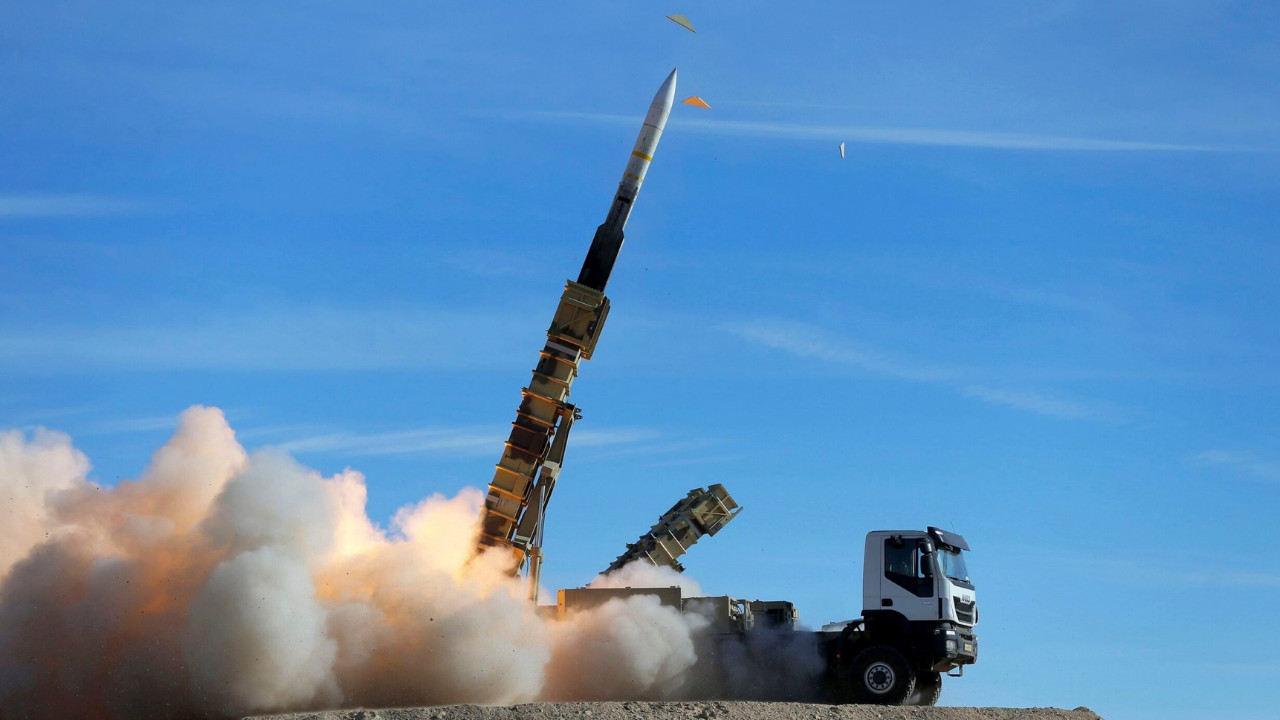
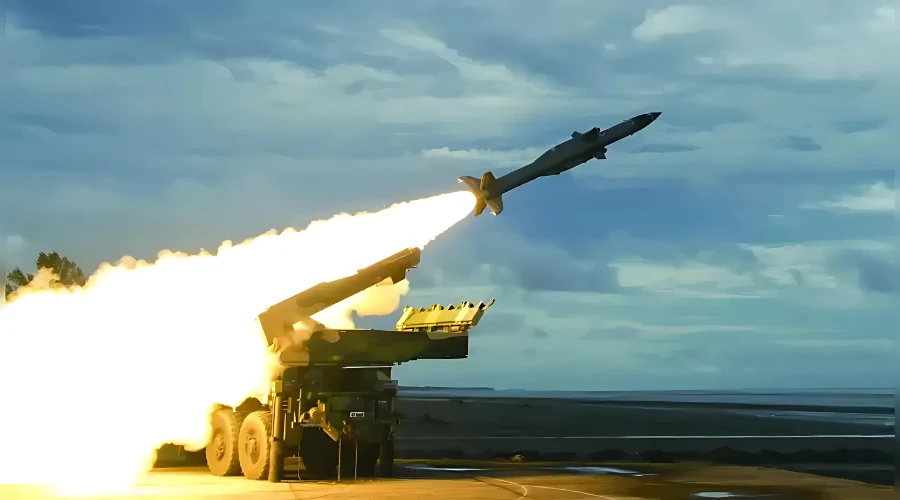
BrahMos supersonic cruise missiles, developed with Russia and mostly made in India, hit radar installations and fortified bunkers. "Its speed and low radar cross-section make it nearly impossible to intercept," he claims. The Defence Research and Development Organisation (DRDO) and Bharat Dynamics developed the Akash surface-to-air missile to coordinate reaction against drones, cruise missiles, and aircraft. It was integrated with the AI-enhanced air defense network Akashteer Command & Control System for real-time data fusion.
Rudram-1, India's first indigenous anti-radiation missile, silenced Pakistani ground-based radars and reduced situational awareness in vital LoC areas. Spencer also noted that DRDO's Embraer-based Netra Airborne Early Warning and Control (AEW&C) tracked hostile aircraft and missiles in real time, vectoring Indian fighters for deep-strike missions.
"Its effectiveness was evident when Pakistan's Swedish Saab 2000 AEW&C was destroyed by a long-range missile," he claimed. India used Harop and SkyStriker drones with precision-guided 'Kamikaze' missiles to descend on enemy targets. SkyStriker is built locally by an Elbit joint venture, whereas Harop is licensed by IAI and BEL. They destroyed mobile radars, convoys, and high-value enemy infrastructure with minimum collateral damage.
India's D4S also disarmed scores of Chinese-made Pakistani drones. India's shift from reactive air defense to proactive electronic warfare is reflected in the system. The US-imported M777 Ultra-Light Howitzer was employed with Excalibur precision-guided rounds to hit terrorist camps without crossing the LoC in Indian mountain warfare. Spencer said its airliftability and fast deployment made it perfect for high-altitude missions.
In addition, India sent modernized T-72s to guard the LoC. The Zorawar, a high-altitude light tank, is under development, and these systems show India's sustained commitment in mobility and firepower in the Himalayas, Specner noted.
Spencer said that India's most modern fighter planes, the Rafales, launched deep precision strikes utilizing SCALP long-range cruise missiles to hit reinforced enemy positions during Operation Sindoor. It carried Meteor air-to-air missiles that could attack targets over 100 kilometers distant, providing India an air battle advantage. Firepower and flexibility were given by the Russian-designed twin-engine heavy fighter Su-30MKI, constructed under license in India, and the French Mirage 2000, which launched several strike packages and controlled airspace.
“The Netra Airborne Early Warning and Control (AEW&C) system monitored enemy aircraft and coordinated the battlespace, protecting these jets. The military operations specialist explained how Rudram anti-radiation missiles disabled enemy radar and air defense systems in SEAD missions to ensure safe air operations.
However, Spencer documented Pakistan's strategic failings and Chinese system flaws. He said that Pakistan's JF-17 Thunder, designed and constructed by China's AVIC, failed to establish air superiority or resist Indian strikes during Operation Sindoor. "Their limited payload, outdated radar, and poor survivability were evident under Indian EW and air defence pressure," he claimed.
Pakistan lost its first air dominance platform during Operation Sindoor when US end-user agreements halted the F-16 Fighting Falcons. HQ-9 and HQ-16, Chinese copies of Russia's S-300 and Buk systems, intercepted Indian air and missile assaults. India's jammer and deception techniques defeated them. BrahMos and loitering drones successfully circumvented these systems, showing key flaws."
Chinese-made LY-80 and FM-90 air defense systems failed to identify India's low-flying drones and precise missiles. Spencer stated this compelled Pakistan to choose passive air defense instead of competent kinetic reaction. Pakistan utilized CH-4s for ISR and light strike, however they were often downed or jammed in terrain and electronic settings controlled by India's D4S system. "Reports emerged that Turkish drone operators had to be brought in to manage UAVs — revealing both equipment and personnel dependency," he added.
Pakistan's airspace awareness and command and control were crippled after an S-400 system destroyed Swedish Saab 2000 AEW&C. "By the end of the campaign, Pakistan had lost key radar stations, its premier AEW&C aircraft, dozens of drones, and its ability to contest Indian airspace," he said. He noted that India's defense equities rose in May, earning investor faith, but Chinese stocks sank drastically following Operation Sindoor, with AVIC, NORINCO, and CETC all suffering as the battlefield refuted their marketing.