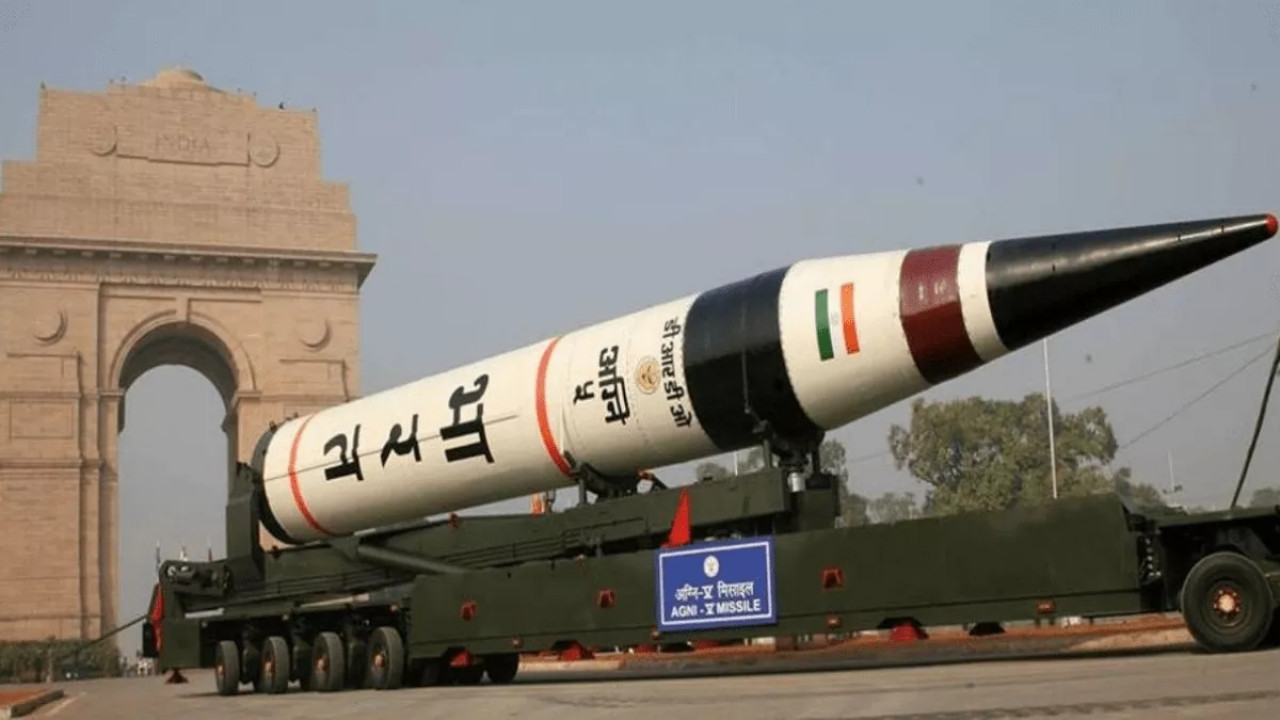
National News: India is now poised to take a significant leap in the defense sector. Learning from recent global military developments, the country has accelerated its efforts to integrate bunker buster warheads into its missile arsenal. The objective is to develop a capability to destroy enemy installations hidden deep underground, beneath hills, or beneath thick layers of reinforced concrete.
The recent US attack on Iran's Fordow nuclear facility using a bunker buster bomb has caught global attention. Inspired by this incident, India has expedited its long-proposed bunker buster missile program. This event highlighted a crucial shift in modern warfare—it is no longer limited to surface targets but extends to deeply buried and well-protected enemy sites.
Capability to Penetrate 80 to 100 Meters Deep
According to defense experts, the new version of India’s Agni-5 missile will be equipped with a bunker buster warhead capable of penetrating up to 80–100 meters below the surface before detonating. This system is specifically being designed to neutralize high-value targets situated in fortified bunkers or underground tunnel networks.
What sets the Indian bunker buster apart is its integration with the Agni-5 missile, allowing it to be launched without relying on a bomber aircraft. This approach not only simplifies operations but also enhances accuracy, reach, and strategic flexibility.
Led by DRDO with a Clear Strategic Objective
The project is spearheaded by the Defence Research and Development Organisation (DRDO), which is developing an advanced variant of the Agni-5 missile. While the conventional Agni-5 has a range of over 5,000 kilometers and is capable of carrying nuclear payloads, the new version will carry a non-nuclear bunker buster warhead weighing approximately 7,500 kilograms.
This warhead is being engineered to detonate after deep penetration, ensuring maximum internal damage to enemy assets. It will be used to destroy command-and-control centers, missile storage facilities, and critical underground military infrastructure.
Two Missile Variants in Development
India is currently working on two variants of this advanced system:
- Surface-target variant: designed to strike airfield runways, tank convoys, and surface-level military bases.
- Subterranean-target variant: capable of reaching deeply buried targets, mimicking and possibly exceeding the performance of American bunker busters.
Due to the added weight of the warhead, the range of these new missiles is expected to be around 2,500 kilometers, a trade-off for greater impact power.
With its bunker buster missile program, India is advancing toward a new era of strategic deterrence. This capability will provide a critical advantage in future conflicts, especially when traditional weapons are ineffective. The upgraded Agni-5 not only enhances India’s defense preparedness but also sends a strong message: India is ready to face any threat—above or below the surface.