You walk into a classroom. Maybe it's your child's, maybe it's a memory. Desks in rows. A teacher at a whiteboard. The only tech is a dusty projector. You think, "This is how I learned. It's fine." But then you see the disconnect: the world outside that room runs on AI, global collaboration, and instant access to all human knowledge. The classroom feels like a museum diorama of learning.
I taught in that room. I felt the frustration of having a world of tools at my fingertips but a system that rewarded scantrons and silence. The "EdTech" we were sold was often just a digital worksheet—a shiny veneer on an old model.
But a real revolution is happening. It's not about putting a tablet in every hand. It's about tapping into hidden technological powers that fundamentally change the process of learning, making it more personal, more engaging, and infinitely more connected to the real world. These aren't just gadgets. They are new pathways to success.
The Core Shift: From Delivery to Discovery
Old tech delivered information (like a video lecture). New, hidden tech powers create environments for discovery. The student isn't a passive receiver; they're an active investigator, creator, and problem-solver.
Here are the four most powerful, under-the-radar forces reshaping success.
Power 1: AI as the Ultimate Personal Tutor (Not a Cheat Engine)
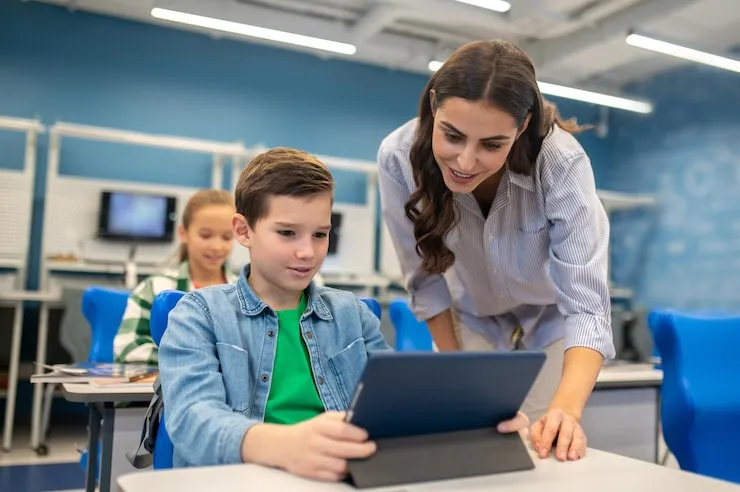
Forget the panic about essays written by ChatGPT. The hidden power is AI as a 1:1, infinitely patient learning companion.
What it looks like in practice:
- Differentiation on Demand: Tools like Khanmigo (Khan Academy's AI) or MagicSchool.ai can take a math problem and generate three different versions: one simpler, one at grade level, one more complex—instantly. Every student gets the right challenge.
- Socratic Dialogue Bots: A student can debate a historical figure simulated by AI, or explain their reasoning to a bot that asks probing questions like, "Why did you choose that step?" This builds metacognition—the ability to think about their own thinking.
- Instant Feedback Loops: An AI can read a student's short written response to a science prompt and give feedback on their reasoning before they finalize their answer, guiding them toward deeper understanding in real-time.
The Revolution: It finally makes truly personalized learning pathways scalable. The teacher is freed from being the sole source of instruction to become a mentor, project designer, and human connector.
Power 2: Immersive Worlds as Experiential Labs (Beyond Field Trips)
VR/AR (Virtual & Augmented Reality) isn't just for gaming. It's the ultimate "learning by doing" tool for things you can't do in a classroom.
Hidden Applications:
- Career & Technical Education (CTE): Students can practice welding in VR with zero material cost or safety risk. They can walk through a virtual engine or trace the wiring in a building's walls.
- Empathy & History: Instead of reading about the Holocaust, students can walk through a carefully curated, solemn VR experience of a historical site. They can stand on the Martian surface via NASA's VR apps.
- AR for Annotation & Layer: Point a tablet at a frog dissection in biology class, and AR labels appear on each organ. Point it at a complex engine diagram, and it becomes a 3D model you can spin and explore.
The Revolution: It collapses distance and resource limitations. A student in rural Kansas can perform a virtual heart surgery simulation or tour the Louvre. Experience becomes the teacher.
Power 3: The "Internet of Things" (IoT) & Data as a Learning Material
This is about turning the physical environment into a interactive data source. Students learn by measuring, analyzing, and interpreting the world around them.
Real-World Projects:
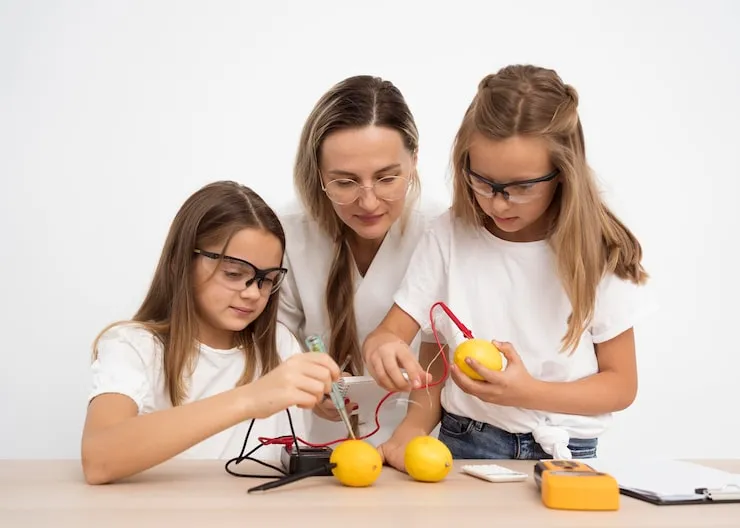
- Environmental Science: Students place simple, connected sensors around school grounds to measure soil moisture, air quality, and temperature. They collect real-time data, analyze trends, and propose solutions for a water-conserving garden.
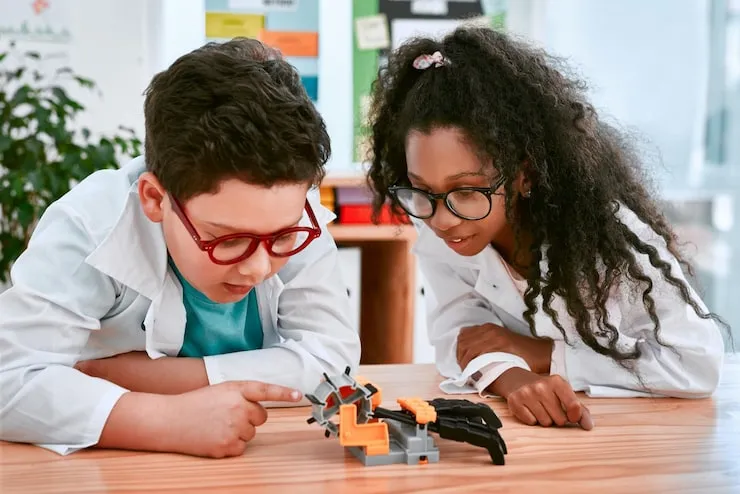
- Physics & Engineering: Using microcontrollers like Arduino or Raspberry Pi, students build simple machines, program them, and collect performance data to iterate on their designs. They're not just learning physics formulas; they're applying them to make something work.
- Civics & Math: A class could use public, real-time municipal data APIs (on traffic, energy use) to analyze community patterns and propose data-informed policy to the city council.
The Revolution: Learning becomes authentic and interdisciplinary. Math isn't abstract; it's the tool you need to understand your sensor data. Science isn't in a textbook; it's in the dirt outside the window.
Power 4: Blockchain for Learner Ownership (The Ultimate Portfolio)
This is the most nascent but potentially most transformative power. Blockchain can create a secure, verifiable, and portable record of learning.
The Problem It Solves: A diploma says you graduated. It doesn't show what you can do. Your projects, certifications, internships, and skills are scattered.
- The Digital Credential/Learning Ledger: Imagine every mastered skill—"3D Modeling in Blender," "Python Data Analysis," "Robotics Team Leadership"—is issued as a verifiable digital badge stored on a personal learning wallet (based on blockchain).
- Student-Owned Data: The learner controls this wallet. They can share specific badges with a college application or employer, proving their exact competencies without needing a transcript office as intermediary.
- Lifelong Learning Pathway: This ledger can be added to across your life—from high school, to university, to a coding bootcamp, to a corporate training. It creates a continuous, owned record of your capabilities.
The Revolution: It shifts the currency of success from grades and degrees to demonstrated skills and competencies. It empowers learners to own and curate their evidence of success.
The Teacher's New Role: Architect & Guide
With these powers, the teacher's job transforms. They are no longer the "sage on the stage." They are:
- The Learning Experience Designer: Curating the right tech tools for the right learning goal.
- The Data Interpreter: Using dashboards from AI tutors and IoT projects to understand each student's needs.
- The Human Mentor: Focusing on social-emotional skills, critical thinking, and guiding students through complex projects that tech enables.
How to Start Tapping These Powers (At Any Level)
You don't need a district-wide initiative.
- For a Teacher: Pick one. Start a unit where students use AI (like ChatGPT or Claude) as a research brainstorming partner, with clear guidelines on citation and verifying information. It teaches critical AI literacy.
- For a Parent: Advocate for project-based learning that uses real-world data. Ask the school about access to tools like Gizmos (simulations) or Vernier sensors for science.
- For a Student: Take ownership. Use free tools like Google's Teachable Machine to create a simple AI model. Build a portfolio on a site like Journey that documents your projects and skills, even if it's not on a blockchain yet.
The hidden technology powers aren't about replacing teachers or making school flashy. They are about unlocking human potential by removing the old limitations of time, space, and a one-size-fits-all model. Success is no longer about memorizing what's easily Googled. It's about learning how to learn, create, and solve problems with the most powerful tools humanity has ever invented. The revolution is here. It's just unevenly distributed. Your job is to start distributing it.
FAQs: Technology in Education
Won't AI just make students lazy and encourage cheating?
It will if used passively. The secret is active integration. Frame AI as a thinking partner, not an answer machine. Assignments must be redesigned: "Use AI to generate three potential hypotheses for this experiment, then design a test to disprove two of them." Cheating is a symptom of a bad assessment. If the assessment requires original thought, synthesis, and creation, AI becomes a starting point, not an end point.
Is this kind of tech too expensive for my school?
The most transformative tools are increasingly low-cost or free. AI chatbots have free tiers. Google Cardboard turned any smartphone into a basic VR headset for $10. Raspberry Pi computers cost under $50. Open-source software (Blender for 3D, Python for coding) is free. The barrier is often teacher training and willingness, not just hardware.
How do we ensure equitable access so tech doesn't widen the achievement gap?
Equity must be proactive. It means: 1) Device & Internet Access: School-provided devices and hotspots. 2) Focus on Pedagogy First: Using tech for creation and critical thinking, not just consumption—skills that empower all students. 3) Professional Development: Investing in training for all teachers, not just the tech-savvy early adopters. The goal is to use tech as a bridge, not a barrier.
What about screen time and social development?
This is a crucial balance. The best uses of this hidden tech often involve collaboration (students working together on an AR design) or lead to tangible, real-world action (using sensor data to plant a real garden). Tech should be a tool for engagement with the world and each other, not isolation. The teacher's role in facilitating discussion and teamwork is more important than ever.
As a parent, how can I tell if my child's school is using tech effectively?
Ask these questions: 1) "Are students mostly consuming information or creating something?" 2) "Can my child explain why they are using a specific tech tool for their project?" 3) "Is the tech allowing my child to learn at their own pace or explore their interests?" If the answer is mostly about completing digital worksheets or quiet time, the tech is being used as a digital babysitter, not a transformative tool.
Where can educators learn about these tools?
Follow educator communities on social media (#EdTech, #AIedu on Twitter/X). Explore non-profit hubs like Common Sense Education for reviews and lesson plans. Attend (or watch recordings from) conferences like ISTE (International Society for Technology in Education). Start with one tool that solves a specific problem you have in your classroom.