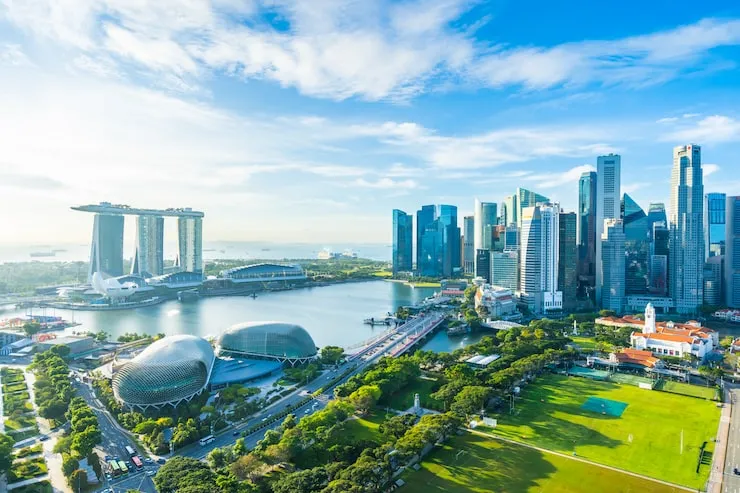
The humidity in Singapore sticks to you. It’s in the air, on your skin. I was sitting in a perfectly air-conditioned cafe in the CBD, across from a man who’d built a nine-figure property portfolio starting from a single HDB flat. He wasn’t flashy. No Rolex, just a simple Seiko. He sipped his kopi-O and said something that cut through the noise of every property seminar I’d ever heard: “The secret isn’t in buying Singapore Property Investor. Everyone here is obsessed with buying. The secret is in structured expansion.”
He wasn't talking about leverage or location. He was talking about a system. A methodical, almost boring, approach to growing wealth through bricks and mortar in one of the world’s most controlled and expensive markets. If it works here, it works anywhere.
The Singapore Context: The Tightest Sandbox in the World
First, understand the board. You can't play the game if you don't know the rules.
- The HDB Foundation: Most start with a government-built Housing & Development Board flat. It’s subsidized, but with strings: a Minimum Occupation Period (MOP), restrictions on renting, and ownership caps.
- The ABSD Avalanche: The Additional Buyer’s Stamp Duty. It’s the government’s brake pedal. Buy a second property? Pay an extra 20%+ in tax on top of the standard stamp duty. Third property? Even more. This is designed to punish speculation and make expansion brutally expensive.
- The TDSR Shackle: Total Debt Servicing Ratio. Banks can only lend you an amount where your total monthly debt payments (for all loans, not just property) are less than 55% of your income. Your salary, not the property’s potential rent, is the ultimate governor.
So, the “secret” isn’t some trick to avoid these. It’s a strategy to move with them.
The Revealed Framework: The Stepping-Stone Ladder
The investor drew it on a napkin. Not a pyramid. A ladder.
Rung 1: The HDB Launchpad (The Sacrificial Pawn)
“Your first HDB is not your home. It is your first investment vehicle with training wheels,” he said.
- The Mindset: You buy the largest HDB you can afford in a promising non-mature estate (e.g., Punggol, Sengkang in their early days). You see it not for its living potential, but for its capital appreciation potential during your 5-year MOP.
- The Action: Live frugally. Pour any extra savings into paying down this mortgage aggressively. The goal is to build maximum equity, fast.
- The Exit: The day your MOP is up, you sell. In a good estate, you’ve captured significant appreciation. Because it’s your only property, you pay zero seller’s stamp duty. This tax-free cash gain, plus your forced equity, becomes your war chest for Rung 2.
Rung 2: The Private Condo & The “Decoupling” Gambit (The Calculated Split)
This is where most stop. The ABSD for a second property seems insurmountable. Here’s the first tactical move.
- The Move: You and your spouse use your war chest to buy a private condo together. This is your new home. You still own only one property as a household, so no ABSD.
- The Secret Tactic: After a period, you “decouple.” This is a legal/financial restructuring. One spouse sells their share of the condo to the other. This is treated as a private sale, incurring some costs, but crucially, it frees one person’s name to buy a new property as a “first-time buyer” again, avoiding ABSD.
- The Outcome: Household now owns one condo outright (or with a small mortgage) and has one “clean” buyer ready to go.
Rung 3: The Investment Engine (The Cash Flow Machine)
The “clean” buyer (post-decoupling) now goes shopping.
- The Target: Not for capital gains. For yield. A smaller, older condo in a central location (like D3, D12) that can be rented out easily. Or a commercial/industrial property (shophouse, small warehouse unit) which has higher yields and, critically, NO ABSD for individuals buying their first commercial property.
- The Math: The rental yield from this property must comfortably cover its mortgage and expenses, with surplus cash flow. This property is not meant to be sold for decades. It’s an income-producing asset that services itself.
Rung 4: The Leveraged Growth (The Slow Roll)
The cash flow from Rung 3, plus your primary income, is used to slowly pay down the mortgage on your owner-occupied condo (Rung 2). As that equity builds, you can borrow against it (via a term loan or by refinancing) to fund the down payment for the next asset, repeating the cycle with extreme patience, always respecting TDSR.
The Real Secret: It’s a Marathon of Financial Discipline
The napkin diagram wasn’t the revelation. His next sentence was: “The system is pointless without the behavior.”
- Live Below Your Means, Permanently: The upgrade in lifestyle after selling the HDB must be minimal. The excess cash goes into the next rung, not a BMW.
- Treat Mortgage Payments as a Religion: Paying down debt is your primary savings mechanism. It’s forced, tax-inefficient in some views, but in Singapore’s low-yield environment, it’s a guaranteed return (saving you the mortgage interest rate).
- Patience is a Currency: Each rung takes 3-7 years. This is a 15-20 year plan. You are not flipping. You are constructing a financial fortress, brick by boring brick.
Why This Works Anywhere (Even Without Singapore’s Rules)?
The principles are universal:
- Start with a Forced-Savings Vehicle: Use your first, most accessible property to build equity aggressively.
- Use Tax & Rule Arbitrage: Understand the system’s pressure points (like ABSD) and find the legal, structural workarounds (decoupling, commercial property).
- Segment Your Portfolio for Purpose: One property for living, one for cash flow, eventually one for long-term capital growth. Don’t ask one asset to do everything.
- Let Cash Flow Fund Expansion: Your wealth expansion is fueled by the income from the assets you already own, not just your day job.
Your First Step: The Brutal Audit
Before you think about a second property, look at your first.
- What is its true purpose? Is it a home or an investment vehicle? Be honest.
- Are you maximizing equity build-up? Could you pay an extra $500/month off the mortgage?
- Do you know your household’s TDSR like your own phone number? Calculate it. That number is your expansion limit.
The Singapore property investor’s secret isn’t a hot tip. It’s a cold, systematic blueprint for using property as a wealth-expansion machine within a set of brutal constraints. The constraints are what make the system so powerful. They force discipline.
Your wealth expansion starts not with looking for the next deal, but with optimizing the asset you already own. Master that first rung. Everything else follows.
FAQs
Q: Is "decoupling" legal, and what are the costs?
Yes, it's a legal property transfer between related parties. The costs are significant: Seller's Stamp Duty (SSD) if within the 3-year holding period, Buyer's Stamp Duty (BSD) on the transacted share, legal fees, and possibly bank penalty fees for refinancing. You must run the numbers with a professional to ensure the long-term ABSD savings outweigh these upfront costs. It's a strategic move, not a casual one.
Q: I'm a single person. Does this ladder strategy work for me?
It's much harder, but the principles adapt. Your key is commercial property. After building equity in your first residential property, you can explore buying a commercial/industrial asset (e.g., a shophouse unit, small office) as your second property. No ABSD for your first commercial property. The higher yield can then help you eventually upgrade your residence. The path is different, but the logic of using yield to fund expansion remains.
Q: With high interest rates, is this still a good strategy?
High rates test the strategy's foundation: cash flow. They make the "Investment Engine" (Rung 3) harder to find. The focus shifts even more strongly to yield. You might need a larger down payment to keep the mortgage payment low enough for the rent to cover it. The strategy slows down, but the disciplined steps remain the same. It filters out weak assets.
Q: Should I use my CPF for this?
CPF is a core part of the Singapore system. Use it for your owner-occupied properties to free up cash for investment down payments. However, remember that CPF used, plus accrued interest, must be returned to your account upon sale. This can eat into your cash proceeds. It's a cheap source of funding for your home, but factor in the "opportunity cost" of locking those funds away.
Q: What's the biggest risk in this expansion model?
A catastrophic loss of income. If your primary salary disappears, the TDSR math collapses, and the entire carefully balanced structure—reliant on your income to qualify for loans and cover any cash flow shortfalls—can be at risk. This is why building a large emergency fund (12+ months of expenses) and securing strong rental covenants for your Singapore Property Investor are non-negotiable parts of the "secret." The system is robust, but it's not immune to a personal financial earthquake.