The explosive growth of the cities of India demands an overhaul in the way we handle transportation, public resources, as well as security. The traditional municipal system is not able to cope with the increasing demands of cities. To address this issue local governments are using Smart Devices for Smart Cities India in order to transform normal streets into connected digital ecosystems. In addition to upgrading ordinary items like water pipes, traffic lights and utility poles by installing smart sensors Indian metropolitan areas can regulate the flow of water, energy, and traffic flows in real-time. This shift in technology optimizes the public infrastructure, and improves everyday life of millions urban dwellers.
What are smart devices in smart cities?
A common object can be transformed into an intelligent device once it is connected to the internet for sharing data. In urban settings such objects comprise trash bins, streetlights water meters, traffic cameras. They're packed with special elements like proximity sensors, environmental monitors and wireless transmitters.
They cannot function independently. They are part of a vast connected network referred to by the name of Internet of Things (IoT). The devices collect data continuously regarding the quality of air as well as traffic flow and the use of power. The data is transmitted into a central hub, referred to as the Integrated Command and Control Centre (ICCC). The continuous flow of data lets public authorities fix urban issues prior to them affecting everyday life.
Why do smart cities need smart devices?
Traditional city management is based on the concept of reactive plan. A broken water line or an inoperable streetlamp will usually be fixed once a person lodges an official complaint. This old-fashioned approach leads to long wait times, is a waste of municipal funds and causes frustration for citizens.
Modern cities need a more proactive method of planning. These devices allow municipal authorities to keep track of their infrastructure assets on a continuous basis. Instead of awaiting a malfunction, engineers from municipal agencies receive immediate alerts when an issue occurs.
Data-driven decision making aids municipalities in saving water, cut down on electricity usage and reduce delays in traffic. These technologies help local governments be more agile and reduce administrative expenses and enhancing the quality of public services.
Read also: Smart Home Devices For Indian Homes
Smart Devices For Smart Cities India: The Top 10 Urban Innovations
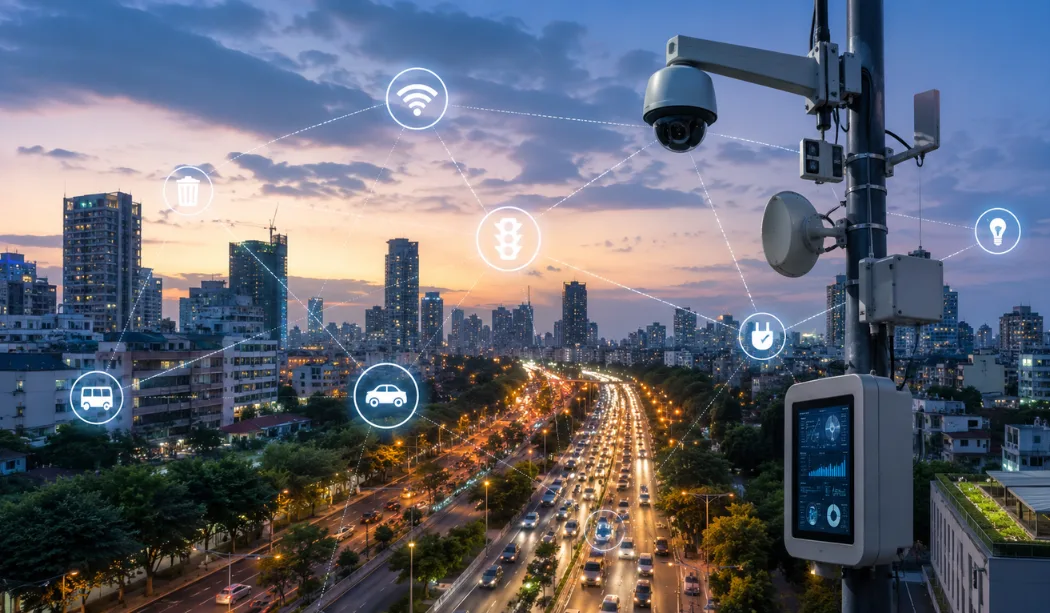
The deployment of connected devices across Indian cities requires the use of tools specifically designed to meet local needs. Large numbers of people using the facilities, variations in weather patterns during the season, as well as changes in power grids require a the most robust equipment. The below list of gadgets for smart cities in India showcases the top tools that are transforming our urban spaces.
1. Adaptive Traffic Control Systems (ATCS)
Traditional traffic lights operate using fixed timers. This frequently causes roads that are empty to get green lights, and busy intersections are subject to prolonged delay. ATCS utilizes camera sensors and radar to monitor exact vehicle numbers in real-time. It automatically adjusts signals to help clear congestion roadways, and keep traffic flowing efficiently during peak hours.
2. Connected LED Streetlights
These are not your standard road lights. Automated lighting systems regulate their brightness according to lighting conditions as well as foot traffic. When a road is not occupied in the evening, the lights reduce their brightness to help conserve energy. The lamps also issue automated notifications to maintenance crews when a light bulb goes out, making sure that roads remain lit and secure.
3. Automated Waste Management Bins
The traditional garbage trucks use certain routes and are often able to empty half-empty containers while not taking care not to empty overflowing bins. Bins connected to the internet make use of ultrasonic sensors for tracking the exact amount of waste. When the bin is overflowing, it notifies the central sanitation division, assisting truck drivers optimize their routes for collecting in order to reduce fuel consumption and time.
4. Digital Water Distribution Monitors
Pipelines that leak cause substantial loss of water in the old municipal distribution networks. The flow meters that are connected track the volumes of water across lines of supply. If volume drop suddenly between two locations it flags an immediate leak. The system's automated monitoring helps municipal authorities conserve water while maintaining constant pressure in the water.
5. Environmental Air Quality Trackers
The issue of air pollution is a significant problem for numerous Indian metropolitan areas. Sensor pods that are weatherproof and compact can be found on utility poles in order to monitor contaminants such as PM2.5 as well as PM10 and nitrogen dioxide. These real-time measurements help authorities in the field to identify areas of high pollution and quickly take actions to clean the air.
6. Interactive Digital Information Kiosks
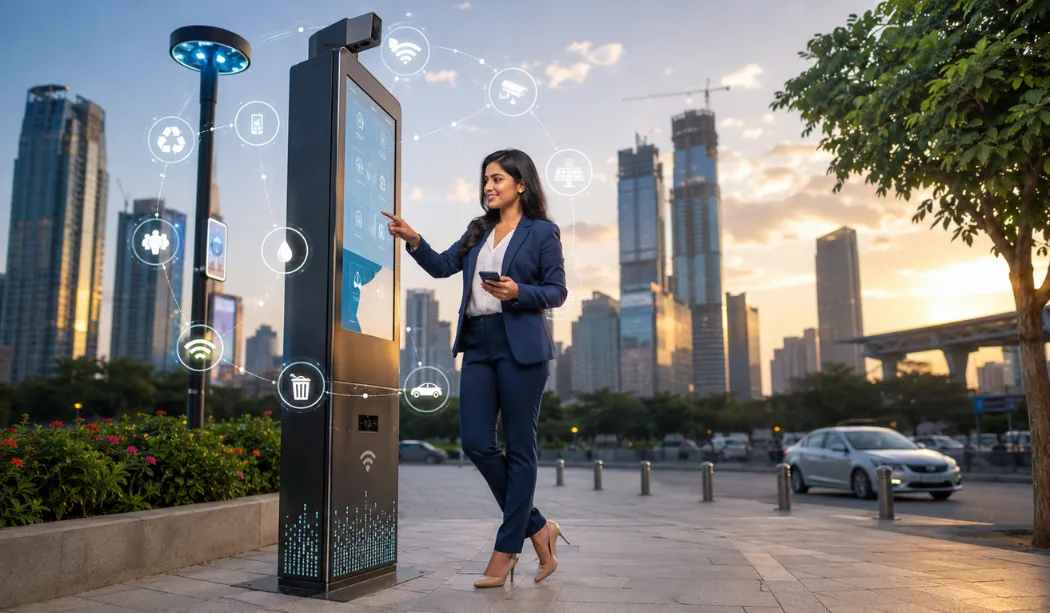
These robust, outdoor touchscreen displays replace traditional paper notice boards. These are placed at metro stations and bus stops, they offer the latest bus information, including health warnings for the public, as well as interactive city maps that help travelers navigate through their way around the city easily.
7. Unified Emergency Panic Buttons
Public safety needs fast and efficient communication devices. These bright and visible boxes are positioned on poles found in public parks as well as market areas that are crowded. When you press the button, it instantly launches an audio and video feed that is sent to the local police command center. This allows residents to seek help immediately in times of emergency.
8. Automated Electrical Grid Meters
Older grids require manually-read meter readings, and have to struggle to detect sudden power surges. Smart grid meters monitor the use of electricity in real-time and help power companies manage grid demands, prevent blackouts and provide consumers with precise information to monitor their energy consumption.
9. Automatic License Plate Recognition (ALPR) Cameras
Tracking stolen cars or speed-breakers is an inefficient process for traffic officers. ALPR cameras make use of advanced optical sensors which detect license plates of vehicles instantaneously, which helps law enforcement identify traffic infractions and increase road safety.
10. Acoustic Gunshot and Crash Detectors
Urban areas that are bustling with activity Emergency services require immediate notifications of major incidents. The audio sensors are specially designed to listen for specific sounds that resemble shootings, high-impact crashes or gunshots. The device pinpoints the precise place of the sound, and informs the first responders instantly and saves precious time during crises.
The Power Shift: Smart City Devices vs Traditional City Infrastructure
Moving from old urban settings to connected systems is a significant upgrade to the management of public services. This table outlines the ways the introduction of digital technology transforms daily processes.
| Urban Operation | Traditional City Infrastructure | Smart City Infrastructure |
|---|---|---|
| Street Lighting | Fixed timers; manual inspection for broken bulbs | Automated dimming; real-time maintenance alerts |
| Traffic Control | Pre-set fixed timers that are set to be in effect regardless of actual traffic volume | Updates to the signal in real-time Based on the live numbers of vehicles |
| Waste Disposal | Fixed routes for trucks; random bin collection | Dynamic routes based upon the bin's fullness in real-time |
| Water Supply | Manual leak detection after visible surface flooding | Automatically alerts to leaks, pressure drop and pressure drops |
| Public Safety | Video recording of a passive video is examined following an incident | Anomaly detection proactive, as well as instant alerts for emergencies |
Proactive Security: AI Surveillance vs Traditional CCTV Systems
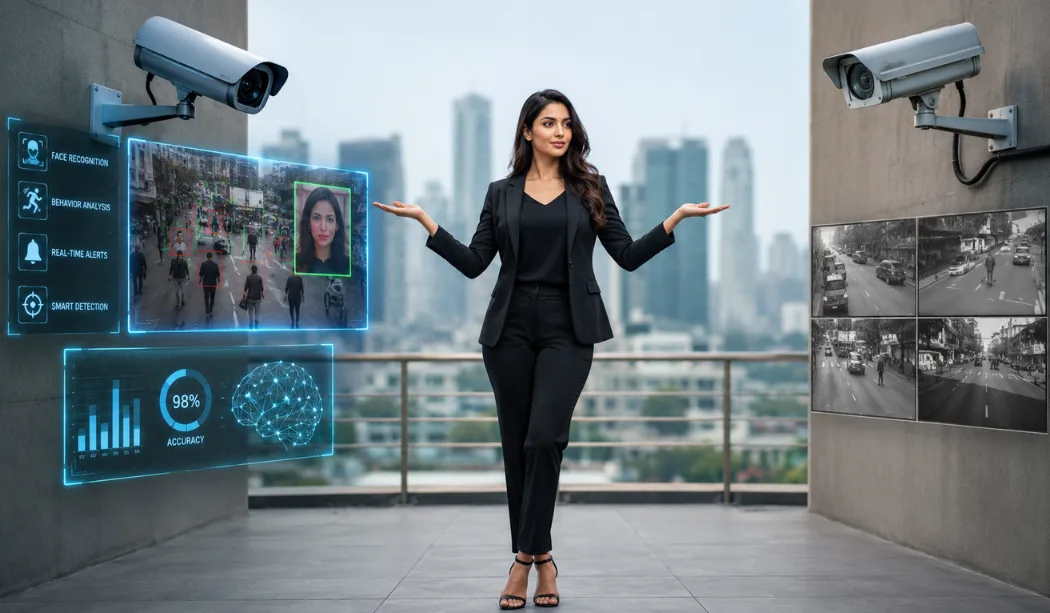
The public safety settings are moving from passive recording of video into active analysis in real time. Traditional CCTV systems record video clips to a drive. Security teams are only able to review the footage after the incident has occurred. This method relies solely on an individual security monitor and can leave out crucial incidents on street display screens that are busy.
Modern public safety utilizes intelligent city gadgets India to analyze footage streams continuously. The advanced technology can detect odd events, like the discovery of a missing package in the subway, or an unexpected crowd gathering in an intersection.
The system identifies any irregularities and alerts security personnel immediately. This monitoring system automatically helps emergency response teams to respond to public security risks quickly, instead of reviewing footage after the fact.
Read also: Best Future Tech Innovations for Everyday Life in India 2030
How do smart devices improve city life?
Implementing smart urban devices in Indian cities provides clear benefits for every day lives. These devices operate in the background to make cities more habitable and resilient.
- Shorter daily commutes: Real-time traffic lights as well as connected public transportation options help keep cars moving, while cutting down travel time at bustling intersections.
- Low Carbon Footprints Intelligent street lighting and optimized routes for garbage trucks dramatically reduce electricity and fuel use, which results in healthier air.
- Speedier Emergency Care Unified emergency buttons as well as sensors that sound alert emergency responders right away, making sure assistance is available faster in critical circumstances.
- Cleaner public areas: Automated trash bins help to prevent the buildup of trash, while keeping the streets and parks of neighborhoods clean and tidy.
Moving Forward: Future Smart City Devices India
The next step in urban development will involve more advanced technology integration. Municipalities are now testing autonomous aerial drones to conduct inspection of bridges' structural integrity as well as high-rise structures.
Additionally engineers are currently making use of Local Digital Twins, which are highly detailed digital models of entire cities. The digital models utilize sensors in real-time to model the future, including the heavy rains of monsoons, or even the construction of new lines for transit, which helps designers optimize the infrastructure improvements prior to construction beginning.
Leading Innovation: Top Smart City Technology Companies India
The construction of a future-ready infrastructure demands the close cooperation of public authorities as well as the top tech companies. Numerous major corporations provide the technology and hardware that makes the urban infrastructure upgrade feasible.
- Tata Communications: The pioneer of huge-scale IoT networks. It provides an infrastructure of connectivity to connect thousands of sensors from municipal systems with central hubs for control.
- Mapmy India is a specialist in high-precision geospatial maps and APIs based on location providing real-time navigation, as well as logistical support for vehicles in emergency.
- Reliance Jio Provides a broad 5G network coverage. It provides an extremely high-speed, low-latency connection needed to enable real-time AI video tracking, as well as grids that are automated.
Expert Insights: The Reality of Connected Urbanism
"Transforming the urban areas we live in isn't just about putting in modern hardware. The real progress is by using data to create a more secure better, more stable daily experience for all residents." -- Rohan Mehta, Principal Urban Infrastructure Consultant
Integration of these systems demands meticulous planning of the privacy of data and security in digital form. The security of municipal data networks is crucial to shield public infrastructure from unauthorized access. When cities are adding many connected devices, incorporating robust cybersecurity into our city infrastructure is an important goal for city planners.
Frequently Asked Questions
What are the main benefits of smart city devices in India?
The technology helps reduce municipal electricity consumption, conserve drinking water from leaks by monitoring and reduce congestion in traffic, and enhance public security through real-time monitoring of incidents.
How do smart street lighting systems India save energy?
The modern lamps employ automatic dimming sensors that reduce their brightness when the streets aren't crowded. They will only boost their illumination in the event of detecting traffic or pedestrians. They also save huge amounts of electricity.
What is the role of AI in smart city development?
Artificial intelligence process huge quantities of environmental, traffic as well as safety-related data. It can automate timings for traffic lights as well as identifies public safety hazards and assists city managers take quick, informed decisions.
Are these connected technologies secure from digital threats?
Modern hardware for urban use includes sophisticated encryption technology, private communications networks and regular software updates to protect the municipal system from cyber-attacks.