Urban spaces have long been seen as consumers rather than producers. Cities import food, energy, and resources from rural areas, while offering little agricultural output of their own. But that long-standing model is quietly breaking down. A new wave of technology is transforming ordinary city yards, rooftops, and small plots into productive, income-generating micro-farms. This “secret” is not a single invention, but a convergence of smart systems, data-driven agriculture, and decentralized food production that is reshaping how cities feed themselves.
What was once dismissed as backyard gardening is evolving into a scalable, profitable form of urban farming. With rising food prices, climate uncertainty, and growing demand for locally produced food, city farming is no longer a lifestyle hobby. It is becoming a legitimate economic opportunity.
The Urban Farming Shift
For decades, agriculture was considered incompatible with city life. Limited space, poor soil, pollution, and zoning restrictions made urban farming impractical. However, modern technology has changed these assumptions.
Urban farming today is defined not by acres of land, but by efficiency per square meter. The goal is no longer to grow more land, but to grow smarter. By maximizing yield, minimizing inputs, and using technology to control variables, city farmers are achieving productivity levels that rival traditional farms.
This shift has been driven by several forces:
-
Increased urbanization and shrinking rural labor pools
-
Demand for fresh, locally sourced food
-
Rising awareness of food security and sustainability
-
Advances in automation, sensors, and artificial intelligence
Together, these forces have created fertile ground for a quiet agricultural revolution within cities.
The Technology Behind the Revolution
The “secret tech” revolutionizing city farming is not a single breakthrough, but an integrated system of tools that work together to optimize growth, reduce waste, and generate profit.
Smart Growing Systems
Modern urban farms rely heavily on controlled growing environments. These systems regulate water, nutrients, light, and temperature with precision.
Hydroponics and aeroponics allow plants to grow without soil, using nutrient-rich water or mist instead. These systems dramatically reduce water usage while increasing growth speed and yield. In small yards, garages, or even balconies, growers can produce leafy greens, herbs, and vegetables year-round.
Smart irrigation systems ensure that plants receive exactly the amount of water they need, no more and no less. This not only conserves resources but prevents common issues like root rot and nutrient imbalance.
Sensors and Data Analytics
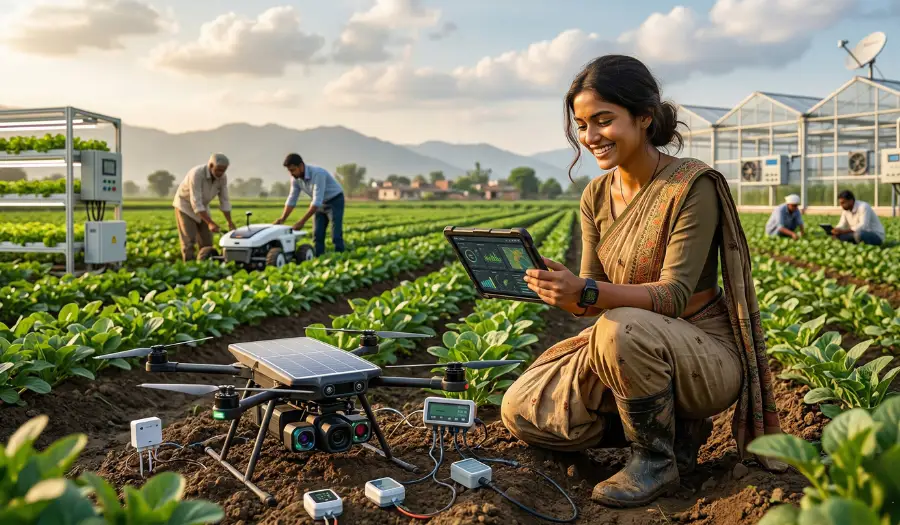
One of the biggest limitations of traditional gardening is guesswork. Urban farming technology removes uncertainty by using sensors to collect real-time data.
Soil moisture sensors, nutrient monitors, and climate trackers continuously measure growing conditions. This data is analyzed to provide actionable insights, such as when to water, fertilize, or adjust light exposure.
By responding to data instead of intuition, urban farmers can prevent crop failure and maximize output. Even beginners can achieve professional-level results with minimal experience.
Automation and Artificial Intelligence
Automation plays a critical role in turning small-scale urban farms into profitable operations. Automated lighting, watering, and nutrient delivery systems reduce labor costs and human error.
Artificial intelligence further enhances efficiency by learning from past growing cycles. AI-driven systems can predict plant needs, identify early signs of disease, and recommend optimal harvesting times.
This level of precision allows city farmers to maintain consistent quality, which is essential for selling produce commercially.
Vertical and Modular Design
Space is the most valuable resource in cities, and vertical farming technologies are redefining how it is used.
Vertical structures allow multiple layers of crops to grow in the same footprint. Modular systems can be expanded or rearranged as needed, making them ideal for backyards, rooftops, and unused urban spaces.
By growing upward instead of outward, urban farms can produce significantly more food than traditional gardens, even in very limited areas.
Turning Yards Into Profitable Assets
The true transformation occurs when technology turns personal space into a revenue-generating asset. A yard that once required maintenance and expenses can now become a small but steady source of income.
High-Value Crops for Small Spaces
Urban farms focus on crops that deliver high value per square meter. These include:
-
Leafy greens such as lettuce, spinach, and kale
-
Culinary herbs like basil, mint, and cilantro
-
Specialty microgreens
-
Edible flowers
-
Exotic or hard-to-find produce
These crops grow quickly, command premium prices, and are well-suited to controlled environments.
Because urban farms are close to consumers, produce can be harvested and delivered the same day, increasing freshness and value.
Direct-to-Consumer Models
Technology has enabled city farmers to bypass traditional supply chains. Instead of selling to wholesalers, many urban growers sell directly to:
-
Local restaurants
-
Farmers’ markets
-
Community-supported agriculture programs
-
Neighborhood subscriptions
This direct connection allows farmers to retain a larger share of profits while building strong local relationships.
Digital platforms and simple logistics tools make it easier than ever to manage orders, payments, and deliveries, even for small operations.
Year-Round Production
One of the biggest advantages of tech-driven urban farming is consistency. Controlled environments are not subject to seasonal limitations.
Year-round production means predictable income, which is critical for profitability. Restaurants and consumers value reliable suppliers who can deliver fresh produce regardless of weather or season.
This stability turns urban farming from a side project into a viable micro-business.
Environmental and Social Impact
Beyond profitability, city farming technology offers significant environmental and social benefits.
Urban farms reduce the distance food travels from farm to table, lowering transportation emissions and food waste. Water-efficient systems conserve scarce resources, while pesticide-free growing methods improve food safety and public health.
On a social level, urban farming strengthens communities. It reconnects people with food production, creates local jobs, and transforms unused or neglected spaces into productive landscapes.
In many cities, urban farms are also being used as educational tools, teaching children and adults about sustainability, nutrition, and technology.
Challenges and Barriers
Despite its promise, tech-driven city farming is not without challenges.
Initial setup costs can be high, especially for advanced systems with automation and sensors. While prices are falling, the upfront investment may be a barrier for some individuals.
Zoning laws and regulations can also limit what is allowed in residential areas. Not all cities have updated policies to accommodate modern urban farming practices.
Additionally, successful urban farming requires a balance between technology and management. Systems still need monitoring, maintenance, and strategic decision-making.
However, as technology becomes more affordable and cities adapt to new food models, these barriers are gradually being reduced.
The Future of City Farming
The trajectory of urban farming technology suggests that this is only the beginning.
Future systems will be even more autonomous, integrating renewable energy, advanced robotics, and deeper AI-driven optimization. Neighborhood-scale food networks could emerge, where clusters of urban farms collectively supply local demand.
As cities grow and global supply chains face increasing pressure, decentralized food production will become not just an option, but a necessity.
In this future, backyards, rooftops, and small urban plots will no longer be passive spaces. They will be active contributors to local economies and food systems.
Conclusion
The secret tech revolutionizing city farming is transforming how we think about urban space, food production, and profitability. What was once an underutilized yard can now be a productive, data-driven micro-farm capable of generating income, improving sustainability, and strengthening communities.
This quiet revolution is not about replacing traditional agriculture, but complementing it. By bringing food production closer to where people live, cities can become more resilient, efficient, and self-sufficient.
As technology continues to evolve, the line between urban living and farming will blur even further. The future of agriculture may not lie solely in vast rural fields, but in the smart, connected yards of the cities themselves.