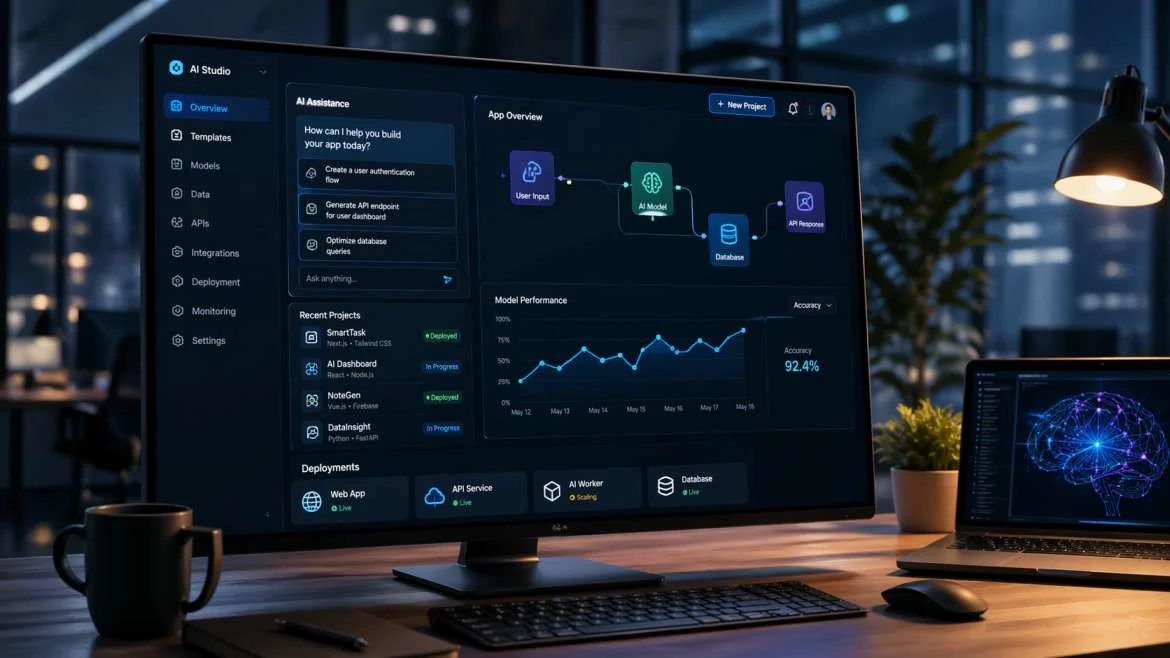
Artificial Intelligence (AI) has moved from the realm of science fiction to become a core driver of modern business strategy. An estimated 88 percent of organizations now use AI in some capacity, making it an indispensable tool for staying competitive. The conversation is no longer about if a business should adopt AI, but how to do it effectively to unlock new levels of efficiency, insight, and customer connection.
This transition is powered by a suite of intelligent technologies. Generative AI, like ChatGPT, creates new content and solutions. Machine Learning (ML) algorithms find patterns in massive datasets, while Deep Learning tackles complex reasoning tasks like fraud detection. Together, they form the backbone of a business revolution.
The following table outlines how these AI capabilities translate into tangible benefits across core business areas:
| Business Function | AI Capability Applied | Key Benefit & Impact |
|---|---|---|
| Customer Service | Natural Language Processing (NLP), Chatbots | Provides 24/7 instant support, resolving common queries and freeing agents for complex issues. |
| Sales & Marketing | Predictive Analytics, Recommendation Engines | Enables hyper-personalized experiences; 80% of consumers are more likely to buy from brands that personalize. |
| Operations & Supply Chain | ML for Pattern Recognition, Predictive Analytics | Optimizes inventory and logistics, predicting demand and preventing disruptions. Companies report up to 15% lower logistics costs. |
| Cybersecurity | Deep Learning, Anomaly Detection | Identifies and neutralizes threats in real-time, analyzing behavior patterns to prevent breaches. |
| Human Resources | AI Screening and Analysis | Speeds up the hiring process, reduces bias in recruitment, and automates onboarding tasks. |
Exploring the Core AI Secrets Revolutionizing Modern Business
The true power of AI lies in its ability to transform foundational business operations. These are not distant promises but practical applications delivering results today.
You may also read :- How Ai Is Transforming The Future
1. Achieving Unprecedented Operational Efficiency
AI excels at taking over repetitive, time-consuming tasks. This automation of routine work spans from data entry and invoice processing to managing customer service requests. In manufacturing, AI-powered robots streamline assembly lines, while in offices, software bots handle scheduling and document management.
This shift does more than just save time. It reduces human error and allows the workforce to focus on strategic, creative, and interpersonal tasks that add greater value. By implementing robotic process automation (RPA), businesses can boost productivity in operations by an estimated 40%. The result is a faster, leaner, and more agile organization.
2. Mastering Data-Driven Decision Making
Businesses are flooded with data, but the secret is in the analysis. AI algorithms can process and analyze vast datasets in real-time, uncovering patterns and insights far beyond human capability. This moves decision-making from intuition-based to evidence-based strategy.
In finance, AI models detect fraudulent transactions by spotting subtle anomalies. In retail, predictive analytics forecast seasonal demand, allowing for perfect inventory planning. Leaders can now make informed choices about product development, marketing investments, and market expansion with a higher degree of confidence, turning data into a decisive competitive weapon.
3. Crafting Hyper-Personalized Customer Journeys
Modern customers expect experiences tailored just for them. AI makes hyper-personalization at scale a reality by analyzing a customer’s browsing history, past purchases, and preferences.
E-commerce recommendation engines, like those used by Amazon, suggest products you’re likely to love. Streaming services curate watchlists based on your viewing habits. As Amir Husain, founder of AI company SparkCognition, notes, AI is a form of software "that’s able to act even in situations not foreseen by the programmers," allowing for dynamic and responsive personalization. This deep understanding fosters stronger loyalty and directly increases revenue.
Implementing Your AI Strategy: A Practical Blueprint
Adopting AI successfully requires more than just buying software. It demands a thoughtful, strategic approach centered on people and processes.
-
Start with a Process Audit, Not a Product Purchase: Look at your current workflows. Identify repetitive, high-volume tasks or areas where data is abundant but insights are scarce. These are your prime opportunities for AI integration. The goal is to augment human work, not replace it outright.
-
Build a Foundation of Quality Data: AI systems are only as good as the data they learn from. Businesses must prioritize data governance—cleaning, organizing, and securing their information. Poor data quality is the most cited challenge in AI projects, so investing in a solid data foundation is crucial.
-
Focus on Change Management and Upskilling: Employee apprehension is natural. Successful implementation involves transparent communication about AI’s role as a tool for assistance, not replacement. Invest in training programs to help employees work alongside AI, focusing on developing skills in data analysis, AI management, and creative thinking.
-
Commit to Ethical and Responsible AI: Establish clear guidelines for ethical AI use. This means actively working to identify and eliminate bias in algorithms, ensuring transparency in how AI-driven decisions are made, and rigorously protecting customer data privacy. Building trust is essential for long-term adoption.
The Future Is a Collaborative Partnership
The ultimate secret revealed by the AI Secrets Revolutionizing Modern Business is that the future belongs to a collaborative partnership between human and artificial intelligence. AI handles the computational heavy lifting—sorting data, predicting trends, and automating routines. This empowers people to focus on what they do best: strategic thinking, innovation, empathy, and creative problem-solving.
Businesses that embrace this partnership, investing in both the technology and their teams, will unlock unprecedented agility and value. They will be the ones leading their industries, not just keeping pace. The revolution is here, and it is intelligent, adaptive, and full of potential for those ready to engage with it thoughtfully.
Frequently Asked Questions
What is the biggest benefit of AI for a small business?
For small businesses, one of the most impactful benefits is leveling the playing field. AI tools for marketing automation, customer service chatbots, and data analytics are now accessible and affordable. They allow small teams to operate with the efficiency and insight of much larger organizations, improving customer experiences and driving growth without proportionally increasing overhead.
How does AI improve customer experience directly?
AI improves customer experience by providing instant, 24/7 support through chatbots, delivering personalized product recommendations, and creating smoother interactions. For example, AI can analyze a customer’s past behavior to predict their needs or route them to the best-suited service agent, making every interaction faster and more relevant.
Are there risks of bias in business AI, and how can we avoid it?
Yes, algorithmic bias is a significant risk if AI is trained on historical data that contains human biases. This can lead to unfair outcomes in areas like hiring or lending. Businesses can avoid this by using diverse and representative datasets, regularly auditing AI decisions for fairness, and maintaining human oversight for critical final decisions.
What is the first step a company should take to explore AI?
The best first step is to identify a single, clear problem or opportunity. Start with a pilot project—such as using an AI tool to analyze customer feedback or automate a specific reporting task. This focused approach allows a team to learn, measure ROI, and build internal knowledge without the complexity and cost of a company-wide rollout.