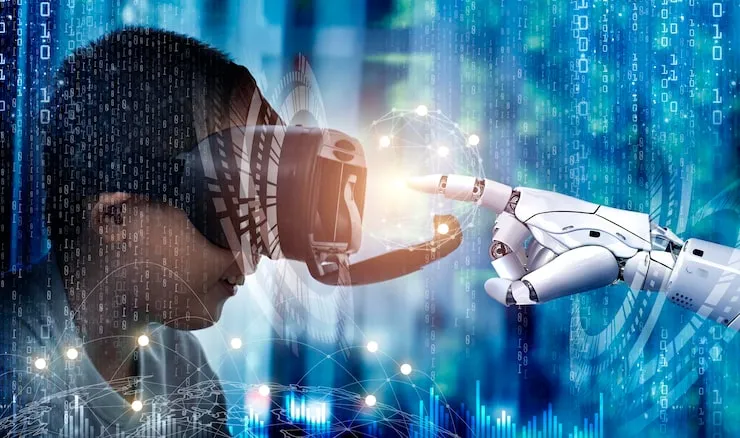
Imagine having a super-smart robot friend who can help you do almost anything—solve puzzles, answer questions, or even suggest the best way to clean your room. That’s a little like what Artificial Intelligence (AI) does. AI is when computers and machines learn to think, make decisions, and even solve problems—just like humans, but sometimes much faster! AI is already part of our lives, and it’s transforming the future in ways we couldn’t have imagined before. From smart phones to self-driving cars, AI is changing how we live, work, and play. In this guide, we’ll explain AI in a way that even kids can understand, with real-life examples, stories, and analogies.
1. Understanding AI
AI stands for Artificial Intelligence. It’s the ability of machines to:
-
Learn from data
-
Make decisions
-
Solve problems
-
Recognize patterns
Kid-Friendly Analogy: Imagine a robot that watches you play a game, remembers all your moves, and then helps you win the next time. That’s AI learning and improving.
2. AI in Everyday Life
You might not notice it, but AI is already all around us:
-
Smart assistants: Alexa, Siri, and Google Assistant
-
Streaming services: Netflix and YouTube suggest shows you might like
-
Online shopping: Amazon recommends products based on your choices
-
Smart games: Video games that adapt to your skill level
Kid Example: When YouTube suggests a fun cartoon you’ll probably enjoy, that’s AI at work!
3. How AI Learns
AI learns in a process called machine learning. It’s like teaching a pet tricks, but the pet is a computer.
Steps:
-
Give the computer lots of examples (data)
-
Show it how to recognize patterns
-
Let it make predictions or decisions
-
Improve over time as it learns from mistakes
Kid-Friendly Analogy: Teaching your dog to fetch by showing it many times. AI “learns” by practicing again and again.
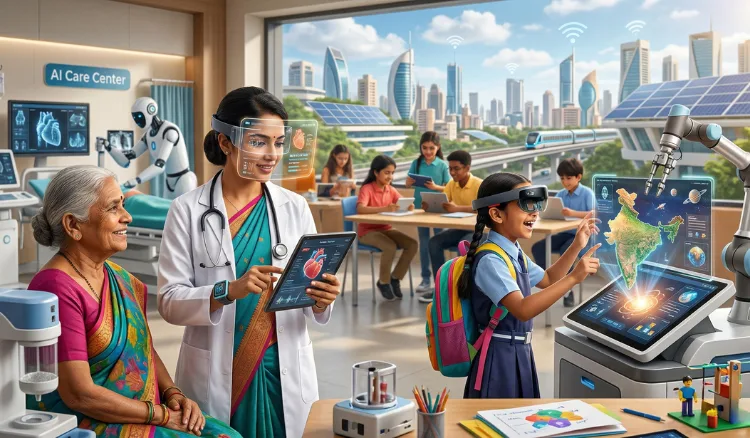
4. AI in Education
AI is changing schools and how kids learn:
-
Personalized learning apps that adapt to your pace
-
Homework helpers that explain tough problems
-
Smart quizzes that focus on areas where you need more practice
Kid Example: Imagine an app that notices you struggle with math but are great at reading. It gives you more math practice and fun stories for reading. That’s AI helping you learn!
5. AI in Health Care
AI is transforming medicine:
-
Detecting diseases early with smart scans
-
Suggesting treatments for doctors
-
Helping robots perform surgeries with precision
Kid-Friendly Analogy: Think of AI as a superhero sidekick for doctors, helping them spot problems faster and make better decisions.
Example: AI can help detect cancer early by reading medical images faster than humans alone.
6. AI in Transportation
Self-driving cars and smart traffic systems are powered by AI:
-
Cars learn road patterns and drive safely
-
Traffic lights adjust to reduce congestion
-
Delivery drones use AI to find the fastest route
Kid Example: A self-driving car is like a toy car that knows where it needs to go without bumping into walls or people.
7. AI in Entertainment
AI makes movies, games, and music more fun:
-
Video games adapt to your skill level
-
Music apps suggest songs you’ll like
-
Animated movies use AI to create realistic movements
Kid Analogy: Imagine your favorite video game character learning your moves and giving you a new challenge every time you play. That’s AI making games smarter.
8. AI in Communication
AI helps people communicate better:
-
Real-time translations in apps like Google Translate
-
Smart email suggestions
-
Chatbots answering questions instantly
Kid Example: If your friend speaks a different language, AI can help you chat in real time.
9. AI in Business and Work
AI helps businesses work faster and smarter:
-
Automates boring tasks
-
Helps companies predict customer needs
-
Improves efficiency in factories and offices
Kid Analogy: AI is like having a robot helper that does your chores while you focus on fun and creative projects.
10. AI in Environmental Protection
AI is helping save the planet:
-
Predicting weather and natural disasters
-
Monitoring endangered animals
-
Managing energy use in smart cities
Kid Example: AI can help track polar bears and make sure they stay safe in their habitat.
11. AI in Safety and Security
AI helps keep people safe:
-
Recognizes suspicious activity in videos
-
Detects cyber threats online
-
Helps police and security teams respond faster
Kid Analogy: AI is like a superhero security guard who watches over your castle and warns you of danger.
12. AI in Space Exploration
AI is helping humans explore space:
-
Robots and rovers use AI to study planets
-
Analyzes huge amounts of space data
-
Helps astronauts make better decisions
Kid Example: The Mars Rover is like a super-smart robot explorer sending pictures and data back to Earth using AI.
13. How AI Makes Life Easier
AI simplifies tasks we do every day:
-
Voice assistants remind you to feed your pet
-
Smart fridges suggest meals based on what’s inside
-
AI apps help organize schedules and homework
Kid-Friendly Analogy: Imagine a magical notebook that reminds you about homework, plays your favorite songs, and tells you jokes. That’s AI helping daily life.
14. AI and Creativity
AI isn’t just for science or work—it can be creative too:
-
Helps make music and art
-
Suggests new designs for clothing
-
Assists writers and storytellers
Kid Example: AI can help you draw a cartoon or make up a fun story with magical characters.
15. How AI Learns from Mistakes
Just like humans, AI learns from errors:
-
It makes predictions
-
Checks if they’re correct
-
Adjusts for next time
Kid Analogy: Imagine learning to ride a bike. You fall, get back up, and do better next time. AI does the same thing, just faster.
16. AI Ethics: Being Responsible with AI
AI is powerful, so humans must use it responsibly:
-
Avoid bias and unfairness
-
Protect privacy
-
Make sure AI helps, not harms, people
Kid-Friendly Analogy: Like learning to use superpowers responsibly—you can do amazing things, but you must be careful.
17. AI in Everyday Problem Solving
AI can help solve big challenges:
-
Finding cures for diseases
-
Reducing traffic accidents
-
Managing energy and resources efficiently
Kid Example: Imagine a smart robot helping your town plant trees exactly where they’re needed to reduce heat and clean air.
18. AI and Jobs: New Opportunities
AI changes work but also creates new jobs:
-
AI engineers, programmers, and designers
-
Jobs that involve creativity, management, and problem-solving
-
Humans and AI working together
Kid Analogy: AI is like a helpful teammate in a game. You do the creative moves, AI helps with strategy, and together you win.
19. AI in Education for the Future
AI can teach skills needed for tomorrow:
-
Coding and robotics
-
Critical thinking
-
Problem-solving and creativity
Kid Example: Imagine a robot teacher who knows what you need to learn next, giving personalized lessons just for you.
Conclusion: AI Is Shaping Our World
AI is not magic—it’s a tool created by humans to make life better. It’s transforming the future by:
-
Making life easier and more efficient
-
Helping humans solve big problems
-
Creating new opportunities for work, learning, and creativity
-
Protecting the environment and saving lives
Kid-Friendly Analogy: AI is like a super-smart robot friend who grows smarter every day, helps with challenges, and works with humans to create a better, safer, and more fun world.
Key Idea: The future isn’t about humans vs. AI—it’s about humans with AI, using it responsibly to make the world amazing.