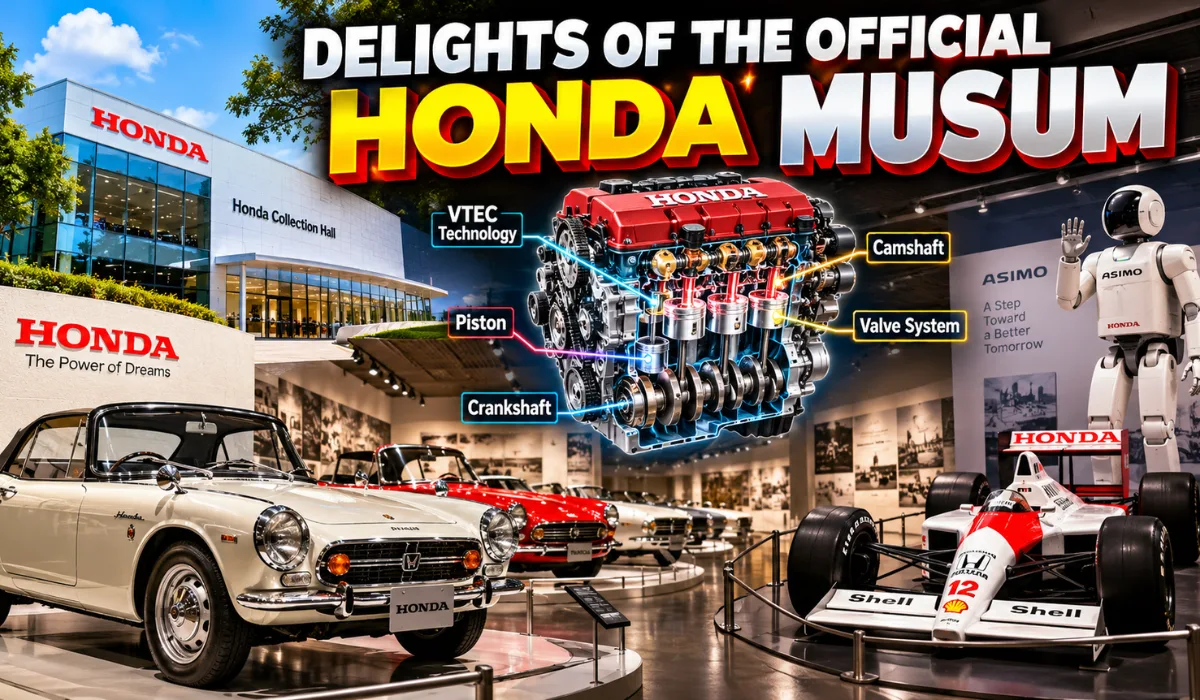
The museum is located at the Motegi Twin Ring complex, hard to find but well worth the effort. The complex houses several excellent road-course and oval-racing tracks, a hotel, a go-karting facility, campsites, hiking trails, and the museum, built in 1990. Showcasing a collection of Hondas, including founder Soichiro Honda's own pre-war racing times, from the birth of the motorcycle business to the recent history of Formula One, sports car, and Indy car racing, the museum embodies the Honda philosophy of 'creating products which help others'.
Curtiss Special (1924)
This is the race car that young engineer Soichiro Honda sat in at Art Shokai automobile service station in Tokyo as a riding mechanic, and it became a great passion of his for all things Motorsport. It was an 8.2-litre overhead-valve Curtiss V8 aircraft engine fitted to a specially designed chassis and multi-plate clutch.
Honda S360 (1962)
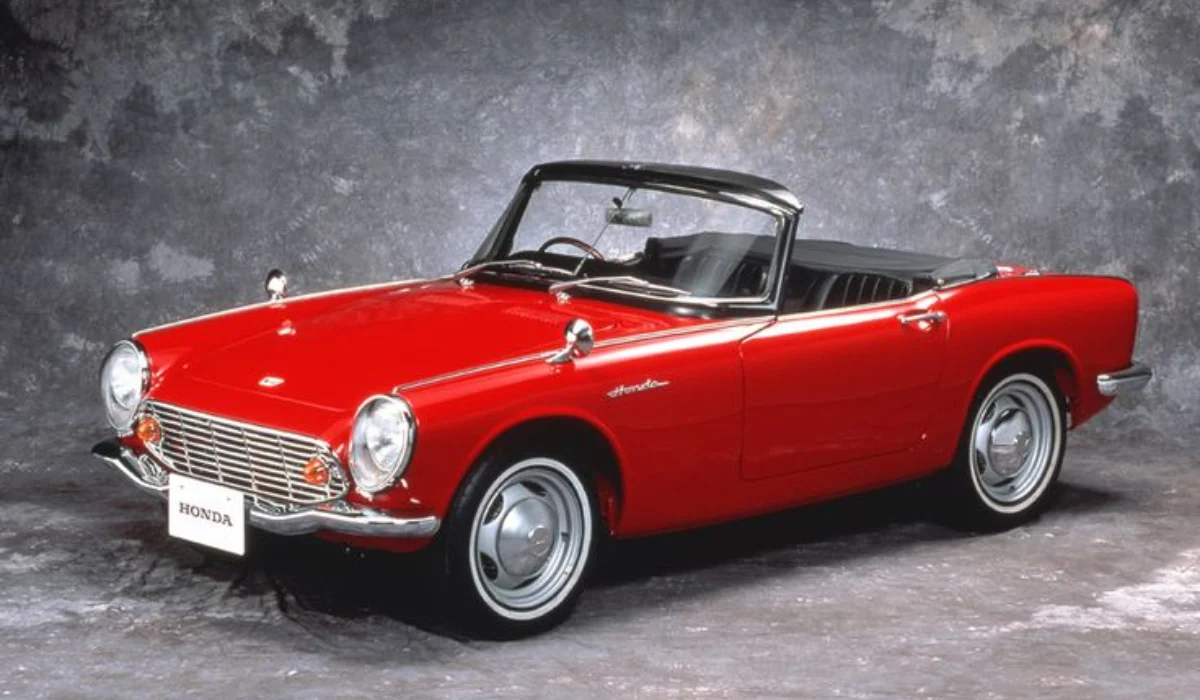
Honda's very first car: this attractive little sports car built around Honda's motorcycle technology. Powered by a 356cc DOHC four, chain driven rear wheels and under 1,125 lbs (510 kg). More or less a prototype, in other words.
Honda S500 (1963)
Seeing the growth in performance that was to come, this is the first Honda in history to go on sale, albeit with a bigger engine. It benefits from a 530cc straight four-cylinder, four carburettor DOHC unit. Although it weighs a third more at 680kg, it still has a single overhead cam engine with 44bhp to propel the machine to 85mph, with a motorcycle heritage to its engine speed red line of 9500rpm.
Honda N360 (1967)
Building on the 'man maximum/machine minimum' mantra, Honda launched the N360 – and proved it – by becoming Japan's top-selling 'kei' car for three years in a row. Honda powered it with an air-cooled 356cc in line four engine producing 31bhp, which was 30 per cent more powerful than its competitors, with enough room for four adults, Honda said.
Honda 1300 (1969)
According to Honda: "Honda's largest production car to date was the 1.3 litre air-cooled front wheel drive. Our founder, Soichiro Honda, devised the revolutionary Duo Dyna Air Cooling technology, which introduced forced cooling air from a fan on the flywheel through a jacket enveloping the four-cylinder engine."
Honda 1300 Coupe S (1970)
The four carburettor all aluminium SOHC dry sump engine 2got became a powerful 'clean' unit that developed in excess of 110bhp and especially appealed to racing drivers. The SOHC was to be Honda's final air-cooled car engine. It was offered in two body styles Sedan and Coupe.
Honda Civic (1972)
And with the Civic, Honda set a new benchmark for small car engineering across the globe. Visually the car was sophisticated. Under the bonnet was layout popularized by the best selling British Mini: wheels as close to the corners as possible and transverse FWD engine placement. In 1973 Honda also made the Civic the very first car to use Honda's CVCC 'Compound Vortex Controlled Combustion' to meet stricter US emissions levels.
Honda Civic Country estate car (1980)
For the second generation of Civic, the designers added the station wagon body style, known as the 'Country', to the class alongside the sedan, coupe, and hatchback. The engineers also offered a new two-speed Hondamatic transmission. They used sliding gears instead of planetary gears for the transmission to cut down on drag. The Civic is currently in its tenth generation and has sold 20 million models since its inception, with more than half sold in the US.
Honda RA272 F1 car (1965)
The RA272 was the first Japanese car to win a Formula One Grand Prix. Americans Richie Ginther and Ronnie Bucknum drove the car in its debut at Monaco. With a real screamer of a transversely mounted 1.5-litre V12 high revving engine, it was a very quick car out of the blocks, although it proved to be unreliable. However, Ginther used the car to take the lead on the first lap of the final race of the season in Mexico, which he held until the end.
Honda Z (1970)
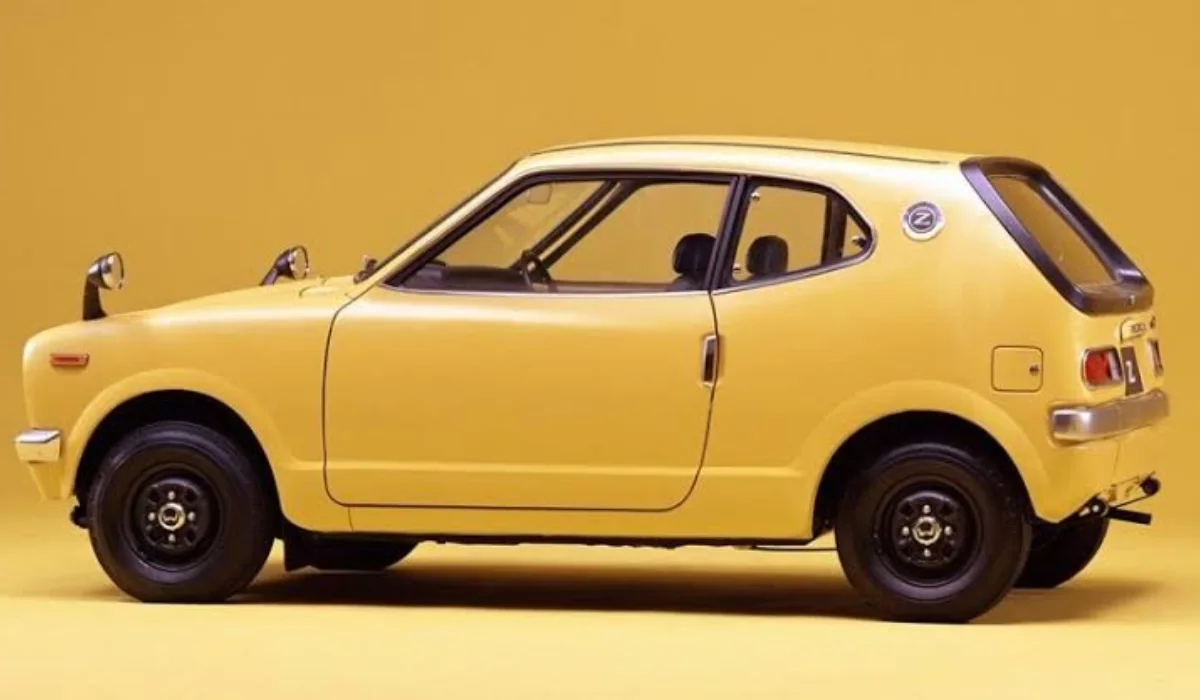
On-trend wacky dayglo colours for 1970, the 'Z' became one of the first city or 'Kei' cars to feature attractive styling for the exterior of the car. Honda motorcycle retailers previously offered it until the more conventional Civic became the first city car available at car dealers; the Z came with various small air-cooled, and subsequently, water-cooled engines, remaining in production until 1974.
Honda Beat (1991)
Soichiro Honda approved it for the last time before his death in August 1991. Pininfarina designed it as the last Honda that Soichiro himself approved and that made under his stewardship. The mid-engined, rear-wheel drive two seat roadster became the first sports car Honda produced since the S800 stopped being made in 1970, with a 656cc three cylinder, belt driven transmission engine, it was a hoot to drive at 760kg/63bhp, with a machine that could electronically tame an 84mph top speed.
FAQ's
Where is the Honda Collection Hall located?
It is situated at the Mobility Resort Motegi (formerly Twin Ring Motegi) in Tochigi Prefecture, Japan.
What can visitors see inside the museum?
The three-story exhibition features over 300 historic Honda motorcycles, automobiles, and racing machines spanning its entire history.
Are the museum vehicles still operational?
Yes, Honda famously maintains most of the displayed cars and motorcycles in running condition, frequently demonstrating them at track events.
Is admission to the museum free?
While entry to the museum exhibition is generally free, you must pay the standard admission and parking fees for the Mobility Resort Motegi complex.
How do I get there from Tokyo?
You can take a train from Utsunomiya Station to Mito Station, followed by a local bus or taxi, or drive approximately two hours via the expressway.