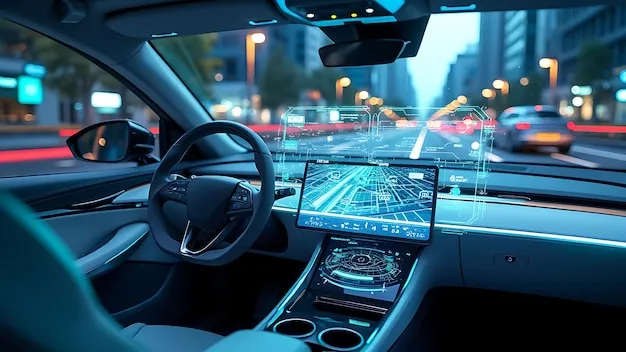
I remember when I was a kid, watching cartoons where cars drove themselves, and I thought, "That will never happen in my lifetime." Well, I am happy to say I was wrong! Just the other day, I had the chance to sit inside a vehicle that needed no one at the wheel, and it felt like stepping into the future.
The world of autonomous vehicles is changing so fast, it is hard to keep up. That is why I wanted to sit down and share the latest self-driving car updates with you. We will look at the cool new tech, the new rules that keep us safe, and even when you might be able to hail a robotaxi. Let's buckle up and take a ride into what is happening right now in 2026.
What Does "Self-Driving" Really Mean in 2026?
However, it is worth knowing what we are discussing before we dive into the news. It is a large umbrella. When I tell you, I mean self-driving. You may hear the professionals discussing various levels of automation in driving. I prefer to feel like riding a bike with training wheels as compared to without training wheels.
From Parking Assist to Full Autonomy
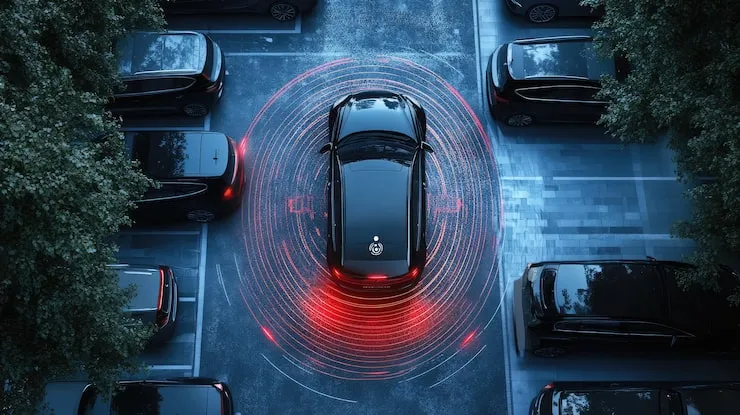
The vast majority of vehicles in the current market have so-called advanced driver-assistance systems, or ADAS. This is like Level 2 or Level 2+. The car will assist in steering and maintaining your speed; however, a human will always have to be alert and keep his hands on the steering wheel. It is great when you are driving long distances on highways.
Next is the so-called eyes-off driving in the industry. This is Level 3. Under specific circumstances, such as a low-speed highway, the car will be able to assume full control. You need to be prepared to take back your control should the car request it; you can look at your phone or even look out of the window.
Level 4 is the most exciting stuff. These are the entirely driverless business processes you read about in urban areas. Even in these automobiles, a steering wheel may not be present! The automobile takes care of all that on its own in a particular region, such as downtown.
You may also read Essential Car Accessories for New Car Owners (2026 Guide)
Why Software is the New Engine
Among the largest self-driving car additions that I have observed is the fact that the companies working on cars are no longer discussing horsepower, but instead, processing power. At the big tech event held in Las Vegas this year, CES 2026, it was the software-defined vehicles.
This implies that it is the software in the car that makes it special, not the metal and bolts. Companies are making cars that improve as time goes on, just as your phone does when it is updated. You purchase the car, and then later it can acquire new tricks since the engineers can send the car an over-the-air upgradeable option directly to your garage.
New UN Safety Regulations
I am somewhat of a safety nerd, which makes the following part of great interest to me. Companies had long been developing self-driving technology, but the regulations varied in each country. That made things confusing. And in February 2026, something gigantic happened.
A Global Standard for Safety
A new world rule was declared by the United Nations to aid the implementation of self-driving cars on the streets throughout the entire world safely. This is a massive deal! This new rulebook provides the manufacturers with a clear direction to be taken. It is not merely a suggestion; it is a legal framework that is real.
It implies that a car with the automation driving system sold in Europe will be obliged to be of the same high quality compared to the car sold in Asia or North America. This assists corporations in creating superior vehicles and ensures that all of us are safe.
How Companies Must Prove Their Cars Are Smart
Carmakers under this new UN regulation must not only assure the consumer that their car is safe. They must demonstrate it by means of a safety case. Just imagine a science fair project at school. You cannot simply say, "My volcano will pop. You are to demonstrate your work, ingredients, and experiment to demonstrate it.
Carmakers are forced to furnish the authorities with colossal amounts of evidence proving that their self-driving system contains no unreasonable risk. They also require a data storage system for automated driving, which resembles the black box of an airplane, to capture what the car is doing.
Latest Tech That Makes Cars Smarter
I am a gadget lover, and this is why the new technology featured in these cars is always the best thing to read when researching updates about self-driving cars. The technology has become very sophisticated, bordering on magic.
Smarter AI and Better "Eyes"
At CES 2026, NVIDIA, a company, uncovered a new model of AI named Alpamayo. It is literally a car super-brain. It assists the vehicle to think and traverse the challenging city streets. We do not mean only walking by a map. We refer to the car, knowing that a ball that enters the street could be signaled by a running child getting to play with the ball.
These cars require extraordinary sensors in order to see. WeRide is a giant in the robotaxi industry, but it recently demonstrated its GEN8 system using a thousand-line LiDAR. LiDAR is like a laser radar. The new version is able to view a small object up to 600 meters. To make that perspective, that is over six football fields! It provides the car with a reaction time of more than 70 percent of the time as compared to the older systems.
The Rise of Robotaxis
You may have spotted a vehicle zoning with a number of cameras and sensors on top. Those are often robotaxis. These are vehicles without human drivers that are taxis. The development in this is going on at light speed. As an illustration, WeRide and Geely Farizon recently shared a strategy of transporting 2,000 new purpose-built robotaxis by the end of 2026 (WeRide and Geely Farizon).
These new ones are cool, as they have been constructed in a more intelligent manner. With AI and new manufacturing tricks, they will be able to make the car within less than 10 minutes. That will reduce the cost, and therefore, hopefully, it will be cheaper to ride in one in the future.
Such fully driverless commercial services are already in operation in such locations as Beijing, Guangzhou, and Abu Dhabi at the present time.
How Self-Driving Cars "See"
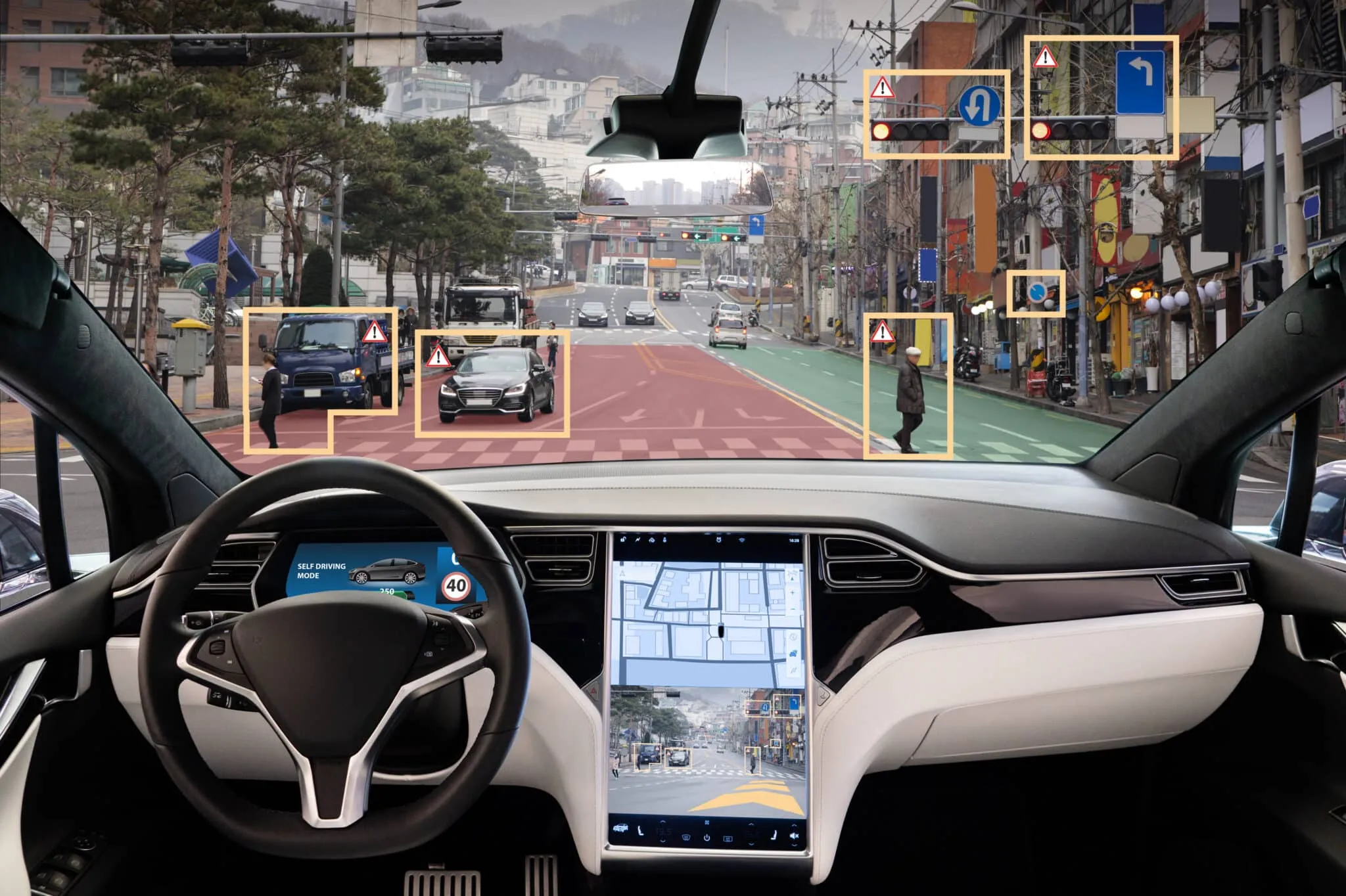
I always ask myself how a computer can be able to know all that is going on in the busy street. It happens that it makes use of a hybrid of super senses. This is commonly referred to as a sensor stack.
- Cameras: These are the eyes of a car. They read traffic lights, read signs, and see the color of things.
- Radar: It is a device that utilizes radio waves to indicate the distance of an object and its speed. Even the new 4D imaging radar can view below a car in front of you or even view a car that is stuck in fog.
- LiDAR: This scatters laser rays on all objects within the car environment to generate a 3D map of the environment in greater detail.
- Ultrasonic sensors: They are the small people who beep when you parallel park. They assist in intimate aspects.
It was an explanation by Ted Chua of Ambarella. According to him, these sensors provide the car with invisible eyes, which perform even during the dark, rainy, or foggy weather, and the computer inside combines all that information and makes smart decisions in real-time.
What the Experts Are Saying
I enjoy listening to the individuals behind this technology. Lei Jun, the founder of Xiaomi, has recently mentioned that 2026 is the year zero of L3 and L4 autonomous driving. That is to say that this is the year when it begins to fly. He believes that there will be a massive push in the high-level driving assistance.
A very good point was made by Phil Amsrud of S&P Global. According to him, what we learn in the process of building self-driving cars are the same things we learn in building advanced robots. They both require physical AI to perceive and navigate the real world. The job done on cars is thus literally contributing to the creation of the future of any type of robot.
FAQs
Q: When can I buy a completely self-driving car?
A: It all depends on what you have in mind under "completely." Today, it is possible to purchase cars with highly developed driver-assistance systems managing highways. To have a car that drives itself anywhere, under any weather, we are probably a few years away. But, even now, in many cities of the world, it is already possible to ride fully driverless commercial activity (robotaxis) in the commercial sphere.
Q: Are self-driving cars safe?
A: Building this technology becomes the number one priority of all people in regard to safety. The new UN international regulation sets a very high standard on the safety level. Business firms must demonstrate that their systems are safe by testing and real-life monitoring. Such vehicles will have sensors that will be able to look in every direction and will not get distracted or tired, which would make our roads a much safer place down the road.
Q: What is the distinction between a self-driven car and a robotaxi?
A: A self-driving car denotes a general term for a car that is capable of driving itself. One of the self-driving car updates that is a particular topic is referred to as a robotaxi. It is a self-driving vehicle that is employed as a taxi to offer ride-hailing services. It is not owned by an individual, but they are normally owned by a fleet company.
Q: What about the night vision of self-driving cars?
A: They make use of a mixture of sensors that are not dependent on visible light. Cameras may not be very effective in the dark, but radar and LiDAR are equally effective both during the night and during the day. They transmit their signals (radio or laser) and wait until the bounce back comes, and so they have a complete picture of the world, even if it is one hundred percent black.
Q: Do you think the self-driving cars will replace me as a driver?
A: This is a big question. Although some driving work could be eliminated due to self-driving technology, such as long-haul trucking, self-driving technology is also generating hundreds of thousands of new jobs in tech, engineering, software, and fleet management. Experts believe that it is going to be a gradual shift, and people may have time to adjust and acquire new skills.