You are driving along, and a light pops up on your dashboard. It is a little picture you do not recognize. You have no clue if it is serious or not. This happens to everyone. Most drivers do not know what these symbols mean, so they just keep driving. That is a bad move. Some lights mean you need to pull over right away. Others are just a heads-up.
Learning the top 10 car warning signs will save you time and money. We are going to look at common car dashboard symbols and meanings. By the end, you will know exactly what to do when a light comes on. No stress. Just clear answers.
The Color Code: Red vs. Yellow vs. Green
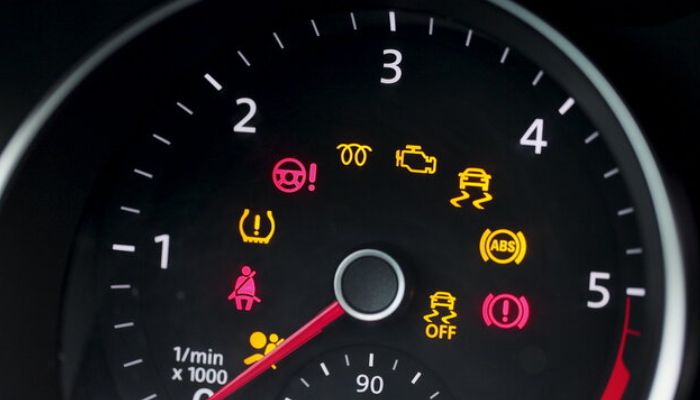
Before we get into the specific symbols, you need to know the color system. Car makers use a simple traffic light system to tell you how serious a problem is .
- Red Light: This is an emergency. It means you need to take action immediately. You should find a safe place to pull over and turn off the engine .
- Yellow or Amber Light: This is a warning. It means something needs your attention. It is not an emergency, but you should get it checked as soon as possible .
- Green or Blue Light: These are not warnings. They just tell you that a system, like your headlights or cruise control, is turned on and working properly .
Top 10 Car Warning Signs and Their Meanings
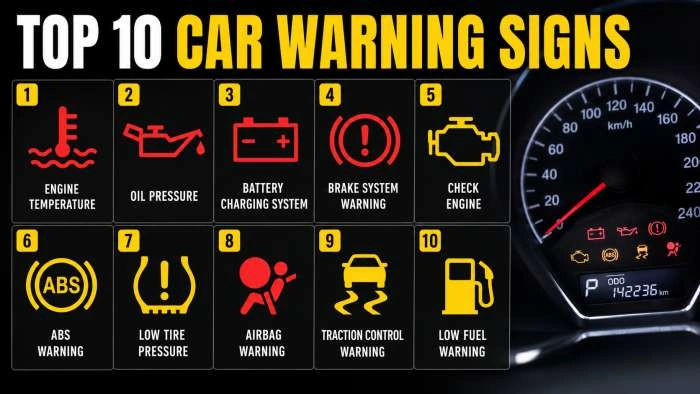
Here is a list of the top 10 car warning signs you are most likely to see. Each one is a crucial part of car dashboard symbols and meanings that every driver should know.
You may also read :- LED Or HID Headlights: Which Is Best For Your Vehicle?
1. Check Engine Light
This light looks like the outline of an engine . It can be yellow or red. This is one of the most common and vague warning lights.
- What it means: It can be triggered by something small, like a loose gas cap, or something serious, like a problem with your engine or emissions system .
- What to do: If the light is solid yellow, you should have your car inspected by a professional soon. If the light is flashing or red, it is a more urgent issue. You should stop driving and get help right away .
2. Oil Pressure Warning Light
This light looks like an old-fashioned oil can with a drop of oil dripping from the spout . It is always red.
- What it means: This light signals that your engine oil pressure is dangerously low. This could be from low oil, a leak, or a failing oil pump .
- What to do: Pull over and turn off the engine immediately. Driving with low oil pressure can destroy your engine. Check your oil level and add oil if it is low. If the light stays on, do not start the car again. Call for a tow .
3. Engine Temperature Warning Light
This light looks like a thermometer sitting in water . It is usually red.
- What it means: Your engine is overheating. This could be due to low coolant, a broken radiator, or a faulty water pump .
- What to do: Pull over and turn off the engine as soon as it is safe. Let the engine cool down completely before you try to check the coolant level. Never open the radiator cap while the engine is hot, as you could be badly burned .
4. Battery/Charging System Warning
This light looks like a rectangular battery with a positive (+) and negative (-) sign . It is red.
- What it means: There is a problem with your vehicle’s charging system. This usually means your battery is not being charged properly, often because the alternator is failing .
- What to do: The car is running on battery power alone and will eventually die. Get to a mechanic as soon as you can. If the car stalls, you will need a jump start to get it going again, but it will not stay running for long .
5. Brake System Warning Light
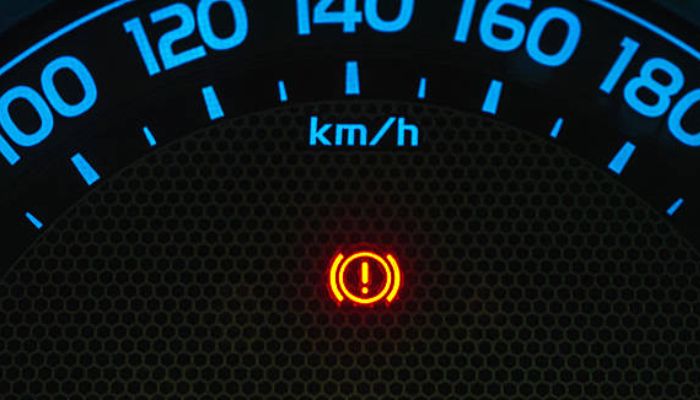
This light is an exclamation point (!) inside a circle, with parentheses on either side of the circle . It is red.
- What it means: This could mean a few things. It could be as simple as your parking brake being on. It can also mean your brake fluid is low or there is a serious problem with the braking system itself .
- What to do: First, make sure your parking brake is fully released. If the light stays on, check your brake fluid level. If the fluid is low or the light stays on, do not drive the car. Your brakes could fail. Call for a tow .
6. Tire Pressure Monitoring System (TPMS) Light
This light looks like an exclamation point inside a half-circle with flat bottom, which looks like a tire seen from below . It is yellow.
- What it means: One or more of your tires has low air pressure .
- What to do: Check your tire pressure and inflate your tires to the recommended level. You can find the right pressure number on a sticker inside the driver’s door frame or in your owner's manual . If the light stays on after you fill the tires, you might have a puncture. If so, get your tire checked by a professional .
7. Anti-lock Braking System (ABS) Light
This light usually just has the letters "ABS" . It can be yellow or red.
- What it means: There is a problem with your anti-lock braking system. This system prevents your wheels from locking up when you brake hard, helping you keep control of the car .
- What to do: Your regular brakes will still work, so you can drive the car. However, your ABS is not working, which is a serious safety risk. Get your car checked by a mechanic as soon as possible .
8. Airbag Warning Light
This light looks like the silhouette of a person sitting in a seat with a large circle (the airbag) in front of them . It is usually red.
- What it means: There is a problem with your airbag system. In the event of a crash, your airbags might not deploy .
- What to do: You can still drive the car, but it is not safe. The airbags are a critical safety feature. You should get this checked by a mechanic right away. It can also cause your car to fail an MOT or safety inspection .
9. Traction Control/Stability Control Light
This light looks like the rear of a car with two squiggly lines behind it . It is yellow.
- What it means: If this light is flashing, it means the system is active and helping you keep control on a slippery road. If the light is solid, it means there is a problem with the system, or you have turned it off .
- What to do: If it is flashing, slow down. If the light is on and you did not turn the system off, you should have it checked by a professional .
10. Coolant Level Warning Light
This light often looks like the Engine Temperature light, or it might just be a symbol of a radiator. It can be yellow or red.
- What it means: Your coolant (antifreeze) level is low. This can lead to your engine overheating.
- What to do: If the light is yellow, you should top up your coolant as soon as you can. Wait for the engine to cool before you open the reservoir cap. If the light is red, it means the engine is already overheating. Pull over and turn the engine off as soon as it is safe .
Conclusion
That little glowing icon on your dash isn't just there for decoration—blowing it off because you're running late is a classic case of "penny wise, pound foolish."Sure, you might make it to work on time today, but you're basically gambling that a cheap fix won't turn into a wallet-draining nightmare next week. The first thing to do is glance at the color: red means pull over and deal with it now, yellow means you've got some wiggle room but don't be an idiot about it, and green is just letting you know something's working like it should.
And for heaven's sake, if you don't recognize the symbol, don't just guess—crack open your owner's manual (yeah, the one collecting dust in the glovebox) because that thing actually has a map of every single light your specific car throws at you.
Frequently Asked Questions
Can I keep driving if a light comes on?
Look at the color. Red means stop right now. Pull over and turn the car off. Yellow means you can drive, but go to a shop soon. Do not wait weeks.
Why does my check engine light go on and off?
It is probably a sensor acting up. Or a loose wire. The problem is still there even when the light goes off. Get it checked while the light is on. That is when the computer stores the code.
What if the light is on but my car runs fine?
It does not matter. Something is wrong. You just cannot feel it yet. Get it looked at. Small problems turn into big bills if you ignore them.
Are all car symbols the same?
Mostly, but not exactly. Each brand has its own style. Your owner's manual has the real answers for your car. Keep it handy.
How much is this going to cost me?
That is the question everyone asks. It depends on the problem. A loose gas cap is free. A bad sensor is a few hundred. A broken engine is thousands. Get a diagnosis first. Then you will know.