

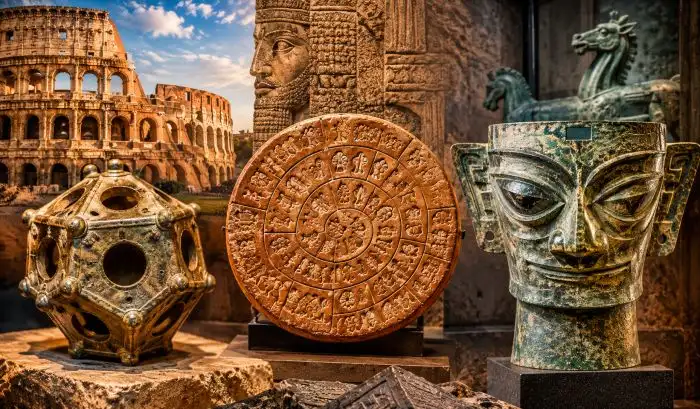
20 ancient objects archaeologists still can't explain reveal how much we still don't know about early human civilisations. These are some of the strange objects from ancient times that have left researchers baffled. Some were found in tombs and others from lost kingdoms and ancient sites.
They are often strange in shape and made of unusual materials and designs and this has given rise to a number of speculations as to what they were used for. Archaeologists have investigated numerous of these objects, but their uses are still not clear. Each find provides a captivating insight into ancient craftsmanship, beliefs and unanswered questions of humanity.
The "Baghdad Battery" Jars from Iraq Still Spark Debate
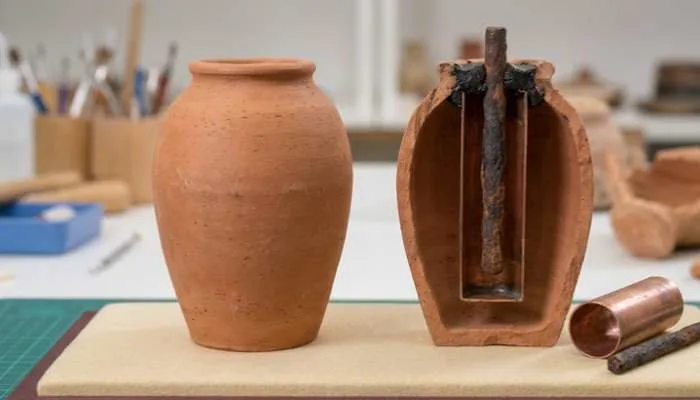
In 1936, diggers near Baghdad, Iraq uncovered clay jars that date back to the Parthian or Sasanian era between approximately 250 BCE and 650 CE.
The jars stand about 13 centimeters high and hold a rolled copper cylinder with an iron rod in the center. If you pour vinegar or wine into one of these samples, you get just about a volt, which earned the artifacts their name. But no record exists of wires or electroplated items from this society, and the jars likely served to keep scrolls that didn't make it.
Read More: Ancient Myths and Legends That Turned Out to Be Real
More Than 110 Roman Dodecahedrons Still Defy One Explanation
Craftsmen in Britain, Gaul, and Germany made each hollow cast bronze object with 12 pentagonal faces, a hole of different diameter in each face, and tiny knobs at the corners between the 2nd and 4th centuries CE. More than 110 have been found, but none appeared in Rome or Greece, and Roman writings and pictures make no mention of such objects. Someone has knitted one as gloves, with wool glove fingers, and others have suggested that they used them as surveying instruments, to measure lengths of pipe, or for ritual purposes.
A Saqqara Falcon Carving Failed Every Flight Test It Faced
Around 200 BCE, an Egyptian sculptor made a sycamore-wood model with fixed flat wings and a vertical tail fin of a flying falcon and placed it as a burial gift in the tomb of Pa-di-Imen, an Egyptian official at Saqqara. In 1969, researchers alleged that this was a model of an ancient glider. Wind tunnel tests showed it had a to nose heavy condition and no horizontal tail plane for gliding flight. Other similar models of birds have been found on the royal sacred boats carved on temples at Karnak.
The Venus of Willendorf Was Carved from Stone Hauled Far from Home
Slightly over 30,000 years old, and originally carved in limestone by roaming hunters and gatherers near Willendorf in Austria, the tiny, featureless woman was painted with red ocher. Scans of the statuette demonstrate that the limestone used to make the statuette had been quarried at a location that was over 400 km away, in northern Italy - further proof that Ice Age humans were regularly crossing vast tracts of territory to trade or roam. Its purpose, in all likelihood, a fertility idol, a self-portrait, a gift shared among groups, is unknown.
Quimbaya Goldsmiths Cast Tiny Jet-Like Pendants for the Dead
Goldsmiths from Colombia's Quimbaya culture made miniature gold-copper pendants, buried them with the burial of the wealthy as grave goods, between 500 and 1000 CE. The miniature figures have triangular wings, a single vertical tailfin, and animal heads.
One researcher found that flying model jets, with additional engines and wheels, "passed" their flight tests when they fitted them with additional elements not on the original model figures. Archaeologists identify the objects as figurines of stylized fish, insects, or birds.
The Phaistos Disc's 241 Symbols Have Never Been Read
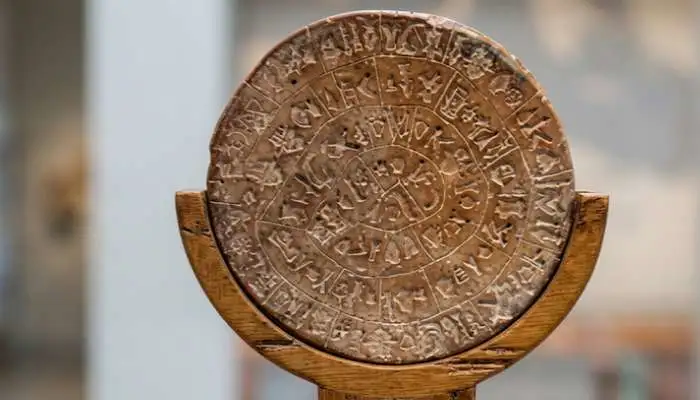
The Phaistos Disc came from Crete and dates from 1700 to 1600 BCE. Minoan craftsmen stamped both sides of the fired clay piece with the 241 symbols, which were pre-made stamps, rather than hand engraved. The symbols appear to be in a script that matches no language ever seen before.
Not only has no one found a second copy of the disc, dozens of casual researchers have translated it into whatever form, from a hymn to a game, and none has been accepted.
You May Also Read: Vintage 1980s Kitchen Designs That Feel Nostalgic
Rome's Spintriae Tokens Hide a Purpose Nobody Has Confirmed
In the first century CE, in the Roman Empire (which Pompeii was part of), you could buy coin-size bronze discs with a sexual image on one side and a Roman numeral on the other.
We don't have any Roman texts or laws to tell us what they were for. The word "spin Tria" isn't even Roman; 17th-century scholars derived the name from the historian Suetonius, who used it for male prostitutes. Theories exist, but no proof supports that these discs served as bathhouse locker tokens, game tokens, or even as privately commissioned satirical works.
Sanxingdui's Bronze Trees Belonged to a Kingdom History Forgot
In 1929, a farmer in Guanghan dug and discovered a pit filled with relics made by the ancient Shu Kingdom 1,200–1,000 BCE. Bronze trees, nearly 4 meters tall with small birds perched on them, stood alongside giant masks with flared, bulging eyes, which had been broken, burned, and buried as offerings. Because the Shu Kingdom had no writing and wasn't part of China's "official" histories, we can only assume that the trees served as conduits between heaven and earth and the masks represented ancestors and monarchs.
FAQs
1. What are some ancient objects archaeologists still can't explain?
Some mysterious ancient objects include the Baghdad Battery, Roman dodecahedrons, the Phaistos Disc, Quimbaya gold pendants, and Sanxingdui bronze trees.
2. What is the Baghdad Battery, and why is it mysterious?
The Baghdad Battery refers to ancient clay jars containing copper cylinders and iron rods. Some researchers believe they could generate electricity, but their actual purpose remains uncertain.
3. Why are Roman dodecahedrons difficult to understand?
Roman dodecahedrons have 12 hollow pentagonal faces with holes of different sizes. More than 110 examples have been discovered, but historians have not confirmed their original function.
4. What makes the Phaistos Disc so unusual?
The Phaistos Disc contains 241 stamped symbols on a clay surface. Its writing system has not been conclusively identified or translated.
5. Have archaeologists solved the mysteries of ancient objects?
Some ancient objects have possible explanations, but many remain uncertain because there are no written records or clear evidence explaining how people originally used them.