Today's world is completely digital. Every company, whether small or large, has its presence on the Internet. Websites, mobile apps, social media and online payment systems are now part of the business. In such a situation, cyber security is not just the responsibility of the IT team. Now it has also become the main subject of top management.
When a cyber attack happens on a company, the loss is not only of money. The biggest loss is the brand reputation of the company. Once the trust of the customers is broken, it becomes very difficult to rebuild it. Therefore, in today's time, the best level of administration has to take cyber security seriously.
What Is Cyber Security and What Does It Mean?
Cybersecurity is the security of digital frameworks, data and systems. This includes the company's computers, servers, mobile phones, e-mail, site, and cloud frameworks. Its purpose is that no outsider or hacker can steal the company's information.
Read Also: Cyber Security for Top Management: Strategy Over Tools
Many people think that cyber security is just a technical thing. But the truth is that it is also a business risk. If the company's customer data is leaked, legal action may follow. Negative news can be spread through the media. The company's image on social media can be tarnished.
What Is Brand Reputation and Why It Matters?
Brand reputation is the image of a company in the eyes of the public. Customers buy a product or service because they trust the brand. If the customer feels that the company cannot keep his data safe, he chooses another company.
In today's time, news spreads very fast. Even a little cyber assault can become big news on social media. Individuals begin to see the company as irresponsible. This leads to a fall in sales and has a direct impact on business.
Why Cybersecurity Is Important for Top Management?
The top management decides the direction of the company. If the leadership doesn't prioritise cyber security, the entire team will take it for granted. That's why it's important for CEOs, CFOs, directors and senior managers to understand this topic.
Top management must understand that cyber risk is as dangerous as financial risk. A big data breach can cause a loss of crores to the company. At the same time, the brand's reputation can be affected for years.
Common Types of Cyberattacks That Need to Be Understood
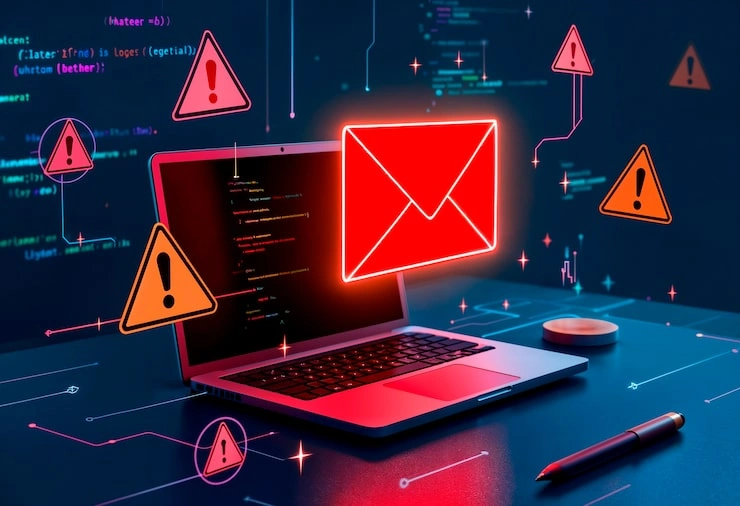
There are many types of cyber attacks today. Some of these are very common and most companies fall victim to them. In a phishing attack, passwords or bank details are taken from employees by sending fake emails or messages.
In a ransomware attack, the entire system of the company is locked and then money is demanded. In a data breach, confidential information of the customer or the company is stolen. These attacks have an impact not only on the system but also on the brand image.
How a Cyber Attack Damages a Brand?
When a company's data is leaked, the media is the first to raise questions. Customers are scared. There are posts against the company on social media. People stop trusting the company.
After this, legal notices and fines can be imposed. The confidence of the shareholders also decreases. Many times companies have to apologize and improve the system by spending heavily.
What role should top management play in cyber security?
The top management's job is not just to pass the budget. They should be involved in the strategy of cyber security. They need to know where the company's data is kept and how secure it is.
The leadership should take regular updates from the IT team. Cyber security should be made a part of the board meeting. This sends a message to the entire organisation that the issue is serious.
Why is it important to educate employees?
Many cyber attacks occur due to the small mistake of the employees. Someone clicks on the fake link. Someone keeps a weak password. And that puts the whole system at risk.
The beat management ought to give regular training to the workers. Clarify in basic language what cyber threats are and how to avoid them. When employees are aware, the risk is reduced to a great extent.
The importance of strong passwords and access control
Companies often ignore this fact. Weak passwords are the easiest route to cyber attacks. A strong password can prevent a lot of problems. The top management should ensure that all systems have a strong password policy. Every employee should get as much access as is required for his work. This reduces risk of injury.
Why it is important to have a data backup and recovery plan
If ever there is a cyber attack, the company should get back to normal as soon as possible. Data backup is very important. Having regular backups can reduce losses. The top management should see whether the company has the right backup system or not. Also, there should be a clear recovery plan so that panic does not spread at the time of crisis.
Don't ignore third-party and vendor risks
Many companies today rely on third-party software and vendors. If their system is weak, then the company can also be in danger. The top management should also check the cyber security policy of the vendors. Ensure that they are moreover complying with security standards.
Cybersecurity is an investment, not a cost
At times, the management considers cyber security as an extra cost. But this thinking is wrong. It is not an expense, it is an investment. Investments made at the right time can save you from big losses in the future. When the company is secure, the trust of the customer increases. This makes the brand stronger and benefits in the long run.
Why communication is essential in times of cyber crisis
If there is ever a cyber attack, keeping calm is the greatest mistake. It is critical to give the right data to clients and stakeholders at the right time. The beat management ought to prepare a communication arrangement in advance. Brand credibility can be handled by talking honestly and transparently.
The role of cyber security will increase in the future
Digital technology is advancing at a rapid pace. The use of artificial intelligence, cloud and online transactions is increasing. At the same time, cyber threats are increasing. In such a situation, the top management will always have to be updated. New technologies and new threats have to be understood. Only then the company will be safe.
Conclusion
In today's time, cyber security is not just the responsibility of the IT department. This is the responsibility of the entire organisation and especially the top management. Brand reputation is built with a part of difficult work, but a cyber attack can harm it in a moment.
If the leadership makes the right choices, raises awareness and prioritizes security, the company not as it were stays secure but rises as a solid and trusted brand in the market.