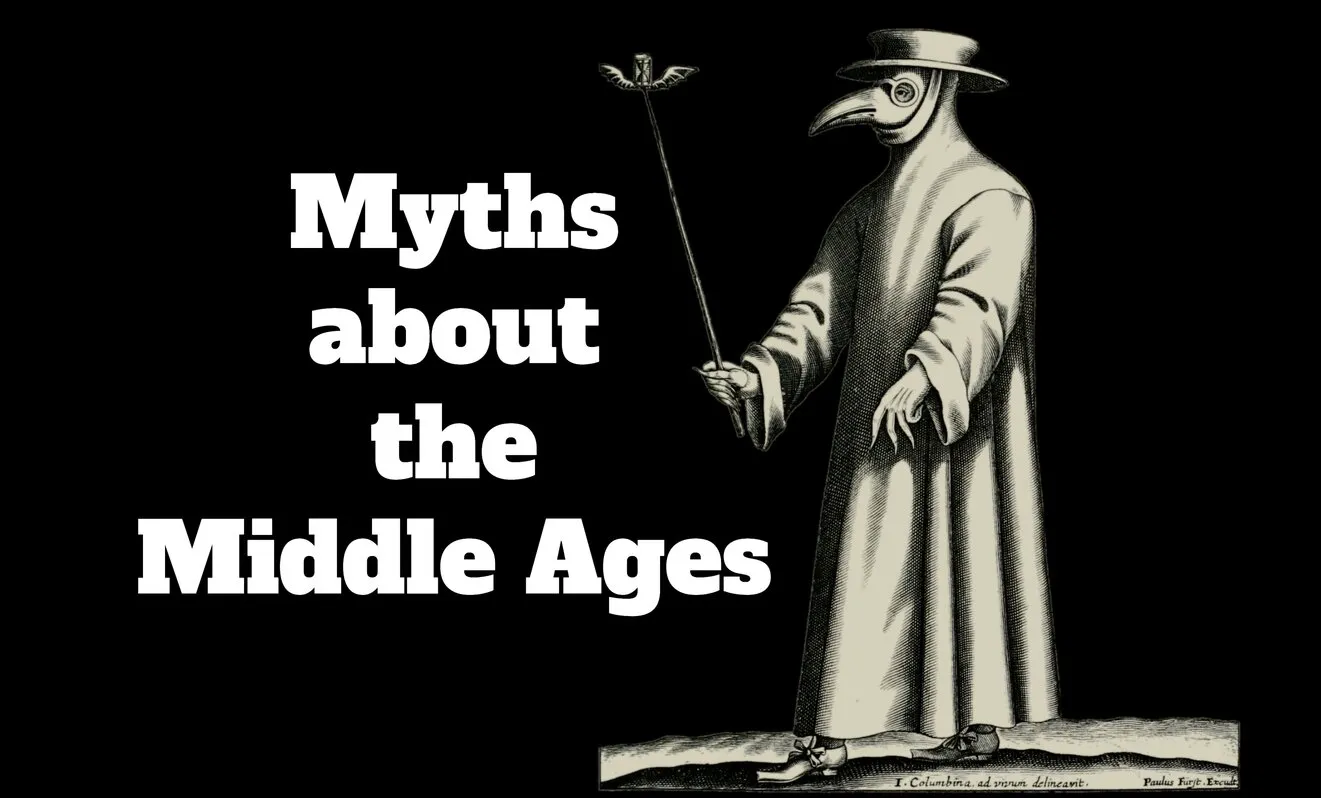
People depict the Middle Ages which lasted from the 5th to the 15th century as a time of darkness that brought about backwardness and uncivilized behavior.
Writers from later periods created this image of the Middle Ages to show their own times as better than what they viewed as a "dark" historical period.
Most common beliefs people hold about medieval life contain either exaggerated elements or complete falsehoods. The most common misconceptions about history will be explained through their actual historical evidence.
Everyone Thought the Earth Was Flat
This is one of the most persistent myths. The educated people of the Middle Ages understood Earth to be a sphere because ancient Greek and Roman scholars had previously established this knowledge.
Read Also: Most Hilarious Historical Pranks Ever Pulled
Medieval universities taught classical astronomy, and many texts described the Earth as a sphere. The idea that people widely believed in a flat Earth became popular much later, especially in the 19th century.
The Middle Ages Were Dirty and People Never Bathed
People in ancient times practiced bathing despite their different understanding of hygiene standards. The majority of towns operated public bathhouses while residents typically washed their hands and faces.
Nobles frequently established their own personal bathing spaces. The statement about city hospitals maintaining dirty conditions throughout streets is an exaggeration of actual conditions.
They Used Elaborate Torture Devices
The Middle Ages produced stories about the Iron Maiden and the Rack and the Pear of Anguish because people believed this torture devices existed. However, these stories were almost always describing events either prior to, or more commonly well after, this time period.
The Iron Maiden remains completely unproven because no evidence exists of its existence and its Middle Ages connections were created in 19th century. The Pear of Anguish existed in the same way as the Rack which had its first documented use at Tower of London back in 1447 but remained uncommon during that era.
People Did Not Live Past 30 Years Old?
You will encounter numerous statistics which state that people in the Middle Ages reached their average lifespan of 35 years. The statement may contain truth, but it creates a deceptive impression.
The extremely high infant mortality rates during that time period caused people who survived their first year of life to have an increased chance of reaching their seventies.
The people of medieval times possessed knowledge about human development which included understanding life stages that ranged from "old age" to "middle-aged" with particular emphasis on "middle age" as the stage in life when men achieved both wisdom and emotional stability.
Witch Trials Were Common
There have been plenty of movies and TV shows depicting medieval witch trials to the point that it has become acceptable to question whether those trials took place continuously throughout history.
You Must Also Like: Ramayana and Value Education in Uttarakhand Schools: Policy or Politics
The short answer to the question provides an explanation that extends beyond a simple yes or no answer. The popular myth claims that the period between 1400 and 1750 saw 9 million witches killed during the persecutions but the actual death toll probably fell between 30,000 and 60,000.
The average number of deaths reached between 85 and 170 fatalities each year. The figures in England showed even lower numbers because the country conducted trials for no more than 2,000 people and only 25 percent of those defendants received guilty verdicts which led to their execution.
Science and Learning Disappeared
The Middle Ages established major universities which established progress in mathematics and medicine and engineering and philosophy.
Scholars preserved ancient knowledge and built on it. The period produced significant inventions which included mechanical clocks and improved plows and eyeglasses and windmills.
The Renaissance Brought Society Out of the “Dark Ages”
The Renaissance period of the 15th and 16th centuries produced significant societal transformations while bringing forth an intellectual movement that shaped cultural development. The time before this period should not be described as the "dark ages" according to this statement.
Italian scholar Francesco Petrarch created the term during the mid-14th century to describe the time period as blind and uncritical which he used to mock people who lived then because medieval scholars showed advanced understanding of individual and communal existence.
The statement that the Renaissance had no precursors exists as a falsehood because two separate intellectual movements from the Middle Ages influenced the period which began with the 8th and 9th century Carolingian Renaissance and extended through the 12th-century Renaissance.
Knights Were Slowed Down by Their Heavy Armour
Modern media shows knights from medieval times wearing heavy armour that looks difficult to handle. The standard battle armour used by soldiers in combat weighed between 20 to 25 kg (44 to 55 lbs.) While the helmet added another weight of 2 to 4 kg (4 to 8 lbs.).
The total weight of the equipment for firefighters with oxygen gear and modern soldiers is higher than this weight. Knights who used 15th century plate armour maintained their ability to move freely while they could mount and dismount horses without help.