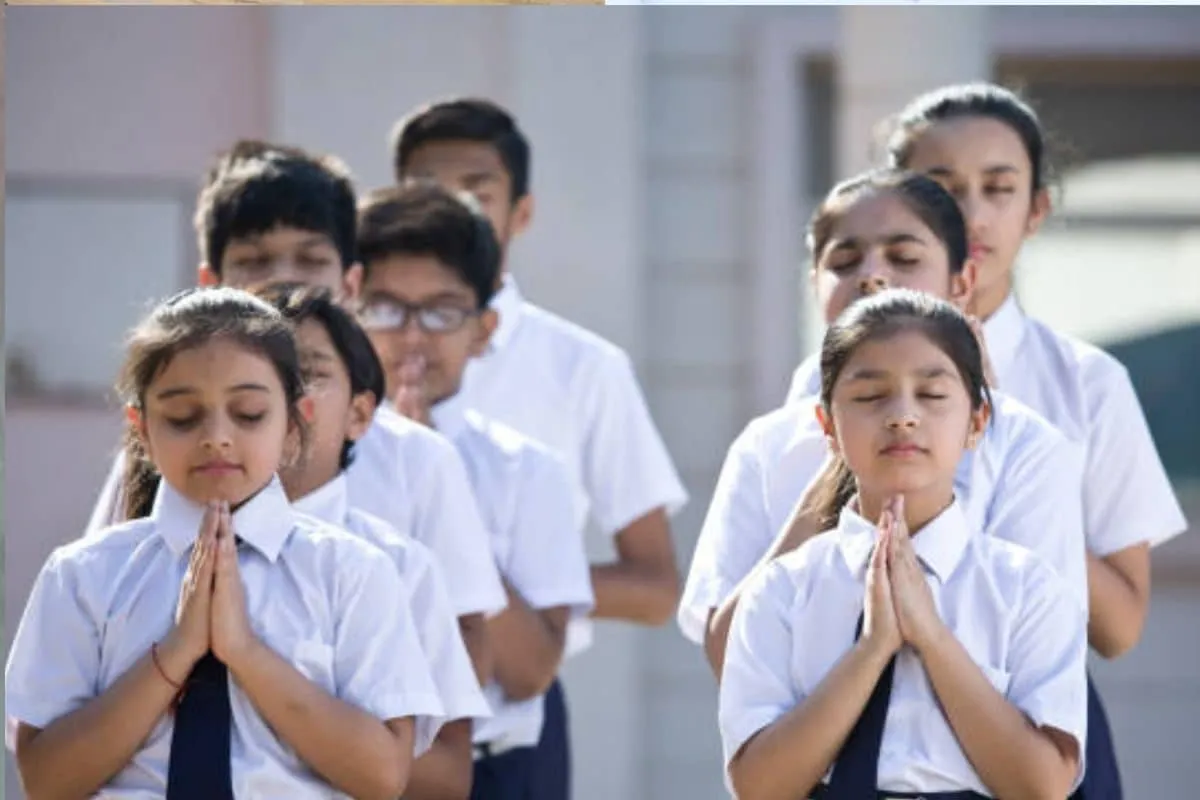
Education is not just about passing examinations. The real work of education is to make people better. It teaches us to think right, behave right and make right decisions. In today's time, when children are developing in a mobile, social media and fast-changing world, the need for moral values is clearly visible.
That is why the Uttarakhand government has proposed to incorporate Ramayana-based esteem education in schools. But the choice has been controversial. Some people consider it a good education policy. Some people are linking it with politics. In this article, we will discuss this topic in simple language.
What is value education?
Value education means:
Teach good values to your children. Teach them the significance of genuineness, kindness, honesty, and responsibility. Education is not constrained to books. This is reflected in the behavior of children. It helps them to become good human beings.
Value education teaches children that:
How to Respect the Elderly?How to get in the habit of telling the truth?How to stay away from the wrong path?How to be useful to society? Nowadays, when crime, pressure and intolerance are on the rise, the demand for esteemed education has ended up even greater.
You may also read :- Vocational Subjects Added: Uttarakhand’s New Learning Model
The Ramayana: Not fair religious texts.
It would be incomplete to consider Ramayana as a religious content only. It's the logic of life. It shows the right way to live life. The life of Lord Rama in the Ramayana is a perfect example. He did not leave limits in every situation. He put religion above power, power and ego.
The Ramayana teaches us that:
It's not easy to walk the path of truth. But in the end, truth prevails. What is the importance of relationships? What it means to be patient and forgiving. That is why many people believe that the values found in the Ramayana can be very useful for the lives of children.
Uttarakhand moots linking Ramayana with education
Uttarakhand is a spiritual and cultural state. It is known as Devbhoomi. The culture here is deeply affected by religion, morals and traditions. The government accepts that if children are associated with their culture, they will be able to identify their roots. The purpose of teaching Ramayana as a value education is stated to be:
Give good education to your children. Learn to differentiate between right and wrong. Discipline and responsibility came to them. The government says it is not imposing any religion. It is only a means of moral education.
Opinion of supporters: A strong educational policy.
Those who support this decision consider it a positive step. He said that there is a lack of value in modern education.
They believe that:
Children are on the books. But in practice, they are falling behind. Books like Ramayana can teach children the essential values of life.
Supporters say:
Education makes children human. It brings peace and harmony in the society. It helps in the mental development of children. According to him, if Ramayana is taught as a story and example, it can be very beneficial for children.
The opinion of critics: Politics in education
Some disagree with the decision. "Education should be kept away from politics.
As the critics say:
India is a religious country. It is not right to teach books related to one religion in schools. This can lead to discrimination among children. Other religions can be ignored. According to him, value education is a must. But it is not right to base it on any one religious text.
The line between policy and politics
That's the big question here. Is this decision an education reform or a political agenda? If the purpose of this initiative is only to give good values to children, then it can be a strong policy. But if it is used for political gains, it can go in the wrong direction. The real difference will be….
How it is taught
Whether or not it is trying to force. Are all children's feelings respected? The line between policy and politics is very thin. Why is education important? How the Ramayana will be taught is the most important question.
If it is -
- in the form of story
- as a moral example.
- through discussion and dialogue.
- If it is taught, it can be useful.
But if it-
- forced
- as religious preaching.
- As the burden of the test
- If taught, it can have the opposite effect.
All religions must be respected.
India is home to many societies and religions. Here each religion teaches people to be great in their own way. When great values are instructed to children in schools, it is important not to talk about almost any one religion. Children meet different individuals each day, so they must learn to get it and regard each other. Tolerance is very valuable in the life of children, since with it they learn to live in peace.
The Ramayana can give children examples of the good life, and at the same time teach children Buddha's idea of peace, Guru Nanak's teaching of equality, and Mahatma Gandhi's principles of truth and non-violence. When such simple and good ideas are included in studies, education becomes balanced and children become good human beings.
The potential impact on children
If implemented properly, this initiative can be beneficial for children.
Children—
You can learn to be patient. Understand the importance of relationships. You can learn to take responsibility. But when used incorrectly, children can be confused. The purpose of education may be weakened. So balance is very important.
Role of teachers
Teachers play a vital part in this process. Teachers should direct children in the right direction. Teach with an open mind. The freedom to ask questions. So this initiative can be successful. If teachers themselves will be under pressure, then the purpose of education may be lost.
Conclusion: What is the solution?
It is natural to debate on Ramayana and value education. This topic is related to emotions. The solution lies in balance, not in confrontation. The purpose of education should not be to impose an idea. Children should be good human beings. All cultures should be respected. Education should be kept away from politics.
So this initiative can bring a positive change. In conclusion, we can say that: It is not wrong to teach Ramayana, but it is vital to educate it with understanding and sensitivity.