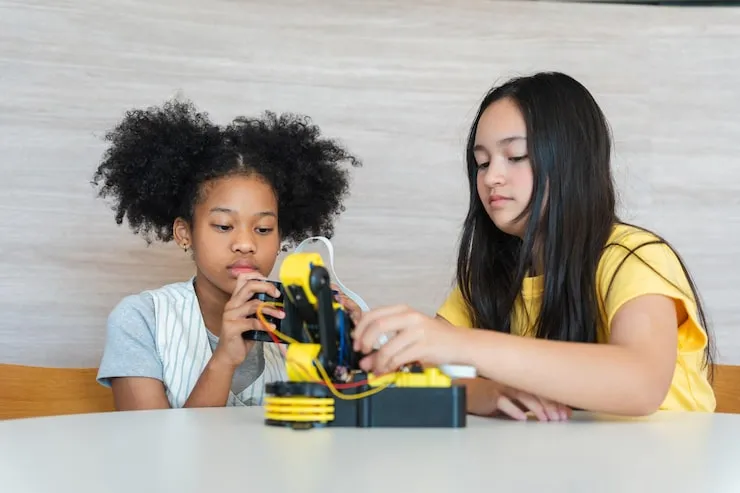
Is your young learner bursting with questions? Do they wonder how bridges stand, why plants grow, or what makes a toy car zoom? The best way to answer these questions isn't always with a book or a screen. The answer is active, joyful learning through hands on STEM activities for kids.
STEM stands for Science, Technology, Engineering, and Math. These subjects are the building blocks of our world. When children get to touch, build, experiment, and create, these big ideas click. This guide is packed with exciting projects and explains exactly why this kind of learning is so powerful.
Why Hands-On Learning Makes STEM Click
Reading about science is good. Doing science is unforgettable. When a child builds a structure that can hold weight, they learn about engineering principles in a way they can feel. When they mix safe kitchen ingredients and see a reaction, chemistry becomes a fun surprise, not just a scary word.
This active approach builds critical thinking skills. Kids learn to ask "what if?" and try a new way. It turns failure into a learning step, not a stop sign. A tower that falls teaches more about balance than a perfect picture ever could. These projects also show kids that STEM is everywhere—in the kitchen, backyard, and living room—and it’s for everyone.
Your Essential Hands On STEM Activities for Kids Guide: Getting Started
You don’t need a fancy lab. Most supplies are already in your home or can be found at a dollar store. Here’s what to gather:
-
Basic Builders: Recyclables (cardboard tubes, boxes, egg cartons), tape (painter’s and masking), scissors, string, straws, paper clips, craft sticks.
-
Kitchen Scientists: Baking soda, vinegar, food coloring, dish soap, measuring cups and spoons, vegetable oil, salt.
-
Nature Explorers: A magnifying glass, leaves, rocks, a notebook for sketching.
-
Safety First: Always supervise activities. Wear old clothes or aprons. Safety glasses are great for building projects.
Remember, the goal is exploration, not a perfect product. Let curiosity lead the way!
Engineering Adventures: Build and Create Challenges
Engineering is all about solving problems with design. These activities turn kids into mini-engineers.
Construct a Marble Maze or Roller Coaster
This is a fantastic engineering challenge for young learners. Using cardboard, paper plates, or foam pool noodles, design a path for a marble. Tape walls to create twists and turns. Experiment with angles to make the marble go faster or slower. This teaches gravity, slope, and planning.
The Classic Egg Drop Challenge
A beloved problem-solving STEM project. The mission: protect a raw egg from a high fall using limited materials like straws, cotton balls, and tape. Kids must think about cushioning, impact, and structure. It’s a thrilling test of their creative engineering skills.
Kitchen Chemistry: Safe and Simple Science Experiments
Your kitchen is a secret chemistry lab. These safe experiments reveal the magic of reactions.
Create a Fizzing Lemon Volcano
Combine the juice of a lemon, a few drops of food coloring, and a little dish soap in a cup. Now, add a spoonful of baking soda and watch the colorful chemical reaction erupt! The acid (lemon juice) and base (baking soda) react to create carbon dioxide bubbles. It’s messy, safe, and amazing.
Discover Non-Newtonian Fluids with Oobleck
Mix cornstarch and water (about a 2:1 ratio) in a bowl. Poke it fast, and it feels solid. Hold it gently, and it drips like a liquid. This strange substance, called Oobleck, is a fun physics experiment at home that demonstrates how some materials don’t follow the usual rules.
Physics Fun: Explore Forces and Energy
Physics explains how things move. These projects make invisible forces easy to understand.
Build and Race Balloon-Powered Cars
Attach a balloon to a simple car made from a cardboard box, bottle caps for wheels, and straw axles. Inflate the balloon, let go, and watch Newton’s Third Law in action! The air rushing out pushes the car forward. It’s a perfect lesson in recycled material STEM projects and propulsion.
Craft a Simple Homemade Catapult
Use craft sticks, rubber bands, and a bottle cap to build a small catapult. Launch pom-poms or marshmallows. Change the design: What happens if you use more rubber bands or move the fulcrum? This is play-based learning in science that teaches about force, levers, and trajectory.
Life Science and Nature Exploration
Biology is the study of living things. Step outside or look closely to discover it.
Start a Windowsill Garden
Plant fast-sprouting seeds like beans or herbs in cups. Observe and record their growth each day. This teaches plant biology, responsibility, and the needs of living things. It’s a calming, long-term educational activity for elementary students.
Go on a Backyard Bug Safari
With a magnifying glass and a notebook, explore a small patch of grass or a tree. Look for insects, spiders, and worms. Draw what you see. This encourages careful observation and respect for ecosystems, a core part of elementary school science experiments.
Coding and Technology Without Screens
Computational thinking starts with logic and sequencing, not just a computer.
Create "Human Robot" Directions
Write simple commands on cards: "Take 3 steps forward," "Turn 90 degrees right," "Pick up object." One person acts as the "coder," arranging the cards in a sequence. The other acts as the "robot," following the code exactly. This teaches the precision needed in programming through unplugged coding activities.
Design a Paper Circuit Greeting Card
Using copper tape, a coin battery, and an LED light, create a circuit on a piece of paper or cardstock. When you fold the card so the tape touches the battery, the light turns on! This is a brilliant intro to electronics for children that makes technology tangible.
Integrating Math Naturally
Math is the language of STEM. Weigh materials, measure distances for catapults, count seed growth days, or graph the results of multiple egg drop tests. This shows math as a useful tool, not just numbers on a page.
Making It Work for Your Family
-
Follow Their Lead: If they love the marble maze, explore other physics activities. Interest is the best fuel.
-
Ask Open Questions: Instead of "Did it work?" try "What did you notice?" or "What would you change next time?"
-
Celebrate the Process: Praise the effort, curiosity, and creative thinking, not just a perfect outcome.
As Dr. Anya Sharma, a science education professor, notes: "The 'aha!' moment a child gets from a hands-on experiment creates a neural pathway far stronger than passive listening. It builds not just knowledge, but scientific confidence."
Frequently Asked Questions (FAQs)
Q: My child gets frustrated if an experiment fails. What should I do?
A: Celebrate it! Say, "Great! Now we know that way doesn't work. What's another idea?" Frame failure as a vital step for all scientists and engineers. It’s how we learn.
Q: I'm not good at science myself. Can I still do these?
A: Absolutely! You are learning alongside your child. Your willingness to try, wonder, and say "Let's find out together" is the most powerful lesson of all.
Q: What’s a good first activity for a 5-7 year old?
A: Start with sensory exploration like Oobleck or a very simple building challenge with blocks and tape. The goal is playful interaction with materials.
Q: How long should these activities take?
There’s no set time. Some take 15 minutes; others (like a garden) are ongoing. Let your child’s engagement level be your guide. It’s okay to pause and come back later.
Start Your STEM Adventure Today
The world is full of wonders waiting to be explored. By choosing hands on STEM activities for kids, you’re doing more than just a fun afternoon project. You’re building a foundation of curiosity, resilience, and problem-solving that will help them in every part of life. So grab some cardboard, some curiosity, and get started. Your next great discovery is waiting