

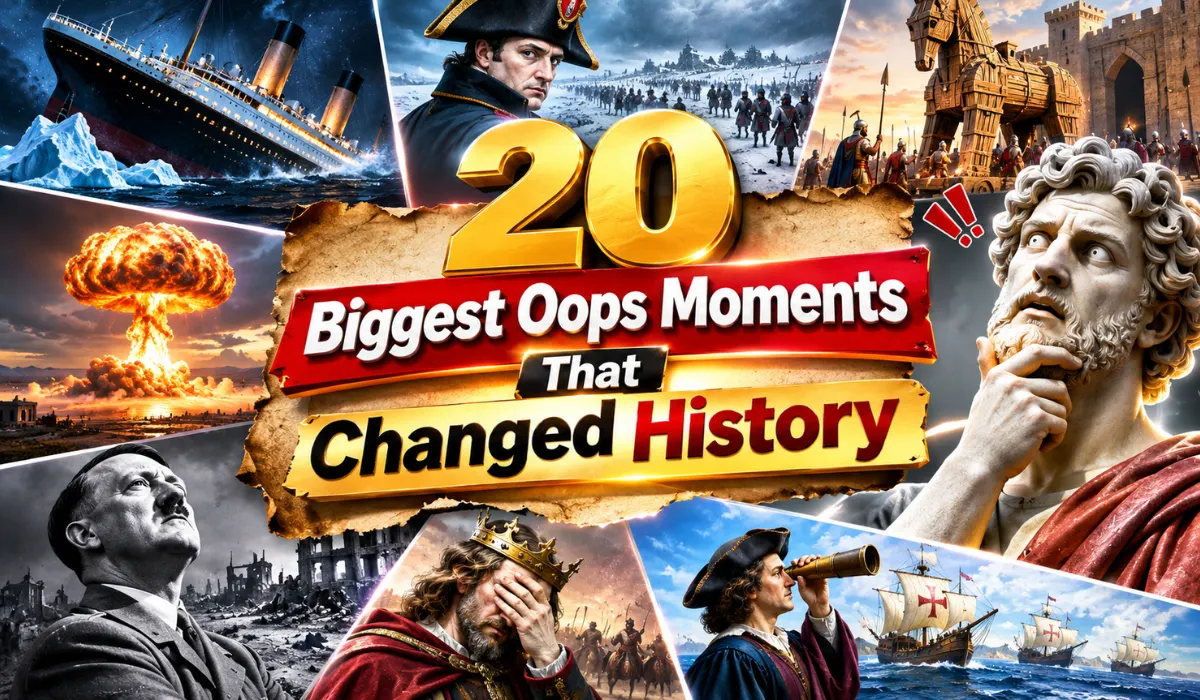
On June 28, 1914, Gavrilo Princip and fellow conspirators planned to assassinate Archduke Franz Ferdinand, visiting Sarajevo, and conduct a propaganda stunt. The first assassination attempt failed. That same afternoon, as Ferdinand's driver drove to a hospital, he accidentally turned the car the wrong way - stopping to do a 360 then putting the car into reverse. The driver finally stalled the car right in front of the waiting Princip, who took two shots, both deadly, and killed Franz Ferdinand and his wife, Sophie. Austria-Hungary blamed Serbia, and history tells us the chain of alliances was set off, starting the beginning of World War I. What started as a navigation mistake ended as one of history's most murderous accidents.
The Chernobyl Disaster (1986)
Operators of the Chernobyl Nuclear Reactor adopted a failed design, breached operational safety requirements, and willfully violated safety procedures at the plant in Soviet Ukraine, which led to the worst nuclear catastrophe in history. The violation of operational safety requirements and the design deficiencies of the safety control systems and the reactor itself together generated a power excursion and resulted in 2 huge explosions that released radioactivity into the environment of the European continent.
The Titanic Hits an Iceberg (1912)
On its maiden voyage in April 1912, people hailed the RMS Titanic as one of the most technologically advanced ships ever created. The Titanic steamed full speed ahead despite numerous iceberg warnings. When the crew finally sighted the iceberg, it was too late for them to steer clear, and the iceberg tore holes in the ship, flooding her. Titanic had too few lifeboats for everyone on board, and over 1,500 people lost their lives when she sank. The impact was immediate. Maritime safety transformed, and the sinking of the Titanic is still one of the biggest disasters at sea.
The Accidental Discovery of Penicillin (1928)
The accidental start of a medical miracle happened thanks to Scottish bacteriologist Alexander Fleming, who returned home from holiday to find a Petri dish that he had forgotten to put away contaminated with a mold. Not disposing of the mouldy dish, Fleming noted that it had killed off the bacteria that had grown around the mold. Taking a closer look, he established the mold as a Penicillium and thus he birthed the world's first antibiotic penicillin.
NASA's Mars Climate Orbiter (1999)
When NASA launched its Mars Climate Orbiter in 1998 to study the Martian atmosphere, the mission's designers used two different measuring systems - one imperial, one metric. The calculations that defined the course of the craft did not catch the error, resulting in the Orbiter's sudden veering into the atmosphere and its demise. The mission lost $125 million before it had an opportunity to accomplish its mission objectives. This infamous case often serves as an example of the high costs a single conversion error can cause.
The Trojans Accept the Wooden Horse
In the ancient Greek epic tradition, the Greeks devised a grand scheme to win after many years of fighting with the Trojans and left behind a giant wooden horse. Thinking they had finally won the war, the Trojans rejoiced and dragged the horse behind the walls of Troy, in defiance of the warning that the horse was not a gift. Overnight, the Greeks emerged from the wooden horse, opened the city gates, and allowed the rest of the Greeks in, and thus the Greeks finally vanquished the city of Troy. Historians continue to argue over its historical accuracy, but the story has gone down in history as perhaps the greatest lesson about appearances in history.
The Great Molasses Flood (1919)
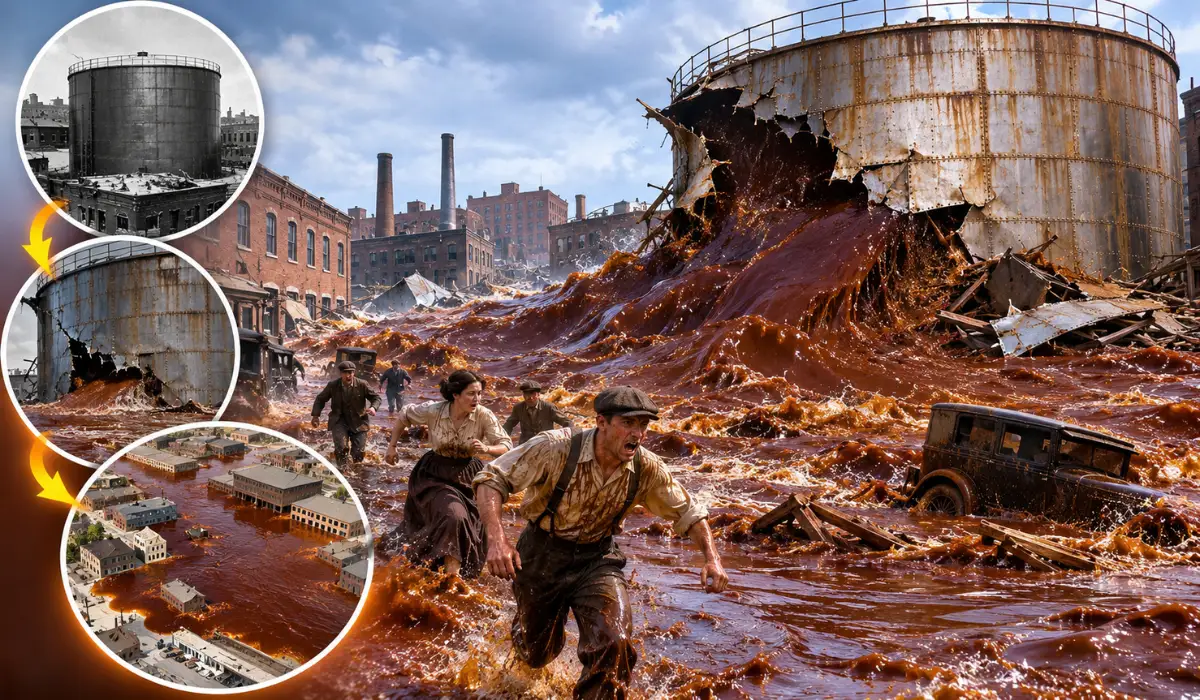
A giant storage tank in Boston exploded on January 15, 1919, releasing over 2 million gallons of molasses. Allegedly, the molasses ran through the streets of Boston at approximately 35 mph. It knocked down buildings, flipped over cars, and trapped innocent bystanders. The event killed twenty-one people and injured about 150, according to Wikipedia. A few years later in the wake of the blowup, investigators found out that the storage tank was not built very well and put in too much molasses. The bizarre event led to the national adoption of new building standards and engineering specifications. One of the strangest industrial accidents in the US.
The Assassination of Julius Caesar (44 BCE)
Julius Caesar had become Rome's greatest power, and this frightened many senators, who thought that he was just about to become king. On March 15, 44 BC, conspirators stabbed him at a meeting of the Senate, thinking they were saving Rome. In fact, they condemned the republic, and for ten years, civil war rocked Rome. Caesar's heir, Octavian, defeated everyone in the race to be first Roman Emperor and called himself Augustus. In the process, the conspiracy did the opposite of what they intended: the republic finished and Rome's long new history began.
FAQ's
1. What is the single most expensive mistake in history?
The 1999 NASA Mars Climate Orbiter crash, where engineers mixed up metric and imperial units, costing $327 million.
2. Which accidental discovery saved the most lives?
Penicillin, discovered in 1928 when Alexander Fleming left a petri dish uncovered near an open window and returned to find mold killing bacteria.
3. How did a simple typo bankrupt a major company?
In 1995, a clerical error on a fax order by Japan's Barings Bank (combined with hidden rogue trades) led to $1.3 billion in losses, collapsing the 233-year-old institution.
4. What historical "oops" created a famous everyday snack?
Potato chips were invented in 1853 when chef George Crum sliced potatoes paper-thin and fried them to a crisp to spite a customer complaining their fries were too thick.
5. Did a forgotten lock really cause the fall of an empire?
Yes—in 1453, the Kerkoporta gate in Constantinople was accidentally left unlocked, allowing Ottoman troops to slip inside and end the Byzantine Empire.