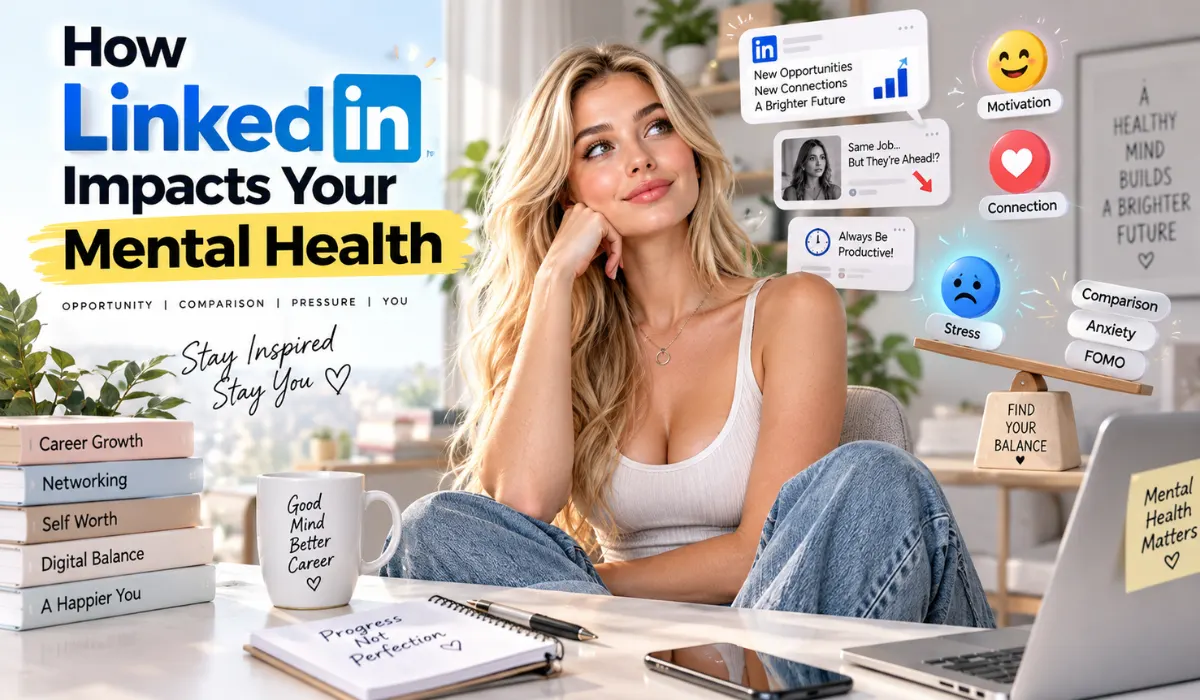
With the 1.2 billion user milestone achieved and a 9% year-on-year growth rate since last year, it’s confirmed; LinkedIn is now the biggest social networking platform on Earth. Originally conceived solely as a place where users could upload a resume or CV, it has now transformed itself into a dynamic, fully integrated social network, as people can now post personal experiences, share opinions on the working world of 2022 and from 2017 onwards, users can upload videos too. From finding a new career, connecting with individuals from their profession or establishing themselves as knowledgeable individuals, to aspiring towards the realm of influencer status; it’s undoubtedly the place to be. As more than 40% of users log in at least daily, it has rapidly established itself as a central pillar of professional life. The query can thus be raised; how does LinkedIn impact our individual mental health, and have we ever stopped to consider how we interact on the platform? Let’s turn to the study results on this specific social networking tool.
Everyone's winning but you (or so it seems)
It can feel like your entire feed is just people bragging on LinkedIn, screaming into the void about how much "better" they're doing. It's all these people coming at you with, 'I got a new job', 'I'm a freelance and I just made an insane amount of money' or 'I'm a business owner, and here's the deal with my latest win!' Meanwhile you're miserable at your current job or you haven't heard back from your 100th application. In light of this, it's easy to feel jealous and comparing yourselves with what everyone else is experiencing on LinkedIn. Ironically enough, it has been found that individuals who are suffering from a problematic use of this social network may have an inclination for upward social comparison, which leads to a decrease in self-well-being.
Scrolling can spike your anxiety
With the rise of LinkedIn, checking the site has become a second nature for some. If you, one of them, log in at least one day out of seven or so, you may be walking on the edge. Research from the Cyberpsychology, Behavior, and Social Networking Journal examined such phenomena. It revealed that users who log on to the network at least once a week were 2.8 times as likely to suffer from anxiety compared to non-users, and the more frequently they accessed the social networking site, the worse their mental status would be predicted.
The depression and LinkedIn connection
The above is just one of many possible side effects that constant LinkedIn visitors experience. According to the same study, researchers found that those who logged on weekly or more were 2.1 times more likely to develop depression than those who don't- depression, a disease plagued by sustained sadness, anhedonia (numbness), low energy and feelings of worthlessness. Although the notion of social media causing mental depression isn't anything new, a vast majority incorrectly think that it applies to others on LinkedIn because users create a social network, rather than network a social connection.
Success posts can cause career frustration
Constantly flicking through all the posts celebrating success must obviously evoke very mixed feelings in anyone browsing them. If it didn't sound like it, everyone else just seems to be going from strength to strength on LinkedIn. If it did…well, you're clearly doing very badly indeed. This may sound exactly like what is happening on the page before you - two Japanese studies into social media comparison on business networking sites revealed that this often-upward comparison actually resulted in job-related frustration; feelings of frustration that one has failed to gain traction in one's career.
The platform can trigger imposter syndrome
Imposter syndrome has now become a very widespread and ever-present problem, especially in today's working society. This means you believe that, in fact, you have effectively tricked everybody around you into thinking that you are capable; that, through luck and being able to persuade them into this, you are in a position which you don't deserve to be in, because in reality, you're just a sham that's been pulled. Researchers at the University of Edinburgh discovered that the social networking site, LinkedIn, causes this to occur twice over. A person can encounter imposter syndrome when scrolling through other peoples' posted updates, due to the fact that most people usually brag more online, and even sometimes, they can feel it immediately after they have 'posted' an update, when all their colleagues send them back congratulations which they feel they're not entitled to.
It can also harm your self-esteem
Despite its purpose to be a platform for finding jobs and establishing connections, that's not where LinkedIn stops. The hyper-curated profile pictures and non-stop postings create an environment that causes everyone to self-doubt - especially for those who belong to generation Z, research seems to suggest so. One research conducted (Strategic HR Review) indicated that generation Z in particular struggled with the public metrics, perfectionism, and upward comparison of LinkedIn. This may result in low self-esteem and lower usage of the platform, it concluded.
FAQ's
Why does scrolling through LinkedIn make me feel anxious?
Exposure to a constant stream of curated career achievements, promotions, and idealized professional milestones often triggers unhealthy social comparisons, leading to feelings of inadequacy, self-doubt, and performance pressure.
What is "LinkedIn anxiety" and who does it affect?
It is a form of stress related to professional networking—often affecting job seekers facing rejection as well as employed individuals who feel pressured to constantly prove their productivity, chase constant career growth, or maintain an immaculate public profile.
Can LinkedIn use actually trigger symptoms of depression?
Yes, excessive or passive use of the platform has been linked to elevated stress and depressive symptoms, largely because individuals mistake online highlight reels for everyone else's everyday reality, fostering a persistent sense of professional stagnation.
How can I protect my mental health while still using LinkedIn for my career?
You can protect your well-being by setting strict time limits, curating your feed to mute toxic positivity or triggering accounts, focusing on intentional networking rather than passive scrolling, and remembering that career paths are non-linear.
Is it normal to take a mental health break from professional networking sites?
Stepping away from LinkedIn completely is a healthy and valid strategy when the platform feels draining, as periodic disengagement helps reset your headspace without permanently damaging your long-term career prospects.