While it might seem like countries have always been a hotbed of food production, in reality, a small number of global powerhouses corner the market for food and commodities that nourish people all across the world. The food producers that provide the global food, meat and grain - essentially creating the world’s breadbasket, rice bowls and livestock farms - have an outsized effect on international food supplies, as well as global price of the food and commodities. Failure in crops or the export process due to climate change or political events have ripple effects throughout the world.
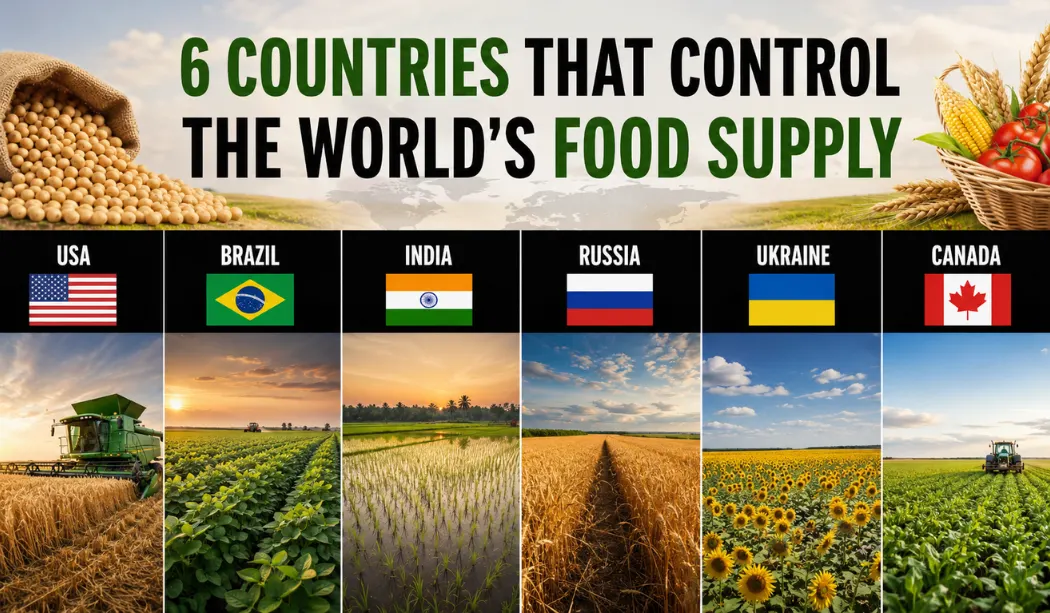
USA
When it comes to exports, the United States leads the pack as the world’s largest agricultural exporter, selling some $170bn (126bn) of crops and commodities to other nations in 2025. Mexico, Canada, China, and the EU represent some of its largest export destinations. The production itself is based on super-sized farming that is largely mechanized.
It ranks high up there in worldwide corn production, at about one-third of the globe's supply, but it's also among the largest suppliers of soybeans and wheat in the world. Not to mention, it's the top producer of beef and one of the top providers of poultry and dairy.
Brazil
Driven by vast swathes of large-scale farming, Brazil has become one of the most significant food exporters in the world. It is already the dominant force in the global soybean trade – exporting almost 60% of the total crop - while it is the top exporter of just about everything else from sugar, coffee and orange juice.
China is by far the biggest buyer, largely dependent on the Brazilian soy supply, with the EU and the USA in hot pursuit. However, the surge in agricultural output has also had an enormous environmental cost, driving the deforestation of the Amazon, while the farming sector is at the mercy of droughts and forest fires caused by climate change.
India
Nicknamed ‘the world’s rice bowl’, India is the globe’s biggest exporter of rice – shipping some 40 percent of world trade in the staple grain. It is also the largest exporter of milk and largest producer of bananas, onions and millet in the world and top global destinations for the nation’s food products include the U.S. and various nations in the Middle East and Africa.
But for all its scale, Indian farming is largely reliant on its monsoon weather and therefore prone to weather variations and patterns as climate change takes effect. This in turn means that failed crops or a decision to curb exports by the Indian government can lead to supply shortages in other nations, driving up prices.
Russia
Russia is the world's largest exporter of wheat and the breadbasket of much of the Middle East, Africa and Asia. The country is a significant producer of many other grains, as well as fish, cooking oil and vegetables. It's not just about food, either. The country's fertilizer exports play a critical role in world food supplies, and farms around the world depend on them. The war in Ukraine has shown just how quickly an interruption in Russian exports can affect global food prices.
Ukraine
Another vital breadbasket is Ukraine, a country that has shipped massive amounts of corn, wheat, and sunflower oil to Europe, the Middle East and North Africa. In fact, before the war it was one of the world's largest grain exporting nations. Agricultural exports have brought in significant revenue for the war-torn country even during the ongoing conflict. Its main destination remains the EU, with demand from countries such as Turkey increasing. Russia’s prolonged war of aggression continues to expose Ukraine’s central role in the global food market.
Canada
One of the world’s most reliable agricultural exporters, Canada has the greatest share of a global market for grains and oilseeds. It is a top source of wheat, the world’s top exporter of canola (which is used to make oils for cooking and food processing), and a major source of pulses such as lentils and peas which feature in the diets of many people in Asia and the Middle East. Most Canadian agricultural output goes to other countries, and a multiple of the volume consumed at home is accounted for by the country’s wheat exports alone.
While the country may not be a major producer in a warmer world, increased sway in global food supply chains would surely be given to it by the impact on other, often warmer regions. This country could well be a rising player on a world with higher global temperatures-which will be able to supply itself and everyone else with ample food products as growing seasons extend.
FAQ's
1. Which 6 countries hold the most power over the global food supply?
The United States, Brazil, China, Canada, Argentina, and India. While European nations (like the Netherlands and France) are major exporters of high-value processed foods, these six giants control the vast majority of the world's raw caloric staples—namely grains, soy, rice, and meat.
2. How can China "control" the food supply if it imports so much?
China controls the food supply through sheer consumption volume and domestic output. It is the world's largest agricultural producer, but because it has 1.4 billion people to feed, it consumes almost everything it grows. To make up for shortages, China buys massive amounts of the world's exportable grain and soy, meaning changes in Chinese demand instantly dictate global food prices and availability.
3. What makes the U.S. and Brazil the ultimate food superpowers?
They dominate the global export market for essential staples. The U.S. is the world’s top food exporter, leading in corn and wheat trade, while Brazil dominates global soybean and beef exports. Together with Canada, the Americas form the core engine of international food logistics.
4. What role do India and Argentina play in global food security?
They are specialized keystones. India is the world's largest exporter of rice, a daily staple for billions of people across Asia and Africa. Argentina regularly leads the world in food self-sufficiency ratios, producing massive surpluses of soy products, corn, and wheat relative to its small population.
5. Why is having so few nations in control dangerous?
It creates systemic vulnerability to climate shocks and geopolitics. Because billions of people rely on a few specific regions for their daily calories, a severe drought in the Americas, an export ban from India, or shipping disruptions can trigger immediate spikes in global food inflation and severe shortages elsewhere.