In recent years, open workspaces have become a hallmark of modern office design. What started as a trend in tech companies like Google and Facebook has now spread across industries, revolutionizing the way employees interact, collaborate, and work. The rise of open office environments has sparked significant debate, with proponents claiming that they boost productivity and foster creativity, while critics argue that they create distractions and hinder concentration.
The debate around open workspaces and their effect on productivity isn’t black and white. It’s nuanced, involving a balance of psychological, cultural, and practical considerations. In this article, we will explore both sides of the debate, dive deep into the effects of open workspaces on individual productivity, and conclude with key takeaways on how this design trend could either transform or hinder your work experience.
Understanding the Concept of Open Workspaces
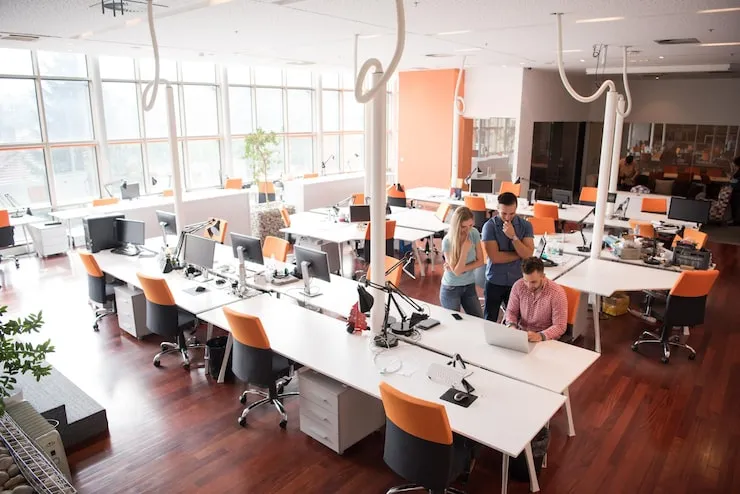
Before diving into the pros and cons, it's important to define what an open workspace is. An open office environment typically involves a shared floor plan with few, if any, physical barriers between workstations. This type of workspace often features long rows of desks or tables where employees work in close proximity to one another. The goal of open office designs is to increase collaboration, enhance communication, and create a sense of community.
However, these spaces usually lack privacy, which can be a significant change from traditional cubicle-based offices or private offices. In open offices, people are exposed to a variety of sounds and activities, from phone conversations and team meetings to general office noise. This increased proximity can lead to both positive and negative effects, depending on the individual’s work style and the office culture.
The Pros of Open Workspaces
1. Enhanced Collaboration
One of the primary arguments in favor of open workspaces is that they foster collaboration. In a traditional office, employees often work behind closed doors or in isolated cubicles, making it harder to interact with colleagues in other departments. Open offices, by design, eliminate these barriers. Workers in an open environment are more likely to engage in spontaneous conversations, share ideas, and ask questions in real-time.
This constant exchange of information can lead to increased innovation, faster problem-solving, and a more agile workforce. Companies like Google, for example, have attributed part of their success to their open office designs, which encourage the free flow of ideas across teams.
2. Greater Flexibility and Agility
Open workspaces are often designed with flexibility in mind. Employees can move around easily, collaborate with different teams, or switch to different workstations based on the nature of their tasks. This fluidity promotes a dynamic work environment where employees can adjust their space to suit their immediate needs. For example, team members can gather around a shared table for a brainstorming session or sit at a different desk when they need a change of scenery.
In this way, open workspaces encourage a more adaptable, flexible approach to working. This is especially beneficial in industries that require rapid responses to changing conditions or teams that often collaborate on diverse projects.
3. Increased Transparency
Another significant advantage of open workspaces is the increase in transparency within the workplace. When everyone works in close proximity, it’s easier for managers to see who is doing what and track progress on projects. This transparency can lead to better communication between teams and improve accountability.
Employees can easily observe how their colleagues are working, which can inspire them to stay on task or raise the bar for productivity. Furthermore, transparency can lead to a more democratic workplace where employees feel that their contributions are visible and valued.
4. Reduced Hierarchical Barriers
In traditional office layouts, the hierarchical structure of a company is often reflected in the physical office design. Higher-ups may have private offices or executive suites, while lower-level employees work in cubicles or open areas. Open workspaces remove these physical distinctions, creating a more egalitarian work environment. This can help break down the power distance between employees and managers, encouraging open dialogue and creating a sense of equal opportunity.
When employees at all levels of the organization are working in close proximity to one another, it fosters a sense of community and teamwork. Employees may feel more comfortable offering ideas or feedback to their superiors, which can lead to greater innovation and problem-solving.
5. Cost Efficiency
Open office designs are often more cost-effective than traditional office layouts. Without the need for walls, private offices, or cubicles, companies can maximize the use of their floor space, accommodating more employees in a smaller area. This reduces the need for extensive office furniture and allows companies to save on overhead costs.
For startups and smaller businesses, an open office can help reduce the expense of leasing large spaces or investing in expensive private offices. As companies scale up, they can easily adjust their workspace to accommodate growth, without the need for major renovations.
The Cons of Open Workspaces
While the advantages of open workspaces are well-documented, they also come with their own set of challenges that can impact employee productivity.
1. Increased Distractions
One of the most common criticisms of open workspaces is that they can be highly distracting. In an open environment, employees are often surrounded by noise, whether it’s the chatter of coworkers, the ringing of phones, or background conversations. These distractions can make it difficult for employees to concentrate on their work, leading to lower productivity.
Research has shown that employees working in open spaces often experience higher levels of stress and frustration due to the noise. A study by the University of Sydney found that 48% of workers in open-plan offices reported that noise was a major source of distraction. For workers who need a high level of focus—such as those working on complex tasks or creative projects—these distractions can be a major hindrance.
2. Lack of Privacy
The absence of physical barriers in an open workspace means that employees have little to no privacy. For some individuals, this lack of privacy can feel intrusive and uncomfortable. Having to discuss sensitive information or make private phone calls in full view of colleagues can lead to anxiety and stress.
Additionally, employees may find it difficult to concentrate when they know others can easily overhear their conversations or see what they’re working on. This lack of privacy can be particularly challenging for introverted employees who need personal space to recharge or focus on deep work.
3. Reduced Focus and Mental Fatigue
While collaboration is encouraged in an open workspace, constant interaction with colleagues can also lead to mental fatigue. Employees who are frequently interrupted by coworkers may find it harder to enter a state of deep focus, which is necessary for tasks that require intense concentration or creativity.
Furthermore, the lack of physical separation between workstations can lead to a sense of constant surveillance, which may create a heightened sense of stress. The result can be burnout or decreased motivation, especially in a high-pressure work environment.
4. Limited Personalization
Open workspaces often limit employees’ ability to personalize their work areas. In a traditional office, individuals can decorate their cubicles or offices, creating a space that feels comfortable and tailored to their needs. However, in open workspaces, employees have little control over their immediate surroundings.
While some open offices allow for flexible seating or provide communal areas for relaxation, the overall environment can feel impersonal or sterile. This lack of control over one’s workspace can lead to feelings of disconnection or dissatisfaction, particularly for employees who thrive in more customized or private settings.
5. Inequality of Experience
Not all employees may experience the open workspace in the same way. For example, those who require a quieter, more controlled environment may feel marginalized or overlooked. On the other hand, those who thrive in social settings or need constant interaction with others may feel more engaged in the open workspace.
Additionally, certain work tasks may be more suited to private or semi-private spaces. For example, deep analytical work, writing, or confidential discussions are often more difficult to execute in an open space. The variety in work tasks means that a one-size-fits-all approach to office design may not be effective for every employee.
How Open Workspaces Transform You
Despite the challenges, open workspaces have the potential to transform employees' work experiences. The key to this transformation lies in understanding how the workspace aligns with individual preferences and company culture.
Open workspaces are most effective when they support a culture of collaboration and flexibility. For teams that value transparency, innovation, and constant communication, open office layouts can create an environment that fosters creativity and productivity. However, for individuals who prefer solitude or focus-heavy tasks, the transformation may be less positive.
The success of open workspaces depends on how companies strike a balance between collaboration and individual needs. Many companies are now adopting hybrid office models, combining open spaces with quiet areas, meeting rooms, and private pods to give employees the best of both worlds. This approach allows employees to choose the environment that best supports their work style and needs.
Conclusion: The Verdict on Open Workspaces
Open workspaces have the potential to transform productivity by encouraging collaboration, flexibility, and transparency. However, they can also create significant challenges in terms of distractions, privacy, and focus. The key to making open workspaces work lies in understanding the diverse needs of employees and providing a mix of environments to cater to different work styles.
Ultimately, the success of open workspaces depends on the company’s culture, the nature of the work being done, and the design of the workspace itself. By striking a balance between open collaboration and individual space, companies can create a productive and innovative work environment that benefits all employees.