Off grid doesn't have to mean going backward; instead, more and more people are now trading traditional houses and huge energy costs for efficient Earthships. These eco homes are becoming increasingly trendy with each passing year after American architect Michael Reynolds pioneered them in the 1970s. They construct these unique homes from upcycled items packed with mud – or embedded in the earth – so that's where the name and distinctive style originate from.
What is an Earthship
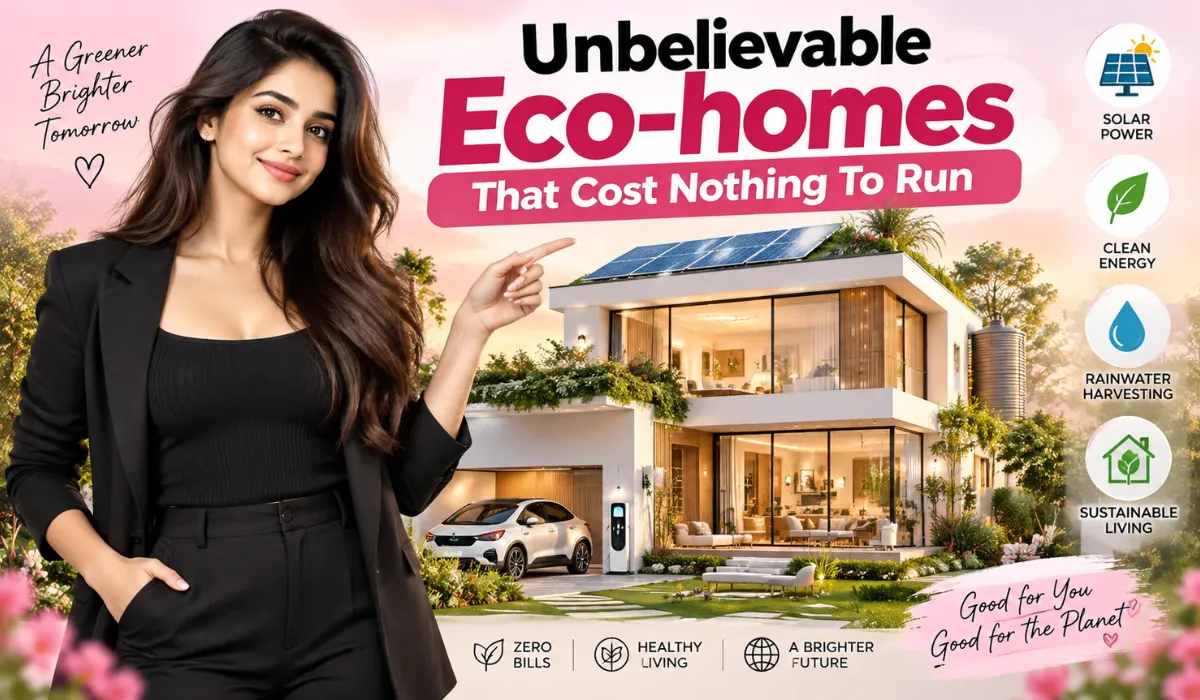
They construct Earthships using sustainable building materials, which are comfortable and warm, and they do not need assistance from public utilities like gas. On the ground, they remain entirely independent. With solar panels or wind turbines, the homes generate all their own electricity and heating. It's also possible to cultivate your own food in indoor greenhouses and design rainwater harvesting and sewage treatment solutions.
How are Earthships made
Climate changing waste Earthships builders construct from waste materials which are widely available – glass bottles, aluminium cans, used car tyres and reused wood are fundamental to the building process. Across many Earthships you'll come across hundreds, sometimes thousands of tyres which people fill with dirt to produce rammed-earth bricks. Natural insulation? And people normally throw away tyres once they're no longer wanted. According to Earthship Biotecture, at least 2.5 billion are already piling up in the US with 2.5 million more people disposing of every year. Another major feature is the use of recycled bottles that builders use to form part of the external walls, which enable sunlight to filter into the buildings, so that when lit up from within it creates a stunning mosaic of coloured glass.
Who founded Earthships
American architect Michael Reynolds, who developed and built the first prototype of sustainable housing in the 1970s, was born and raised in Kentucky and is currently based in New Mexico. He graduated from the University of Cincinnati in 1969. In 1972, he constructed his first 'trash house,' a unique dwelling made from drinks cans joined together in 'bricks.' However, he later faced the challenge of considering that nearly everything, from used tyres to plastic bottles, could be transformed into a sustainable building material.
A pioneering company
After he heard news reports about the rising levels of rubbish and the issue of unaffordable homes, he realized that if he could merge the two pressing problems, they could be effectively addressed together. Reynolds later established Earthship Biotecture, which has become the world's leading company in such innovative designs. If you are looking for an Earthship, you can purchase detailed plans for Earthship homes, receive valuable building advice, take an informative Earthship tour, and even visit the company's well-regarded eco-construction school.
How is energy produced
Because Earthships require neither central heating nor cooling, they have few needs. They generate their own power thanks to solar panels that provide clean energy for 30 years, which helps combat global warming. Earthships also feature windmills that produce electricity in addition to using solar power. The combination of power generated by the two sources is enough to charge the batteries in the power module of the house, thus ensuring a steady supply of clean energy to power the home.
How is water collected
No off-grid, water harvesting Earthships collect rainwater on the roof, which then gets filtered, flows through your home by gravity, and becomes ready for drinking and washing. The water harvested can be used four times in an Earthship home - firstly for washing, bathing, and laundry, with the waste directed to irrigate an internal garden. This water is then piped to the toilets, and subsequently used to irrigate an external garden.
How are Earthships heated
Earthships continuously work to maintain their internal temperature, ensuring that living spaces always remain at a temperature that is comfortable for the humans who occupy them. The building’s orientation plays a crucial role, as architects position the glazing so that the sun's rays can enter and effectively heat the walls, which are constructed from tyres for insulation. Now, let's explore some amazing real-world Earthships from various locations across the globe.
New Mexicos Earthship Community
The Greater World Community in Taos, NM offers over 70 fantastic off-grid homes for people looking to experience life in a unique setting. For some of the properties listed for rent on Airbnb, the community also features an academy where students can learn about sustainable living, and hosts can take a self-led tour to discover the eco-structures that are part of this vibrant community. Let us guide you through a tour of some of the incredible houses that you can find here.
FAQ's
1. How can an eco-home cost nothing to run?
They achieve net-zero utility bills by utilizing passive solar heating, high-efficiency thermal insulation, on-site solar power generation, and integrated rainwater harvesting systems.
2. Are zero-bill eco-homes expensive to build?
While initial construction or custom green technology can sometimes carry a higher upfront price tag, many designs use affordable or recycled materials like rammed earth, straw bales, and repurposed timber to keep initial budgets low.
3. Do these homes require connection to public utilities?
Most true zero-run eco-homes are built entirely off-grid, relying on independent solar battery banks, private wells or rainwater cisterns, and natural waste processing systems instead of municipal services.
4. How do eco-homes stay warm without a heating system?
They use passive solar design principles, featuring large south-facing windows, thick thermal mass walls (like adobe or concrete) that trap heat during the day, and airtight thermal shells that prevent heat loss.
5. Do zero-run eco-homes require high maintenance?
They generally require regular upkeep typical of specialized systems, such as cleaning solar panels, maintaining rainwater filters, and occasionally resealing natural earthen or wood finishes.