The current Abarth brand mainly markets high-performance variants of the Fiat 500 which Fiat sells through its Abarth division. Abarth supermini hot hatches compete against John Cooper Works Minis by using the Abarth Scorpion logo which replaces the Fiat badge on their 595 and 695 models. The first Abarth company opened its doors in March 1949 when Austrian ex-pat Carlo Abarth who was born in 1908 under the star sign Scorpio and his business partner Guido Scagliarini established the company in Bologna. The initial vehicles incorporated Cisitalia designs because Cisitalia had entered receivership while Abarth was owed payment from the company.
Alpina
Alpina maintains its long-standing reputation as a BMW M vehicle designed for intellectual drivers who want more power than standard M cars yet receive their highest performance through torque delivery with special turbo models which Alpina developed during a time when BMW had limited turbo options and all drivers received an enhanced premium driving experience through the automatic transmission system. The most crucial element of the Alpina product line exists in its unique multi-spoke wheel design combined with official decorative elements which the company designates as the Alpina Deco-set. The Alpina story starts back in 1962, when founder Burkard Bovensiepen offered a twin Weber carb kit for the BMW 1500, which soon caught BMW’s attention – and allowed Alpina customers to keep the full BMW warranty.
AMG
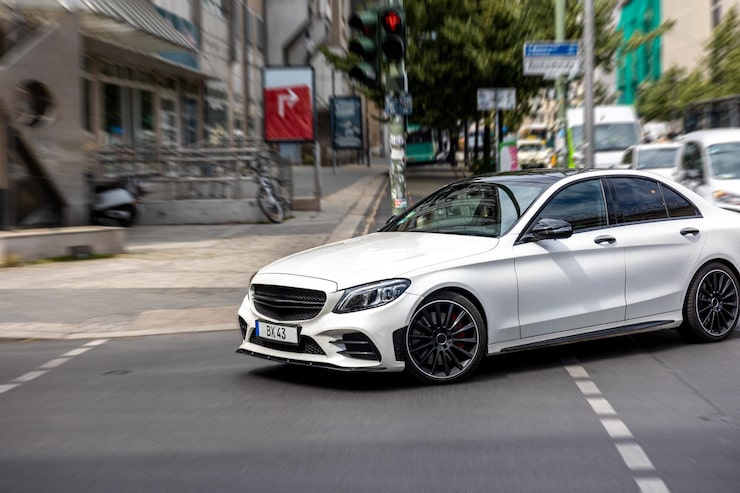
AMG serves as the official high-performance division of Mercedes-Benz while its foundation took place in 1960s when former Daimler-Benz engineers Hans Werner Aufrecht and Erhard Melcher established the tuning company in the town of Großpach. Racing established the reputation of AMG engines which reached its peak in 1971 when the AMG Mercedes 300 SEL 6.8 vehicle achieved second place overall while winning its class at the 1971 24 Hours of Spa – an unexpected victory for a luxury saloon known as the 'Red Pig' (shown in the image) which competed against smaller and lighter vehicles. The company established new performance-tuned road car production facilities in Affalterbach which included their standard body vehicles that received major engine upgrades. The company demonstrated its design philosophy through its 1986 introduction of 'The Hammer' which featured an E-Class vehicle that used a 5.0-litre V8 engine.
Andy Rouse Engineering
Andy Rouse who worked as both an engineer and racer achieved fame through his Ford Sierra racing efforts which he executed at the British Touring Car Championship. He won his first championship title in 1985 by driving the US-designed XR4Ti before he later reached success with the Sierra Cosworth RS500 which he drove from 1987 to 1990 and achieved two class victories.
Besides his racing career Rouse founded Andy Rouse Engineering in 1981 and he received the Ford works contract to develop Cosworth products.
Gordini
The Gordini brand remains inactive at Renault headquarters, where it uses Amédée Gordini's name who originated from Italy and began his career as a Maserati mechanic before he arrived in Paris during the 1920s. Gordini established a lasting official partnership with Renault which began in 1957 after he started out by creating racing vehicles for Fiat and Simca. The Renault Dauphine Gordini came first,upping the standard car's Ventoux engine from 27bhp to 36bhp but the ball really got rolling with the R8 Gordini pictured first as a 1.1-litre model with a punchy 89bhp later as a 1.3 with what remains a very healthy 99bhp spot it by quad headlights.
Irmscher
Irmscher’s history dates back to 1968 and a residential garage near Stuttgart, Germany, owned by rally driver and mechanic Günther Irmscher, where he’d prep his latest projects. The earliest days of the organization feature motorsport competitions as their foundation because Walter Röhrl drove an Irmscher-prepped Opel Commodore on the 1973 Rallye Monte-Carlo (a Irmscher-modified Commodore is pictured). The company developed the Manta i2800 in 1976 which consisted of a Manta Broad car that used a 2.8-litre straight-six engine from the Opel Commodore.
John Cooper
The question about John Cooper's status as the most recognized factory-endorsed vehicle tuner in history remains open to discussion. The factory ties of his partners begin with their motorsport activities which extend to their involvement with the Mini. The Cooper single-seaters introduced to racing a new design that used rear mid-mounted motorbike engines. The Cooper Car Company Formula One manufacturer championships which the company won in 1959 and 1960 established their name as a leading brand among automotive producers and general consumers. The Mini Cooper emerged from Cooper's friendship with Mini creator Alec Issigonis because the two men developed the Group 2 homologation special in 1961. The 848cc 34bhp engine of the standard vehicle received an upgrade to 997cc with 55bhp ability.