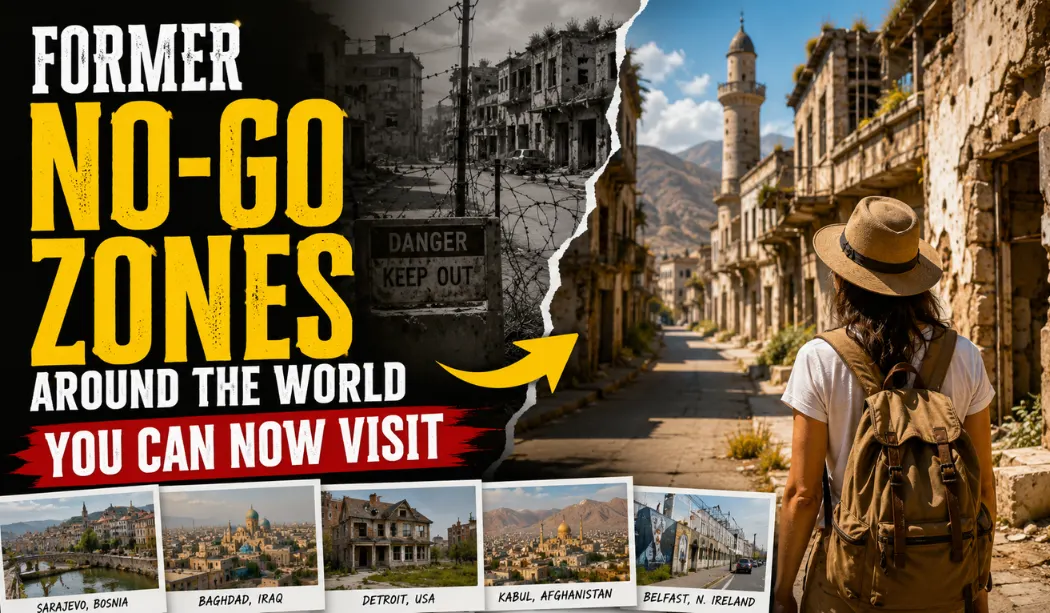
There's any number of factors that can make a country or a city a no-go area. In the case of war, natural disaster or the choice of some international drug lord to set up operations from their base. Or in the case of several countries, they caught a glimpse of the outside world for a brief period of time and decided that it wasn't anything that they wanted to have anything to do with.
Dubrovnik, Croatia
This walled city, a UNESCO World Heritage site on the beautiful Dalmatian Coast of Croatia, is one of Europe’s hottest travel destinations. In 2019 alone, 1.5 million visitors thronged the narrow-cobbled alleys of the city – an average of 36 tourists for every citizen. However, when Croatia decided to break away from Yugoslavia in 1991, the Yugoslav People’s Army bombarded the city in a long siege. Cannon on hills overlooking the old town blasted the area, leaving hundreds dead and destroying centuries of history.
Timor-Leste
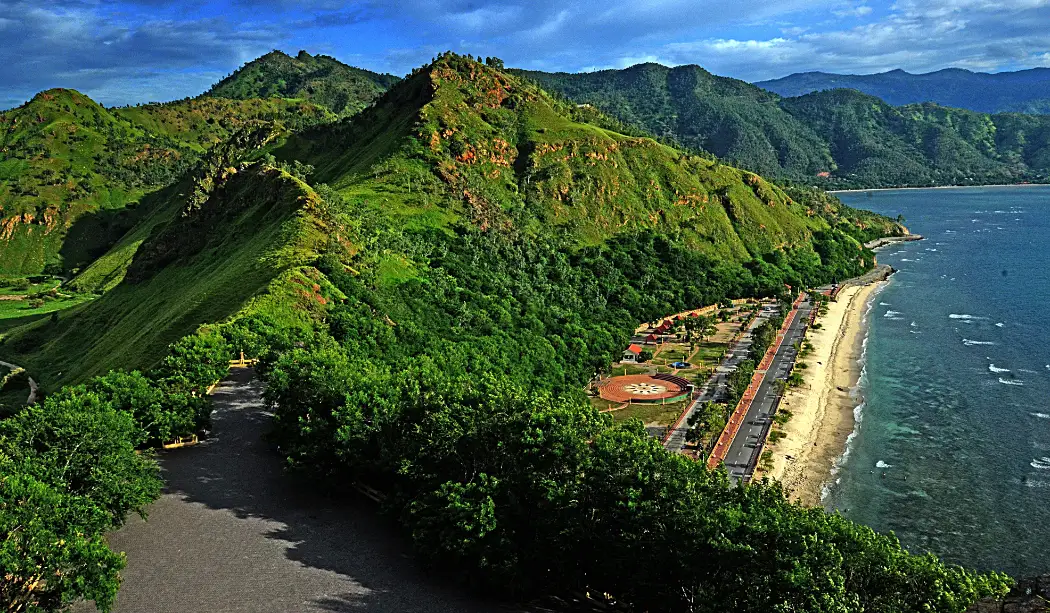
East Timor, or Timor-Leste, was always an outsider, even among Indonesia. Even as the other part of Timor Island fell under Dutch control as part of the wider Indonesian archipelago, the Portuguese were laying their claim. Just before gaining independence from their colonizers in 1975, Indonesian troops invaded and began a violent occupation of East Timor. The civil war between the Fretilin’s forces and Indonesian soldiers stretched for more than a decade and resulted in brutal suppression.
Timor-Leste
UN-supervised in 1999, the vote for independence of 78% of people triggered widespread devastation, as Indonesian army troops and their allied militias forced hundreds of thousands of people to flee into West Timor. Then, a UN force came in, and people finally gained independence in 2002. Now, a new tourist industry invites people to enjoy unspoilt beaches, challenging terrain, and a distinct cultural heritage that reflects Portuguese colonialism.
Karosta, Latvia
Karosta, an abandoned military base, features a photo captured by the author. Karosta once served as the Russian Imperial and Soviet naval base situated on the Baltic Sea in present-day Latvia. Tsar Alexander III of Russia commissioned the construction of Karosta, part of Liepja, between 1890 and 1906, and it also functioned as the headquarters of the Soviet Baltic Fleet. This former naval base developed into one of the most secretive military towns in the Soviet Union, where authorities prohibited people from visiting the beaches of Karosta. Meanwhile, just a few kilometers away, the people of Liepaja enjoyed leisurely beachcombing strolls to collect the amber pieces that washed onto the coast.
Karosta, Latvia
After Latvia achieved independence in 1991, the Soviet troops abandoned the port and parts of the city started falling into disarray. To-day it has developed into an odd tourist destination and artists’ hub. The former military prison has now turned into a hotel and wedding centre. The magnificent Russian Orthodox Naval Cathedral, used as a cinema hall and gymnasium in Soviet years, is once again holding divine services. Graffiti artists have transformed the crumbling into the sea old fort buildings into poignant canvasses.
Medellin, Colombia
Time magazine declared Medellín the world's most dangerous city back in 1988, the heyday of the Escobar regime. In that era, Colombian drug kingpin Pablo Escobar headquartered his cartel, which at one point held the cocaine market for as much as 80 percent of the world, in the city. Running gunfights between police and cartel hit men were regular events, and bomb attacks and political assassinations also made up the daily fare.
The Maldives
When the Maldives officially opened for tourists in 1972, government officials feared that too many foreigners could impact small island communities. To control outside influences, in 1978, officials introduced the ‘one resort, one island’ policy. Most resorts were built on previously uninhabited islands, so access to local islands, such as Hithadhoo or Fuvahmulah, was uncommon and difficult.
Albania
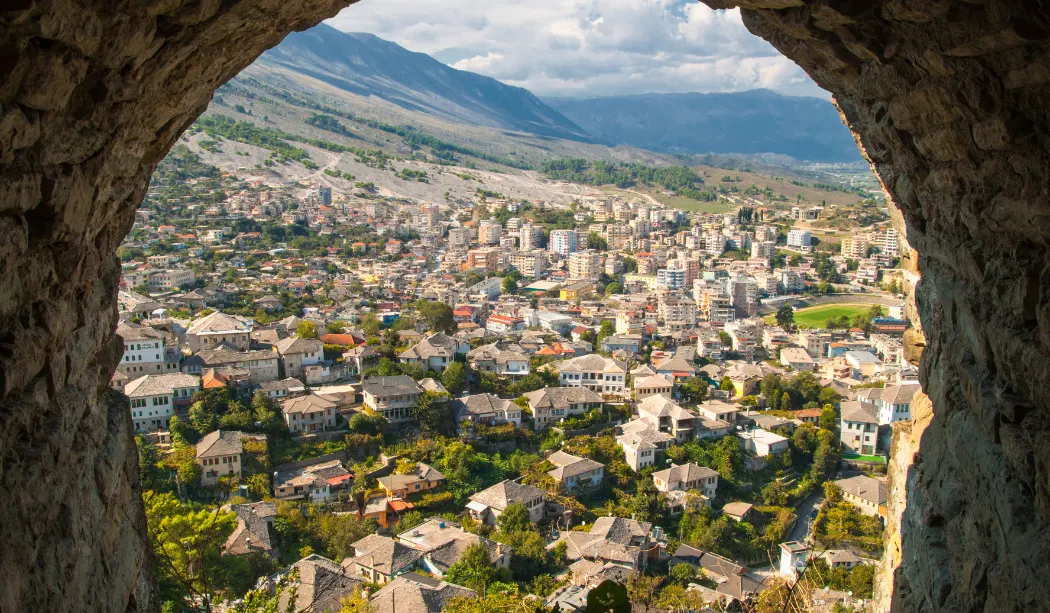
The majority of the 20th century, however, saw much of Albania totally cut off from the outside world. Albania's communist dictator, Enver Hoxha, rejected all of the world’s powers and was so worried about invasion he almost bankrupted the nation building a concrete bunker on every road, border and the country’s coast. The number of bunkers varies with figures from 170,000 to 750,000 but the fact is they all cost roughly the same amount of money as a 2-bedroom apartment.
Sperrgebiet, Namibia
Diamond Country : A Prohibited Area Diamonds scatter everywhere in Sperrgebiet, which is part of the southern part of the Namib Desert of southwest Namibia. Zacharias Lewala, a railwayman, discovered a diamond in 1908 at Kolmanskop, making it a forbidden zone. In German, Sperrgebiet means prohibited area. Until the 2000s, it was a forbidden place that prohibited visitors, with mysterious folk stories, hazardous sand sea, and exclusive diamond mines.
FAQ's
1. Can you safely visit Northern Ireland’s political mural zones today?
Yes. During "The Troubles" (1960s–1990s), urban neighborhoods along Belfast's Peace Lines (such as Falls Road and Shankill Road) were strict conflict sectors. Today, these areas are world-famous open-air galleries showcasing political art, easily visited via local "Black Cab" heritage tours led by residents from both communities.
2. Is Medellín, Colombia’s Comuna 13 safe for tourists now?
Yes, when staying with guided groups. In the 1990s, Comuna 13 was considered one of the most violent neighborhoods in the world due to drug cartels and urban warfare. Following major municipal investments—including giant outdoor escalators (escaleras eléctricas) that connected the hillside community—it is now a thriving hub of street art, hip-hop, and local tourism.
3. Can tourists explore the Demilitarized Zone (DMZ) between North and South Korea?
Yes. While technically a buffer zone along an active military border, the South Korean side of the DMZ welcomes over a million tourists annually. Visitors can tour former invasion tunnels dug under the border, view North Korean territory from the Dora Observatory, and visit peace parks—all under strict military supervision.
4. How did Berlin’s "Death Strip" become a travel attraction?
During the Cold War, the heavily guarded area adjacent to the Berlin Wall was a mined, heavily fortified no-go area. Following the wall's fall in 1989, this line was transformed into public spaces like the East Side Gallery (the longest remaining stretch of the wall covered in murals) and Mauerpark, a popular weekend spot for flea markets and live music.
5. Can you visit the Chernobl Exclusion Zone in Ukraine?
Prior to recent conflict, yes, but access is currently restricted. After the 1986 nuclear disaster, a 30-kilometer radius around the power plant was declared an uninhabitable no-go zone. From the mid-2000s until early 2022, thousands visited on authorized day tours to see the abandoned city of Pripyat. However, leisure tourism in the region remains suspended due to ongoing security concerns and regional military activity.