Tons of guides and tricks exist for anyone looking to improve their diet and get in shape - however, many healthy eating suggestions masquerade as facts that are actually wrong, outdated or just misleading. We decided to debunk these healthy eating myths for good with a crew of the most pervasive myths out there.
Myth: there's a right way to eat
It’s definitely true that no one size fits all diets work for everybody; a study back in 2019 from King’s College London actually revealed that different people will have very different blood sugar and insulin responses to commonplace foods such as muffins, bread, and bananas. However, researchers have noted that people living in blue zones around the world (regions with reduced chronic diseases and longer than expected lifespans) commonly stick to a predominantly plant-based diet, so it appears that fruits and vegetables will always hold their advantages.
Myth: your 'five a day' is based on hard science
The World Health Organization (WHO) advises people to consume a minimum of 14oz (400g) of non-starchy fruits and vegetables - or, approximately, five portions per day. Nutritionists widely believe that the statistic is not based on firm scientific fact. Instead, many experts suggest that it serves as a practical target to encourage a healthier lifestyle – and numerous nutritionists advocate that we should be doing far more. Furthermore, studies confirm that 11% of fatal heart diseases and 14% of fatal gastrointestinal cancers stem from the consumption of too few fruits and vegetables.
Myth: chocolate gives you spots
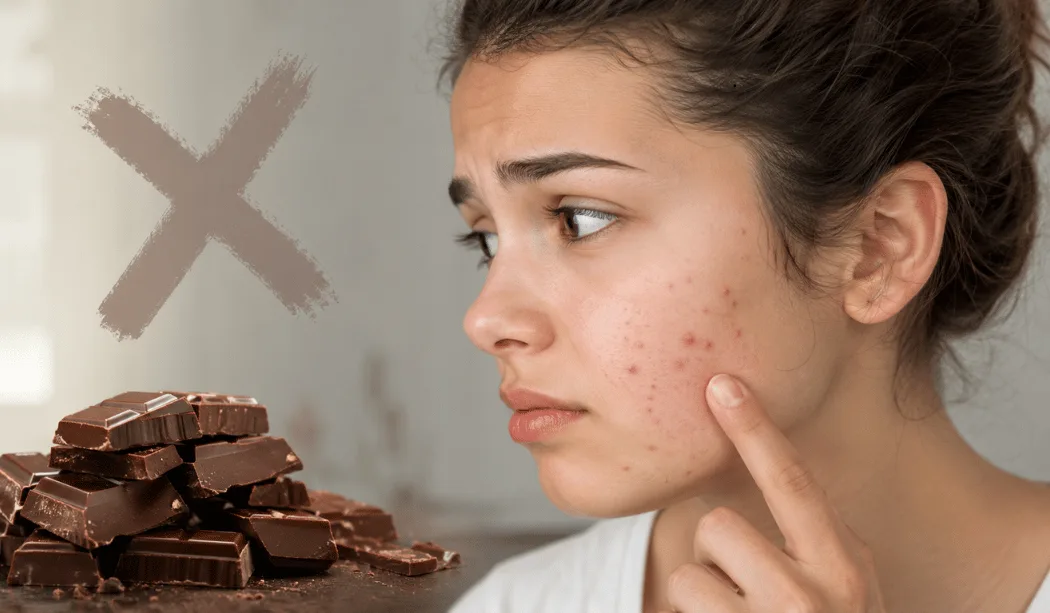
Acne primarily arises from the skin's hormone response to the glands located within the skin, rather than from a person's eating habits. An unhealthy diet that is high in refined carbohydrates and tends to raise blood sugar levels can contribute to increasing the hormone levels that trigger spots in the body, but contrary to most common assumptions, there is little evidence linking the consumption of chocolate to the development of spots.
Myth: you shouldn't chew (or swallow) gum
Good for the teeth gum you didn't know this but it's so true-chewing on xylitol gum is excellent for your teeth. And there's also the worry that a chunk or more might be accidentally swallowed - although kids are told not to try it (and it could be a choking hazard to toddlers) the idea that it just sits there doing nothing is untrue. Chew all you want, and the gum is just going to be processed through your body like any other food you eat.
Myth: spinach is the ultimate iron powerhouse
Scientists first examined the nutritional content of spinach during a period when they made one small calculation error. They overestimated the amount of iron that spinach contains, and although it doesn’t pack quite as much iron as they initially suspected, it still offers quite good amounts. A 3oz (90g) serving of boiled spinach provides about 10% of your RDI (recommended daily allowance), but since the body does not absorb iron as effectively from plant sources as it does from meat and other animal sources, one should not use it as a substitute for these more iron-rich food options.
Myth: only water hydrates you properly
Tea, coffee, fizzy drinks, and juices will hydrate just as effectively as pure water does, along with the fluids found in water-rich foods, fruits, and vegetables. Furthermore, studies demonstrate that habitual coffee drinkers do not experience issues with caffeine, the stimulant, acting as a diuretic and one particular study indicates that caffeine had no impact on their hydration levels.
Myth: coffee is bad for you
If that brings us back to coffee – not the big, scary, cancer-causing chemical that many nutritionists once predicted! In fact, researchers at the American Institute for Cancer Research state that phytochemicals in coffee may offer some cancer-protective benefits, and here’s even better news: that’s true whether you brew it with the beans in or out of the coffee maker.
Myth: sugar is the main cause of type 2 diabetes
Sugar foods provide excess energy, according to Diabetes UK and that extra energy (not merely the sugar content) can lead to the fatty pancreas, which is responsible for the development of type 2 diabetes. While sugary drinks seem to have an effect on diabetes regardless of body weight, people should also consume them sparingly; furthermore, they should reduce sugar intake for the sake of maintaining good health.
Myth: MSG is an unhealthy food additive
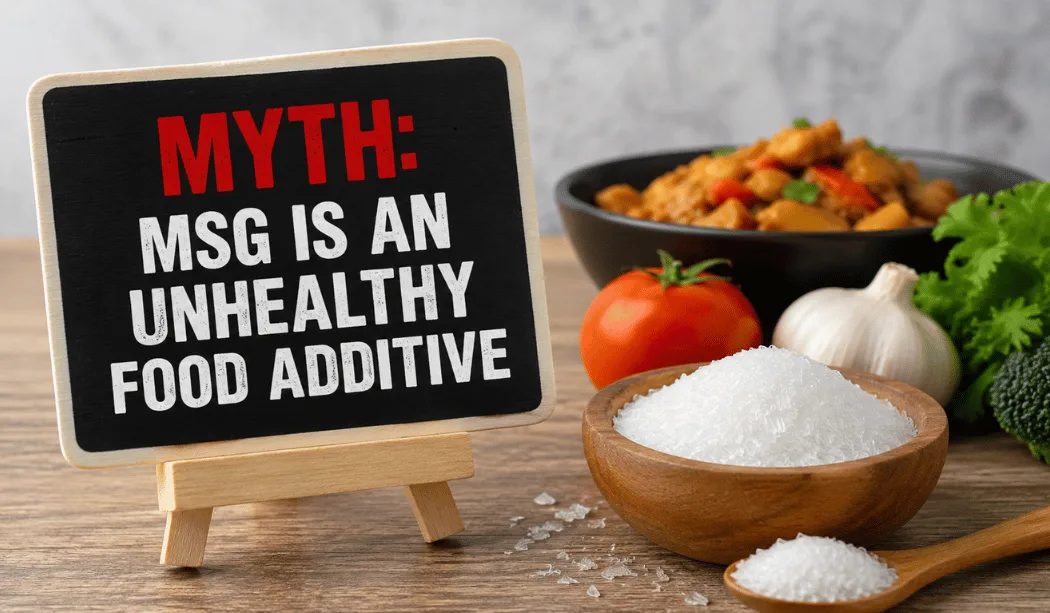
It's not something that necessarily has to go into dishes where all of the flavour comes from properly cooking - but the sort of 'Chinese restaurant syndrome' (a sudden onset of weakness, palpitations and headache) does not seem to be produced by MSG (monosodium glutamate), actually, as is claimed by its naysayers.
Most of the time, if that condition is suffered from, just a bit too much has likely been consumed. A dislike of MSG seems to be considered more of a food snobbery issue when the chemical responsible occurs quite naturally in expensive, tasty umami-rich things such as bonito flakes, porcini and Parmesan.
FAQ's
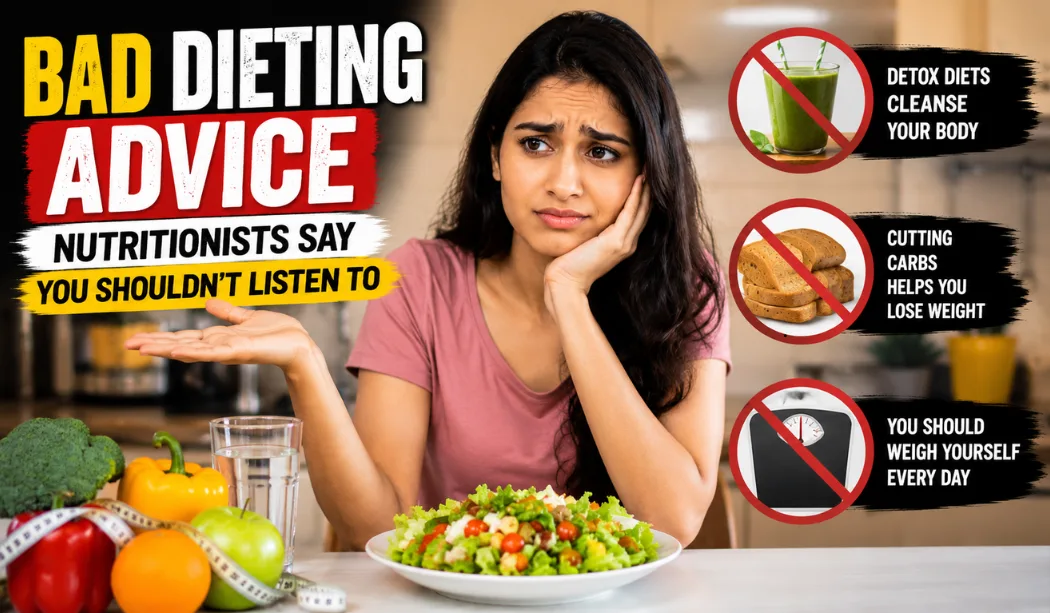
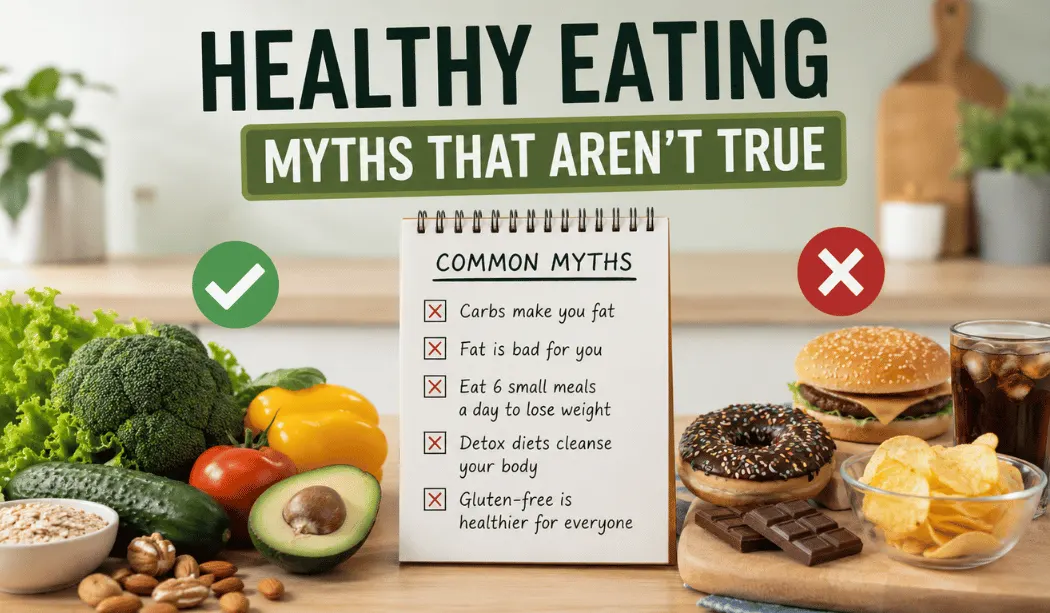
Q1: Is eating carbs inherently bad for weight loss?
A: No. Carbs are your body's primary energy source. The issue isn't carbs themselves, but the type and quantity. Refined carbs (sugary snacks, white bread) can cause blood sugar spikes, whereas complex carbs (oats, quinoa, vegetables) provide sustained energy and fiber that actually aid weight loss.
Q2: Do we need to detox our bodies with juices or cleanses?
A: Not at all. Your body already has a highly efficient, built-in detoxification system: your liver and kidneys. "Detox" juices often strip away beneficial fiber, leave you hungry, and offer no proven medical benefit over a balanced diet and proper hydration.
Q3: Does eating fat make you fat?
A: No, this is an outdated idea from the 90s. While fat is calorie-dense, healthy fats—like those found in avocados, nuts, seeds, and olive oil—are essential for hormone production, brain function, and nutrient absorption. Weight gain comes from a total caloric surplus, not dietary fat alone.
Q4: Are fresh fruits and vegetables always healthier than frozen ones?
A: Surprisingly, no. Frozen fruits and veggies are typically picked at peak ripeness and flash-frozen immediately, locking in their nutrients. Fresh produce often travels for days or sits on shelves, losing nutritional value over time. Both are excellent choices.
Q5: Is skipping meals a reliable way to cut calories and lose weight?
A: It usually backfires. Skipping meals drops your blood sugar, which triggers intense cravings and leads to overeating later in the day. It can also slow down your metabolic rate over time. Consistent, balanced meals are much better for long-term energy and weight management.