
Gladiator myths have shaped how people imagine ancient Rome and its famous arena battles. But the gladiators and the emperors in movies and TV shows are usually depicted as men who always fought to the death and the emperor always decided the outcome of their duels with a flick of his thumb. But history has a very different narrative.
Some gladiators were free men who volunteered to fight, many survived their fights, and women too were in the arena. Even the famous story about Spartacus and Roman beauty products have information people don't know. Here are 20 gladiator myths that expose the truth behind the most popular gladiators in ancient Rome.
Gladiators Never Saw A "Thumbs Down" For Death
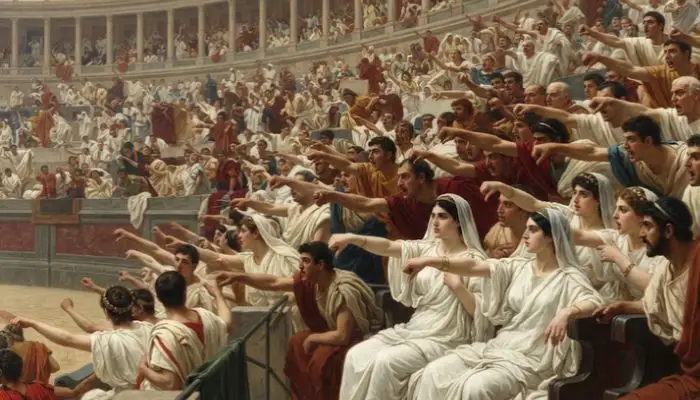
A classic film image shows the thumb turned down, meaning a person was dead. The Romans used a gesture, pollice verso, or "turned thumb," which the Roman historian Pliny the Elder also described.
But a thumb pressed in or out of sight signified clemency not the thumbs-down we're familiar with today - because Hollywood's thumb story isn't Roman. It appears in the 1872 mythmaking of French artist Jean-Léon Gérôme.
Read More: 20 Ancient Objects Archaeologists Still Can't Explain
Spartacus Led a Slave Army on A Bid to Escape Italy:
Spartacus, a former slave and gladiator, rebelled against the Roman Republic in 73 BCE, instigating a massive slave army in the fight of what is known as the Third Servile War.
Films have shown Spartacus fighting to free all of the slaves, but ancient Greek historian Plutarch wrote that the real goal of Spartacus was to get his army up and over the Alps so they could return back to home, back to Thrace and Gaul. The Roman general Marcus Licinius Crassus quashed the revolt in 71 BCE, and enemy soldiers slain Spartacus in battle.
Most Gladiator Duels Left Both Fighters Alive
Now picture two men slugging it out to the death. Hardly! Scholars suggest that 80 to 90 percent of all early empire and high empire gladiators survived to see the next morning, based on the epigraphic record they uncovered and studied.
The promoters of the "gladiatorial games" (editores), who paid the owners of the gladiator schools, could rent a fighter. The idea was to buy a gladiator's contract and to force him to perform on demand and to die in their place if he failed. Paying back by an editores every time a gladiator was killed or mauled was too much.
Roman Beauty Cream Was Never Made from Fighter Sweat
A well-known urban myth suggests that women's body lotions in ancient Rome included collected and sold gladiator sweat. Classicist Maxwell Paule identified this myth as a misinterpretation of Roman author Pliny the Elder's critique of Greek gyms harvesting and selling the gloios, oil and dirt of the body after exercise, for medicinal salves.
The culture, the nature of the substance, and its use were all very different. Archaeologists and historians have found no evidence that gladiator sweat was sold as a cosmetic in ancient Rome.
Condemned Captives Spoke Rome's Famous "About to Die" Salute
In 52 CE, Emperor Claudius staged a fake sea fight on Lake Fucinus, with prisoners sentenced to death participating, rather than trained marines. As the battle began, the prisoners yelled out, "Ave Caesar, morituri te salutant" (hail Caesar, we who are about to die salute you).
Claudius replied, "Aut non" (or not), which signaled clemency to the prisoners, and they refused to fight. That phrase was never the gladiators' standard greeting, having appeared here for the first and only time.
You May Also Read: Ancient Myths and Legends That Turned Out to Be Real
Amazon And Achillia Fought Their Way to Honorable Discharge
Ladies did also sometimes compete as gladiators in the time of Ancient Rome, typically during some special show set up by an elegant host. A 2nd-century marble sculpture (now in the British Museum) that shows two women fighting with shields and swords, but no helmet (they lost theirs and threw them away), depicts a fight between the female gladiators Amazon and Achillia.
This sculpture commemorates their honorable discharge: both women survived the fight. Women gladiators were prohibited by emperor Septimius Severus c.200 CE because, he is said to have thought, aristocratic men were "disgraced" by the idea of women fighting in the arena.
Free Romans Signed Away Their Status as Auctorati
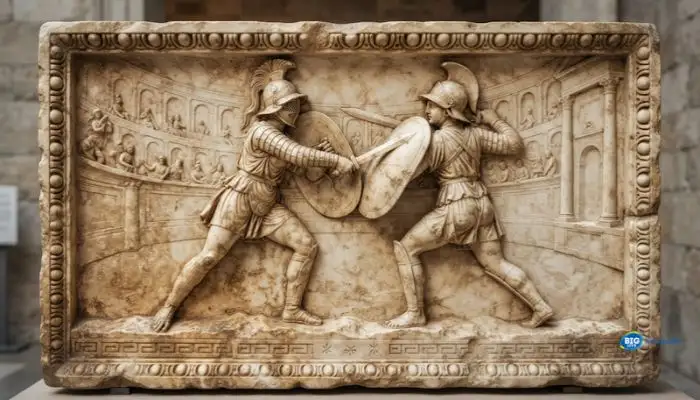
Not all of them were slaves though. Free Roman citizens known as auctorati made up approximately 20% to 50% of all fighters in the High Empire. These men volunteered for pay, made contractual commitments to a lanista (a gladiator school master), and earned incentive pay, salary, and glory if they survived their contract term. They swore an oath "to be bound, burned, beaten, and slain by the sword."
Many volunteered to enlist in order to clear debts and gain some notoriety by achieving a sort of celebrity by choosing gladiator hood and relinquishing legal rights to risk wealth or stardom.
Commodus Rigged Hundreds of Arena "Victories" For Himself
Roman emperor from 180 to 192, Commodus fought numerous times in the arena wearing the dense body armor of a secutor and paid the state treasury a fee for each fight. He did not risk death in these contests, however, as both Cassius Dio and Herodian, who were both there as firsthand witnesses, state that his rivals were issued wooden swords or intentionally dulled weapons.
Commodus extended the charade for the remainder of his rule, and ancient writers viewed his staged "victories" as an indication of his vanity, rather than in terms of his efficacy.
FAQs
1. Did Roman gladiators always fight to the death?
No. Many gladiators survived their fights because training and maintaining fighters required significant money.
2. Did a thumbs-down gesture mean death for gladiators?
There is no clear historical proof that Romans used the familiar thumbs-down gesture to order a gladiator's death.
3. Was Spartacus a real gladiator?
Yes. Spartacus was a former gladiator who led a major slave rebellion against the Roman Republic in 73 BCE.
4. Were women allowed to become gladiators in ancient Rome?
Yes. Some women competed in gladiatorial events, although their appearances were less common than those of male fighters.
5. Did gladiators use their sweat in Roman beauty products?
There is no reliable historical evidence that gladiator sweat was collected and sold as a beauty product in ancient Rome.