Fashion has always asked people to suffer a little for the look, but historical evidence shows that fashionable suffering develops into greater suffering. People across different time periods used clothing and makeup and jewelry and body-shaping products, which created breathing difficulties and increased fire hazard and poison risk and physical discomfort, which now seems almost amazing.
The act of wearing forbidden clothing during multiple historical periods resulted in social consequences, which included bullying and detention and exclusion and physical attacks and more severe punishment. The following list presents 20 occasions when a fashion trend developed into an actual threat to people's safety.
Top 10 Most Dangerous Fashion Trends in History
1. Tight-Laced Corsets
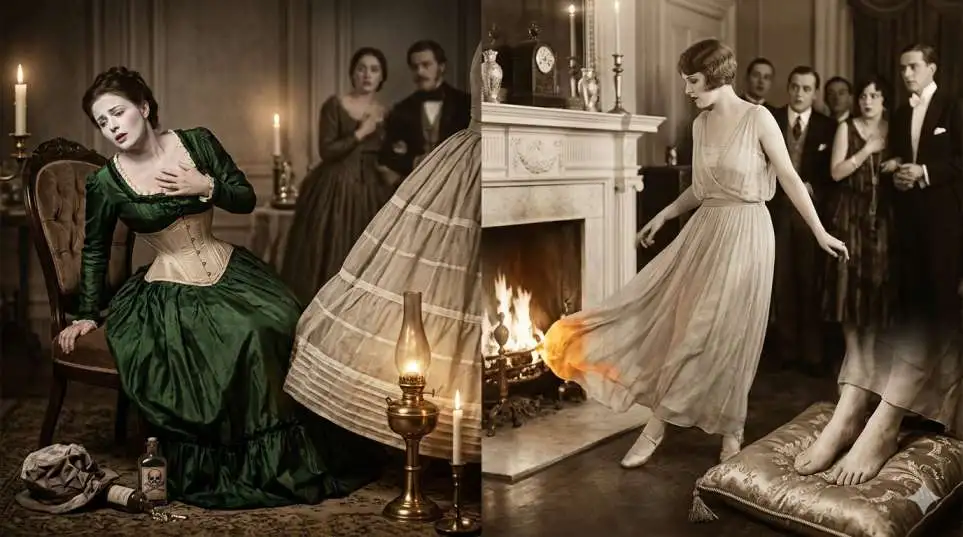
The practice of tight lacing has reached dangerous levels, which have created actual problems. Corsets, which were worn too tightly by people, prevented normal breathing because upper body movement was restricted. The fashion trend required dresses to be worn by women that created an extremely small-waisted appearance. A garment that causes fainting, pain, and structural discomfort has moved beyond what is considered fashionable.
2. Arsenic Green Dresses
In the nineteenth century, it was discovered that green dyes could be turned vibrant and durable by arsenic. The wearer would be made to experience exposure to hazardous materials by the fashionable dress, artificial flowers, and accessories. The color trend becomes unenjoyable because its dangerous side effects, which include poisoning, are learned about by people.
3. Lead-Based Face Makeup
For centuries, people considered pale skin to be the ultimate beauty standard, which they would pursue at any cost. The products that people used to achieve that smooth white appearance contained lead, which served as an extremely dangerous substance for facial application. The complete elegance of a person becomes less valuable when their beauty routine silently harms their physical well-being.
4. Crinolines Near Open Flames
Dramatic visual effects are created by the use of crinolines through their wide design, yet an increased risk of accidents is created by this design. The fabric in the room with candles and fireplaces and lamps could be ignited at any moment, and dangerous results could be produced. An increased risk of domestic fires is created by the design of the skirt, which makes it an unsuitable option for practical clothing design.
You may also read :- The Most Intriguing Subcultures From Around The World
5. Highly Flammable Gauze Gowns
The time periods in which evening gowns were used by women required fabrics that were extremely lightweight and fragile because a danger of rapid combustion was created by the fabrics. A dreamy appearance was created by the soft lighting, which resulted in an absurd risk to safety because this occurred before the invention of electric lighting. The trend, which makes a dress dangerous because standing near a candle transforms it from stylish to deadly, deserves your disdain.
6. Chopins
Renaissance chaplains raised women high off the ground, sometimes to ridiculous levels. The shoes served as status symbols because they made it impossible to walk properly. The shoes become dangerous when wearers need help to walk through a room because they require too much assistance.
7. Foot Binding
Extreme suffering was caused by foot binding in China, which resulted in lifelong physical damage. Foot shape was changed through multiple sessions, which decreased walking ability and transformed beauty into everlasting physical weight because size four feet needed to be maintained by adult women throughout their lives. The cost of this fashion standard for achieving "beauty standards" is shown more clearly by the practice than by any other fashion standard.
8. Mercury in Hat Making
Hazardous conditions are created by the fashion industry, which affects both its workers and its customers who wear the clothing. Doomsday hazards were faced by hat makers because mercury was encountered during the felting process, which led to health problems that developed throughout their lives. The expression "mad as a hatter" originated from this particular historical fact about hat makers who worked with mercury.
9. Celluloid Hair Accessories
Early plastic accessories could look modern and stylish, while one very important flaw could be hidden: some forms of celluloid were highly flammable. Commitment is already demonstrated by an individual who chooses to wear a hair accessory, but dangerous consequences are created by the choice of a flammable accessory.
10. Women Wearing Bloomers
The perilous nature of dangerous fashion items extends beyond their actual physical dangers. Women in the nineteenth century found bloomers to be a better choice than traditional dresses because their practical design provided women with more usable clothing. Women who wore them could face ridicule, hostility, and moral judgment simply for dressing in a way that suggested greater freedom.
Long Hair on Men
There have been periods when long hair on men was treated as a sign of rebellion, weakness, or social deviance. The way people reacted to my appearance brought three possible outcomes, which included mockery and employment difficulties and dangerous encounters with those who considered my looks to be disruptive to societal peace. It's a strange reminder that something as simple as hair length can become politically charged very quickly.