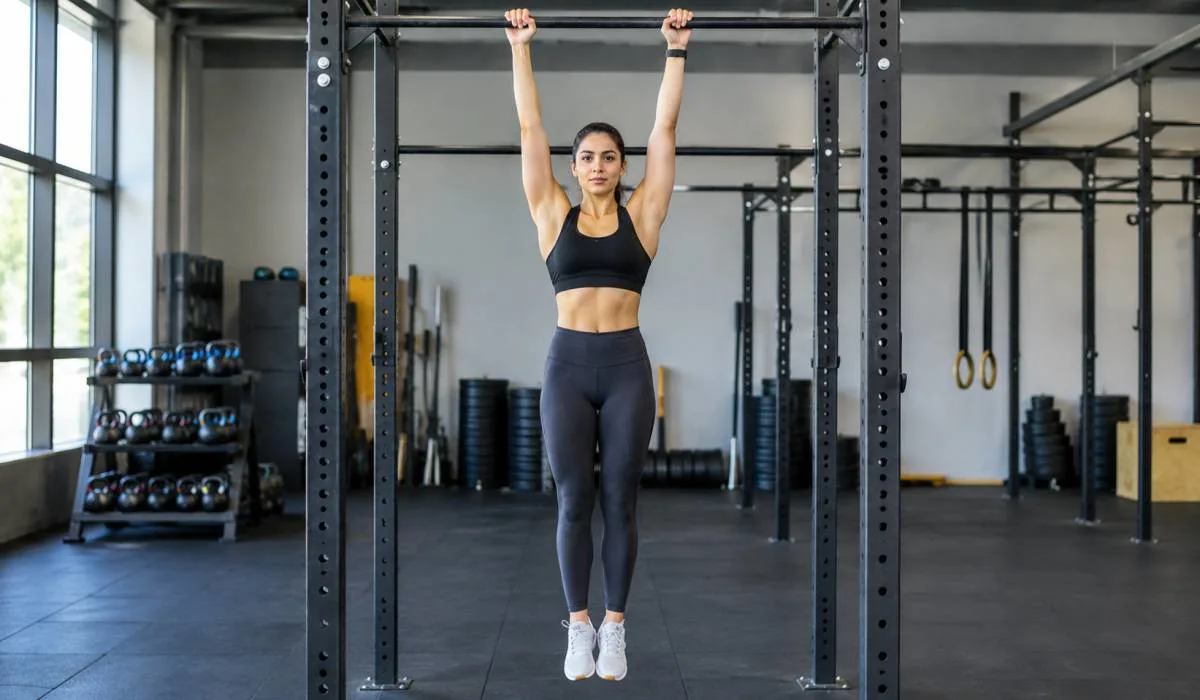
You ever just want to hang from something and let your body stretch out? That is exactly what a dead hang is. You grab a bar. You lift your feet. You just hang there. Looks simple. But it does so much for your body. It stretches your spine. Opens up your shoulders. Builds grip strength.
Fixes your posture from all that sitting. And you do not need a gym. Just a bar at home or the park. The dead hang exercise for beginners is perfect if you are just starting out. No complex moves. No weights. Just you and gravity working together.
What Is a Dead Hang?
You grab a bar. You lift your feet off the ground. You hang. That is it. Your arms are straight. Your body is relaxed. You just dangle.
Sounds too simple to work. But it does. Your shoulders get a good stretch. Your lats get worked. Your grip strength improves. Your spine gets a break from gravity. It is like a reset for your upper body.
The dead hang exercise for beginners starts with just a few seconds. That is okay. Everyone starts somewhere. You build up over time.
Read More: Strength Training for Women Over 40: Complete Guide

Dead Hang Exercise for Beginners Benefits
Why bother hanging from a bar? Here is why.
1. Better Posture
You sit all day. Your shoulders roll forward. Your back hunches. That is bad. A dead hang pulls your shoulders back. It opens up your chest. It reverses that slouch. Do this every day and you stand taller. Look better. Feel better.
2. Stronger Grip
Your grip gets weak as you age. That matters. Weak grip means you drop things. You cannot open jars. You cannot carry groceries. A dead hang builds grip strength fast. It works your forearms. Your fingers. Your hands. You notice the difference in a few weeks.
3. Spine Decompression
Gravity compresses your spine all day. Your discs get squished. That causes back pain. A dead hang stretches your spine out. It creates space between your vertebrae. That takes pressure off your nerves. Your back feels better. Your posture improves. Your body thanks you.
4. Shoulder Health
Your shoulders are complicated joints. They get tight from sitting. They get tight from sleeping wrong. A dead hang stretches them out. It increases your range of motion. It prevents injuries. Healthy shoulders let you do everything else better.
5. Core Engagement
You think hanging is just arms. It is not. You have to brace your core to stay stable. That works your abs. Your obliques. Your lower back. Not as much as a plank. But enough to matter.
6. Mental Break
You hang there. You breathe. You let go of tension. It is almost meditative. Your mind calms down. Your body relaxes. That is good for your stress levels.
Dead Hang Exercise for Beginners at Home
You do not need a gym. You just need something to hang from.
What You Can Use at Home?
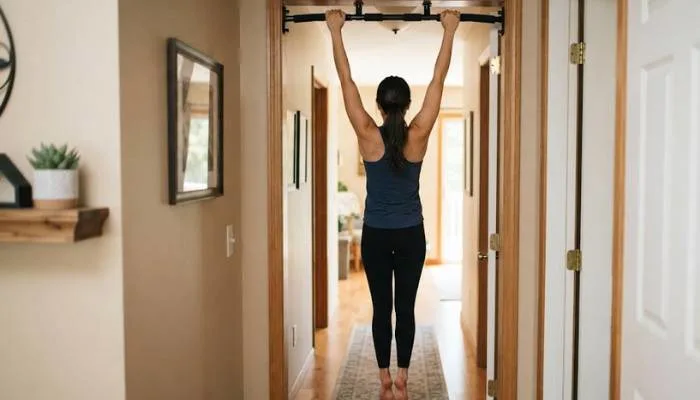
- Pull-up bar: Buy one that hooks into a doorframe. They are cheap. They are easy to install. They hold your weight.
- Tree branch: Find a sturdy branch outside. Make sure it is thick enough. Make sure it is not rotten. Test it before you hang.
- Playground bars: Go to a local park. Use the monkey bars. No one judges you. Everyone starts somewhere.
- Stairs: Hang from the edge of a staircase. Hold the top step. Let your body hang down. It works.
- Rafters: If you have exposed beams in your garage or basement, use those. Just make sure they are solid.
Safety First
Check your bar or branch before you hang. Give it a good tug. If it moves, find something else. Start low. Use a box or chair under you. That way you just step off if you get tired. Do not drop down from a height. That hurts your knees. Your ankles. Just step down.
How to Do a Dead Hang Properly?
Follow these steps. It is simple.
Step 1: Grip the Bar
Reach up and grab the bar. Hands shoulder-width apart. Palms facing away from you. That is the standard grip. You can also do palms facing you. Both work.
Step 2: Lift Your Feet
Pull your feet off the ground. Keep them together. Or keep them slightly apart. Whatever feels better.
Step 3: Relax Your Shoulders
Let your shoulders come up toward your ears. Then drop them down. That is your active hang position. Your shoulders are engaged but not tensed up.
Step 4: Engage Your Core
Tighten your belly. Like you are about to get punched. That keeps your body stable. It stops you from swinging.
Step 5: Breathe
Breathe normally. Do not hold your breath. In through your nose. Out through your mouth.
Step 6: Hang
Just hang there. Let your body stretch. Let your arms work. Keep your form.
Step 7: Step Down
Lower your feet back to the ground. Step down gently. Do not drop.
How to Dead Hang for 2 Minutes?
Two minutes sounds easy. It is not. Most beginners cannot do 30 seconds. That is normal. You build up to it.
Week 1
Do 10 seconds. Rest 30 seconds. Repeat 5 times. Do this every day.
Week 2
Do 15 seconds. Rest 30 seconds. Repeat 5 times.
Week 3
Do 20 seconds. Rest 30 seconds. Repeat 5 times.
Week 4
Do 30 seconds. Rest 30 seconds. Repeat 5 times.
Week 5
Do 45 seconds. Rest 30 seconds. Repeat 4 times.
Week 6
Do 60 seconds. Rest 30 seconds. Repeat 3 times.
Week 7
Do 90 seconds. Rest 30 seconds. Repeat 2 times.
Week 8
Do 120 seconds. That is 2 minutes. You did it.
This is how to dead hang for 2 minutes. Slow and steady. Do not rush. Your grip needs time to get stronger.
You May Also Read: Functional Strength Routine for 40+ | Stay Fit And Strong
Dead Hang Time by Age
Your age matters. So does your fitness level. Here is what is normal.
Under 20
- Beginner: 30 to 45 seconds
- Intermediate: 60 seconds
- Advanced: 90 seconds plus
Young people have good grip strength. They can hang longer. But form matters more than time.
20 to 39
- Beginner: 20 to 30 seconds
- Intermediate: 45 to 60 seconds
- Advanced: 75 seconds plus
This is your prime. You should be able to hang over a minute. If you cannot, start working on it.
40 to 59
- Beginner: 15 to 25 seconds
- Intermediate: 30 to 45 seconds
- Advanced: 60 seconds plus
Grip strength starts dropping. That is normal. But you can fight it. Dead hangs help.
60 and Over
- Beginner: 10 to 15 seconds
- Intermediate: 20 to 30 seconds
- Advanced: 45 seconds plus
You are not young anymore. But you can still hang. Start slow. Build up. Every second counts.
This dead hang time by age is just a guide. Do not stress if you are below these numbers. Everyone starts different. Compare yourself to yourself yesterday.
Common Mistakes Beginners Make
Swinging
You hang and you start swinging. That wastes energy. It also puts stress on your shoulders. Brace your core. Keep your legs still. Stop the swing.
Dropping Down
You finish your hang and drop to the floor. That shocks your joints. It hurts your knees. It hurts your ankles. Step down gently. Always.
Holding Your Breath
Some people hold their breath while hanging. That makes you tired faster. It also spikes your blood pressure. Breathe normally. In and out.
Shrugging Your Shoulders
Your shoulders should be relaxed. Not shrugged up by your ears. Not pulled down too hard. Relaxed. Let your body hang.
Not Engaging Core
You think hanging is just arms. But your core matters. Tighten your belly. Keep your body stable. That protects your lower back.
Gripping Too Tight
You do not need to crush the bar. That tires your forearms. Just hold it. Firm but not death grip. Save your energy.
Variations of Dead Hang
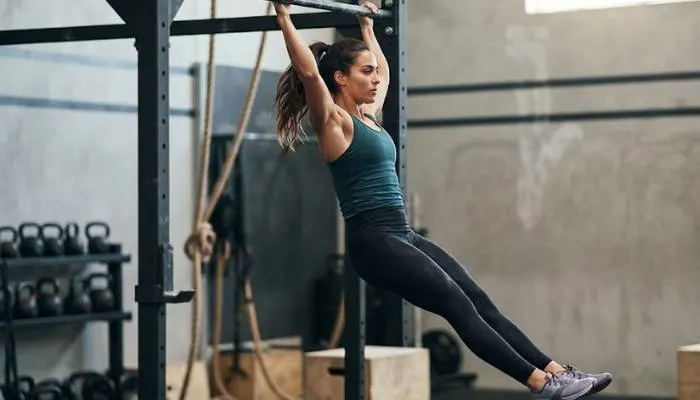
Once you get good, try these.
One Arm Hang
Hang with one arm. This is hard. Build up to it. Start with just a few seconds.
Bent Knee Hang
Bend your knees behind you. That shifts your center of gravity. Works your core differently.
Leg Raise Hang
While hanging, raise your legs to 90 degrees. That hits your abs hard.
Scapular Pull
From a dead hang, pull your shoulders down. Do not bend your arms. Just move your shoulder blades. That works your back.
When Not to Do Dead Hangs?
Dead hangs are safe for most people. But not everyone.
- Shoulder injury: If you have a torn rotator cuff or dislocated shoulder, skip it. Ask your doctor first.
- Back problems: If you have severe back issues, check with your doctor. Most people get relief. But some conditions get worse.
- High blood pressure: Hanging can spike your blood pressure. Check with your doctor if you have heart issues.
- Pregnancy: Skip it. Your joints are looser. Your balance is off. Not worth the risk.
Sample Routine with Dead Hangs
Daily Morning Routine
- Dead hang: 3 sets of your max time
- Rest 30 seconds between sets
- Stretch your arms and shoulders after
Full Upper Body Workout
- Dead hangs: 3 sets of max time
- Push-ups: 3 sets of 10
- Rows: 3 sets of 10
- Planks: 3 sets of 30 seconds
Posture Fix Routine
- Dead hang: 3 sets of max time
- Wall angels: 3 sets of 10
- Chest stretch: Hold 30 seconds each side
Quick Summary
| Age | Beginner | Intermediate | Advanced |
|---|---|---|---|
| Under 20 | 30-45 sec | 60 sec | 90+ sec |
| 20-39 | 20-30 sec | 45-60 sec | 75+ sec |
| 40-59 | 15-25 sec | 30-45 sec | 60+ sec |
| 60+ | 10-15 sec | 20-30 sec | 45+ sec |
Final Word
The dead hang exercise for beginners is simple. You grab a bar. You hang. You get stronger. You get healthier. Your posture improves. Your grip gets stronger. Your back feels better.
You can do this at home. You can do this at the gym. You can do this at the park. No equipment needed except a bar.
Start today. Just grab something. Hang for 5 seconds. That is a start. Tomorrow do 10. Keep adding. Your body will change. Your shoulders will open up. Your back will hurt less. You will stand taller. Just hang. That is all it takes.
FAQs
1. What if I cannot do even 10 seconds?
Use a chair. Put your feet on the chair. Take some weight off your arms. Hang that way. Slowly take more weight off. Build up.
2. Can I do dead hangs every day?
Yes. Your grip recovers fast. You can do them daily. Just listen to your body. If your forearms hurt, take a day off.
3. Does dead hang build muscle?
It builds grip strength. It builds forearm muscle. It works your back too. But it is not a mass builder. Combine it with other exercises.
4. Is dead hang better than pull-ups?
Different things. Dead hangs stretch you. Pull-ups build muscle. Do both. They work together.
5. How long should a beginner dead hang?
Start with 10 seconds. Do that 3 times. Rest in between. That is your starting point. Add 5 seconds each week.
6. Should I use chalk or gloves?
Chalk helps if your hands get sweaty. Gloves help if the bar hurts your hands. Both are fine. Use what works for you.
7. Does dead hang help with back pain?
Many people say yes. The stretch takes pressure off your spine. Your back feels better. Try it for a week and see.