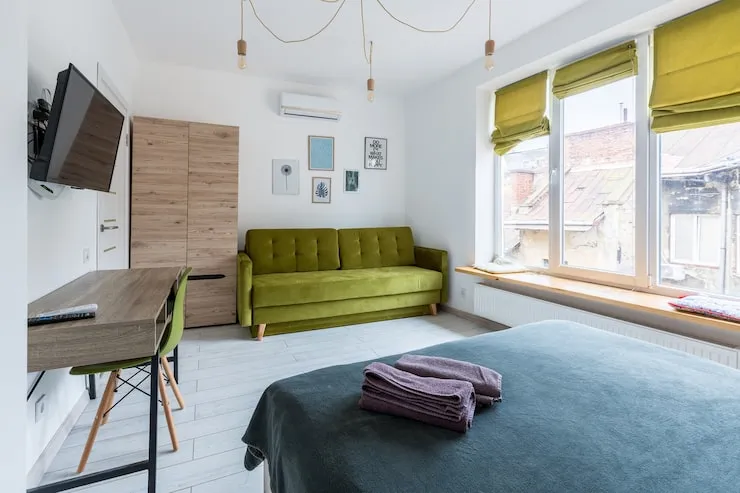
You walk into your studio. Four walls, one room. Your bed is staring at your dinner plate. Your yoga mat is unrolled next to your desk. It feels less like a home and more like a multi-purpose storage unit you sleep in. The dream of a "beautiful home" seems to require doors you don't have.
I've lived this. My first "beautiful studio" was a masterclass in chaos—a murphy bed that nearly brained me, a sofa that swallowed the room, and a constant sense that I was camping in my own life. I thought beauty required space. I was wrong.
A beautiful studio isn't about decorating a room. It's about designing a life within a single footprint. It's the ultimate exercise in intentional living. The constraint isn't a limitation; it's the creative brief. Let's build your dream home, right where you are.
The Foundational Mindset: You're a Curator, Not a Collector
In a house, you have attics and closets to hide the things you don't love. In a studio, every single item is on display, all the time. Therefore, every item must earn its keep through either extreme utility or profound beauty.
Your first task isn't to buy. It's to purge with prejudice. If it's not useful or beautiful to you, right now, it has to go. This creates the blank canvas.
Phase 1: The Architecture of Zones (Building "Rooms" Without Walls)
The psychological key to loving a studio is creating clear, defined areas. Your brain needs to understand: "This is for sleep," "This is for work," "This is for living."
The Three Non-Negotiable Zones:
- The Sleep Sanctuary: This area must feel calm and separate.
- The Living Zone: For relaxation, entertaining, and existing.
- The Work/Dine Zone: A dedicated surface for focused tasks and meals.
How to Build Them Visually:
- The Strategic Divider: Ditch the flimsy screen. Use a tall, open bookshelf (like an IKEA KALLAX unit placed sideways). It holds your stuff and creates a visual barrier without blocking light. A large, statement floor plant (a fiddle-leaf fig, a bird of paradise) can also effectively mark a boundary.
- Rug Magic: This is your most powerful tool. Use different rugs to define each zone. A plush, neutral rug under the living area. A flat-weave, durable rug under the dining table. Your feet will feel the transition, telling your brain you've moved to a new "room."
- Lighting as a Room Marker: Never, ever rely on the single overhead "boob light."
- Sleep Zone: Warm, low bedside lamps or wall sconces.
- Living Zone: A stylish arc floor lamp for ambient glow.
- Work Zone: A bright, focused task lamp (an adjustable architect's lamp).
Assigning a distinct lighting "personality" to each zone makes them feel separate the moment you turn a light on.
Phase 2: The Furniture That Does the Heavy Lifting (Multi-Function is King)
Every piece must be a champion of dual purposes.
The Bed: A platform storage bed is non-negotiable. The space underneath is prime real estate. Get one with deep, built-in drawers for clothing, linens, and off-season items. This eliminates the need for a bulky dresser.
The Living Surface: A nesting coffee table set or an ottoman with storage that can also serve as extra seating. Look for sofas with a clean silhouette and raised legs to maintain a feeling of airiness.
The Work/Dining Table: A drop-leaf console table is a studio secret weapon. Closed, it's a slim console against a wall. Open, it seats 2-4 for dinner or becomes a spacious desk. Or, choose a small round table—it takes up less visual space and feels friendlier in a small area.
Phase 3: The Vertical Frontier (Look Up!)
Floor space is your most limited resource. Wall space is your expansion pack.
- Floating Shelves: Install them above desks, sofas, and beds. They hold books, plants, and art without consuming floor space.
- Wall-Mounted Everything: Consider a wall-mounted desk that folds up, or a TV mounted on an arm that can swing to face different zones.
- Hooks & Rails: A stylish coat rack by the door, hooks inside a closet door for bags, a pegboard in the kitchen for utensils. Get things off surfaces and onto walls.
Phase 4: The Layers of Beauty (The "Dream Home" Feel)
Now for the joy. Once the functional architecture is set, you layer in personality and sensory delight.
- Textile Therapy: This is your cheapest path to luxury and coziness. Invest in amazing bedding—high-thread-count cotton or linen in a calming color. Add a chunky knit throw and textured pillows to your sofa. These are the things you touch every day; they should feel wonderful.
- The Art of the Gallery Wall: Don't scatter small art. Create a intentional, curated gallery wall in your Living or Work zone. Mix frames, sizes, and art (photos, prints, textiles) for a collected, personal feel. It becomes a major focal point.
- The Scent & Sound Scape: Your dream home engages all senses. A simple reed diffuser with a sophisticated scent (sandalwood, fig) beats plug-in air fresheners. A quality Bluetooth speaker (like a Sonos One) for curated playlists fills the space with atmosphere, not just noise.
- The "Third Place" Nook: Even in a studio, create one tiny spot that isn't your bed or work chair. A reading corner with that one perfect armchair and a floor lamp. A window seat with a cushion. This is your mental escape hatch within your home.
Your "Dream Studio" Starter Plan (This Weekend)
- The Great Purge (2 Hours): Get three boxes: Donate, Trash, Relocate (to storage). Be ruthless with surfaces. Clear off every tabletop, shelf, and counter. Start with a blank slate.
- Define Your Sleep Sanctuary: Make your bed with your best linens. Clear the floor around it completely. If possible, orient it so it's not the first thing you see when you walk in.
- Buy One Transformative Rug: Measure your Living Zone. Buy a rug that fits it, in a texture and color you love. This single act will define the space.
- Master Your Lighting: Go to the store and buy three different lamps (bedside, floor, task) if you don't have them. Use smart bulbs (like Philips Hue or Wyze) so you can adjust color temperature—warm for evening, cool for morning focus.
A beautiful Studio Apartment Decor Ideas isn't a compromise. It's a masterclass in living with intention. It forces you to choose only what you truly love and need, and to arrange it with care. That process—curation over accumulation, design over default—is what transforms a small space into a dream home. It's not the square footage you'll remember; it's the feeling of peace, order, and personality you built within it.
FAQs: Studio Apartment Decor Ideas Design
How do I deal with kitchen clutter in an open studio?
Maximize vertical space inside cabinets with shelf risers. Use a pot rack or magnetic knife strip. Keep countertops as clear as possible—store small appliances in a cabinet. Use attractive canisters for staples. The goal is to make the kitchen area look like a tidy, integrated part of the living space, not a messy afterthought.
What colors make a studio look bigger?
Light, neutral walls (white, light gray, soft beige) are classic for a reason—they reflect light and feel open. But don't be afraid of color in strategic doses. A single dark, saturated wall (navy, forest green) as an accent behind your bed or sofa can add huge depth and sophistication without shrinking the space. Just keep other walls light.
How can I entertain guests without feeling cramped?
Embrace the cocktail party, not the seated dinner. Have 4-6 people over for drinks. Clear all clutter to create circulation space. Use your nesting tables scattered around. Excellent lighting and music set a mood that makes people forget about square footage. Most guests remember the vibe, not the size.
Where do I put all my clothes without a bedroom closet?
The storage bed is your first defense. Next, invest in a low-profile, wide dresser that can double as a media console under your TV. Use the back of the entry door for hooks. Consider a minimalist clothing rack for frequently worn items, styled to look intentional. The key is to avoid tall, deep furniture that blocks sightlines.
Is it possible to have a home office in a studio?
Absolutely, but it must be hyper-efficient. A wall-mounted, fold-down desk is ideal. If not, a small desk (like the IKEA MICKE) tucked into a corner. Use a room divider (like the bookshelf) to visually separate it from your living/sleep area when "at work." At the end of the day, clear the desk completely to mentally leave work.
How do I create privacy, especially if I have a partner?
This is about visual and auditory cues. The zone separation is critical. Headphones are a studio dweller's best friend. A white noise machine can help mask sounds. For changing, a simple, beautiful folding screen can be placed strategically. Communicating about needs and schedules becomes an essential part of studio living harmony.