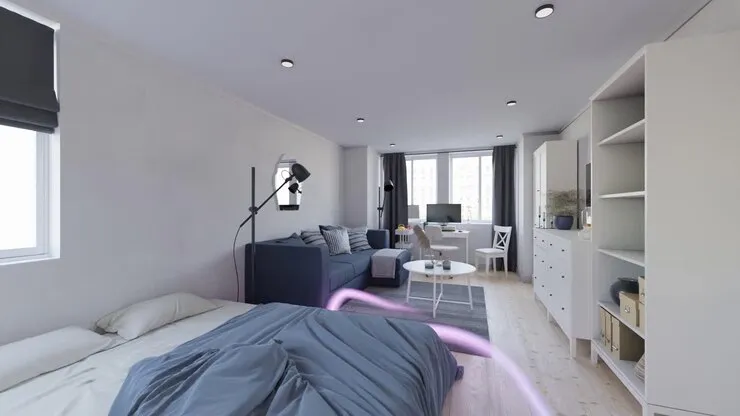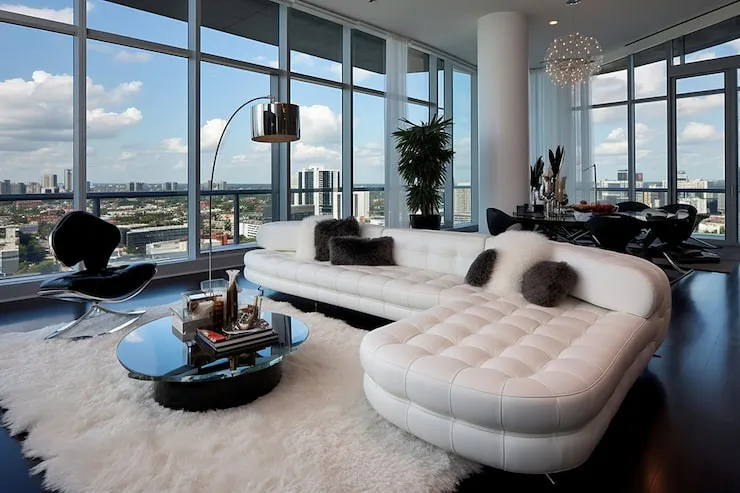
Let’s get the fantasy out of the way. You’re scrolling. You see a “studio apartment.” It’s 500 square feet of pure, minimalist bliss. Sun streams across polished concrete floors. A sleek, multifunctional sofa bed faces a stunning city view. Everything has a place. It looks like a movie set for a cool, unbothered protagonist.
Then you look at your reality. Maybe it’s a cramped room where your bed is also your dinner table and your office. The “kitchen” is a microwave and a sink. You feel like you’re camping in your own life. The dream of “living luxuriously” seems to require a spare bedroom you’ll never have.
I lived in a true New York shoebox for years. I cracked my shin on the coffee-bed-table every morning. Luxury felt like a concept for other people. But I learned, through brutal trial and error, that luxury in a small space isn’t about square footage. It’s about perception and precision. It’s the art of engineering your environment to serve you, not imprison you.
You can live luxuriously in a studio. It just requires a different definition of luxury.
Redefining Luxury: It’s Not Space, It’s Sovereignty
Forget marble countertops and walk-in closets. In a studio, luxury is:
- A Clear Floor: Space to do yoga, or just pace without obstacle.
- Dedicated Zones: The mental separation between “work,” “sleep,” and “relax.”
- Effortless Function: Everything you need is within reach, and everything has a home.
- Quality Over Quantity: One amazing chair you love vs. a saggy couch and two misfit armchairs.
- Ambiance on Demand: Lighting and scent that can transform the mood from “home office” to “cocktail lounge” in 30 seconds.
This is attainable luxury. It’s about control over your environment. Let’s build it.
Phase 1: The Strategic Purge (The Foundation of Luxury)
Luxury and clutter are mortal enemies. You cannot feel luxurious surrounded by stuff you don’t use or love.
The 90-Day Rule: If you haven’t used it in 90 days (seasonal items excepted), you don’t need it in your immediate space. Donate, sell, or store it.
The Duplicate Purge: How many mugs, water bottles, or blankets do you actually need for one person? Keep the best two. Let the rest go.
The “Maybe” Box: For sentimental items you can’t part with, get one single, clearly labeled storage bin. When it’s full, you’re done. This is your emotional clutter allowance.
This isn’t minimalism for its own sake. It’s curation. You are the curator of your own museum of one. Every item must earn its keep.
Phase 2: The Zone Defense – Creating “Rooms” Without Walls
This is the most critical psychological hack. Your brain needs separation.
The Three Non-Negotiable Zones:
- The Sleep Sanctuary: This is sacred. Your bed should only be for sleep and intimacy. No eating, no laptop, no doomscrolling.
- The Living Zone: Where you relax, entertain, and exist.
- The Work/Dining Zone: A dedicated surface for focused work and eating meals.
How to Build Them:
- The Room Divider That Doesn’t Suck: Forget flimsy screens. Use:
- A tall, open bookshelf (ikea KALLAX turned sideways). It holds stuff and creates a visual barrier.
- A large, standing panel (like a Japanese Shoji screen or a modern room divider from Article).
- A strategically placed armchair or sofa with its back to the bed.
- Rug Magic: Use different area rugs to define each zone. A plush rug under the living area, a flat-weave under the dining table. Your feet feel the transition.
- Lighting as Architecture: Never rely on the single, harsh overhead light. Assign a lighting “identity” to each zone.
- Sleep Zone: Soft, warm bedside lamps or wall sconces.
- Living Zone: A stylish floor lamp for ambient light.
- Work Zone: A bright, focused task lamp.
Phase 3: The Furniture That Does the Heavy Lifting
Every piece must be a multi-tasking champion.
The Holy Grail: The Storage Bed. A platform bed with deep, hydraulic-lift drawers is not optional. It’s your basement, your attic, your linen closet. It swallows off-season clothes, luggage, and bedding.
The Transformative Table: A drop-leaf console table that expands for dining or work. Or a nesting coffee table set that can be pulled apart for extra surface area when guests come over.
Vertical Storage, Always: Look up. Use wall-mounted shelves, floating nightstands, and hooks. Floor space is your most precious commodity; don’t waste it on the legs of a bookcase.
Phase 4: The Sensory Details – This is Where Luxury Lives
Now for the fun part. Once the structure is set, you layer in the feels.
- Textile Therapy: This is the cheapest path to luxury. Invest in amazing bedding (high-thread-count cotton or linen), a weighted blanket, and quality towels. You interact with these every day. They should feel incredible.
- The Scent Scape: Ditch the plug-in air fresheners. Use a simple reed diffuser with a subtle, sophisticated scent (like sandalwood, fig, or linen). Or get an essential oil diffuser. Your home should smell like a spa, not a candy store.
- The Soundtrack: A small, high-quality Bluetooth speaker (like a Sonos One) is worth every penny. Curate playlists for different moods—morning coffee, evening wind-down, weekend cleaning. Good sound fills space with atmosphere, not stuff.
- The “Third Place” Nook: Even in a studio, create a tiny spot that isn’t your bed or your work chair. A reading corner with that one amazing armchair and a floor lamp. A window seat with a cushion. This is your mental escape hatch within your home.
Your Studio Luxury Starter Plan (This Weekend)
- The Purge Sprint: Spend 2 hours with three boxes: Donate, Trash, Relocate (to storage). Be ruthless with surfaces: countertops, table tops, the top of your dresser. Clear them completely.
- Define One Zone: Pick your Sleep Sanctuary. Make your bed with your best sheets. Clear everything off the floor around it. Install a bedside lamp if you don’t have one. Tonight, do not bring your phone into this zone.
- Buy One Sensory Upgrade: Get a reed diffuser with a scent you love, or a set of nice pillows for your sofa. One thing that appeals directly to your senses.
- Master Your Lighting: Go to the hardware store and get smart bulbs (like Philips Hue or Wyze) for your main lamps. For $50, you can have sunset tones in the evening and bright white for cleaning. This is the single biggest ambiance hack.
Living luxuriously in a studio isn’t about having more. It’s about wanting less, but better. It’s about designing a life where your space supports your ambitions and your peace, rather than fighting against them.
Your studio isn’t a compromise. It’s a blank canvas for a highly efficient, deeply personal, and intentionally curated life. That’s the ultimate luxury.
FAQs: Affordable Studio Apartment Living
How small is too small for a studio to feel luxurious?
It’s less about square footage and more about layout and light. A 300 sq ft studio with huge windows and a logical layout can feel more luxurious than a 450 sq ft unit with a dark, awkward floorplan. The key is flow and natural light. If you can’t change the windows, you must master artificial lighting.
What’s the one piece of furniture I should invest in?
A quality, storage-oriented bed frame. You spend a third of your life there, and it solves your biggest storage problem. A close second is a comfortable, appropriately-sized sofa (not a loveseat that’s too small, not a sectional that’s too big). It defines your living zone.
How do I entertain guests without feeling cramped?
Embrace the cocktail party, not the dinner party. Have people over for drinks, not a seated meal. Use your nesting tables. Clear all clutter to create standing/sitting circulation space. Use mood lighting and music to distract from the size. Most guests remember the vibe, not the square footage.
Are studio apartments only for single people?
Not at all, but they require exceptional communication and organization for couples. Dual-purpose furniture and defined personal zones (even if it’s just “your side of the bed” and “your shelf”) are critical. The purge is even more important—two people’s clutter collides fast.
How do I handle kitchen limitations?
Maximize vertical space with a pot rack, magnetic knife strip, and shelf risers inside cabinets. Limit your cookware to one excellent skillet, one saucepan, and a sheet pan. A toaster oven/air fryer combo can often replace a full oven for most cooking. A stick blender is more versatile than a full-sized one. It’s about being a strategic chef.
I’m on a super tight budget. Where do I start?
Start with the free purge. Then, focus on lighting. You can find cheap but stylish floor lamps at Target or IKEA. Swap out harsh bulbs for soft white ones. Next, invest in textiles—a throw blanket and two new pillow covers for your sofa can change the entire color scheme and feel for under $50. Luxury is in the details you touch and see daily, not the price tag.