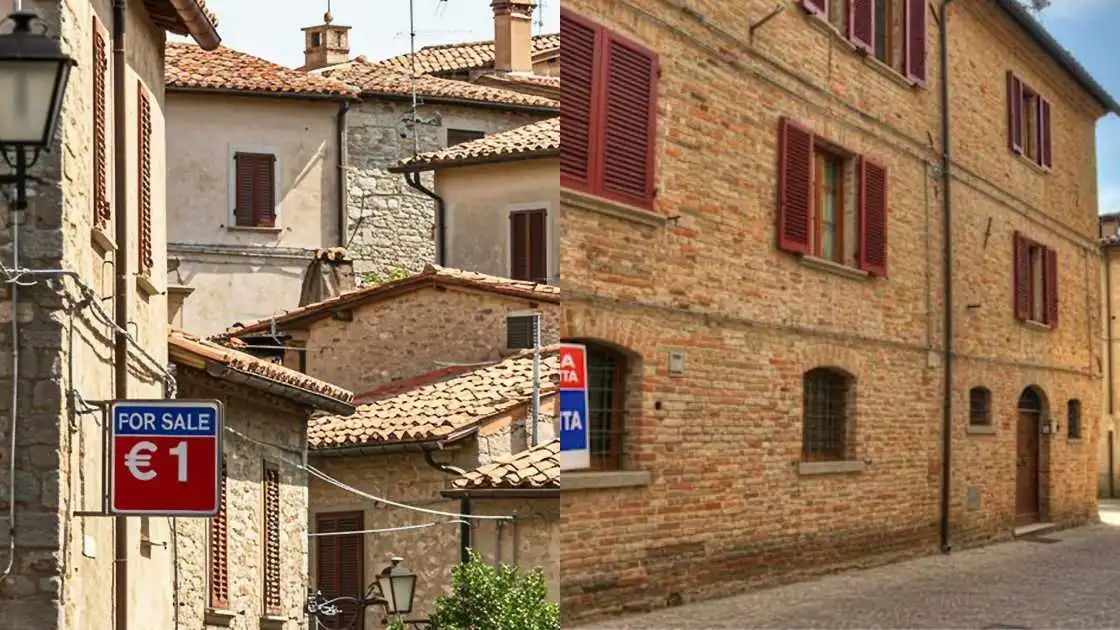
Picture this. Two investors walk down the same city street. One sees a "For Sale" sign on an office building. He calls the number, gets into a bidding war, and pays top dollar.
The other investor looks at the tired, half-empty strip mall next door. No sign. No listing. He sees the peeling paint, the struggling tenants, and an owner who’s probably paying the mortgage out of pocket every month. He sees a secret goldmine.
The first investor bought a publicly traded stock at its peak. The second investor bought a private company before the IPO.
That’s the difference between on-market and off-market commercial real estate. The real wealth isn’t found in the listings; it’s found in the quiet conversations that happen before a sign ever goes up.
Why “Off-Market” Is More Than a Buzzword
On-market deals are a price discovery mechanism. They’re designed to find the highest possible price by creating competition. You’re swimming with sharks, and they all have the same map.
Off-market deals are relationship-based acquisitions. You’re finding a seller who has a problem you can solve, and you’re negotiating a price before the whole world knows it’s for sale. The “goldmine” isn’t the property itself—it’s the information asymmetry. You know something (that the owner might sell, and on what terms) that the rest of the market doesn’t.
The Three Real “Secret” Sources (And How to Mine Them)
Forget shady backroom deals. This is about systematic, professional networking.
Source 1: The “Tired Landlord”
This is the classic. The owner who’s been at it for 20 years. The building is 80% occupied with long-term, under-market rents. The roof is old. They’re dealing with tenant complaints, rising insurance, and their kids have no interest in taking over. They’re not “selling,” but they’re exhausted.
- How to Find Them: Drive for dollars, but with a commercial eye. Look for properties with poor upkeep, outdated signage, or obvious deferred maintenance. Then, use a platform like Lightstone or APN to find the owner’s LLC name and mailing address.
- The Approach: NEVER lead with “Do you want to sell?” It’s invasive and gets a quick “no.” The winning script is about solving a problem. “Hi Mr. Owner, I’m an investor in the area. I couldn’t help but notice the beautiful bones of your building on Main St. I specialize in helping owners unlock equity from properties like yours to relieve management burdens. Would you be open to a brief, no-obligation conversation about its potential?”
Source 2: The “Motivated Professional” (The Silent Exit)
This is the doctor, dentist, or lawyer who bought a small office building for their practice 15 years ago. They’re retiring, relocating, or their practice is shrinking. The building is now a financial asset they don’t know how to manage or optimize. It’s not on an agent’s radar because it’s not “investment property” to them—it’s just their office.
- How to Find Them: This is pure networking. Join your local Chamber of Commerce, BNI chapters, or rotary clubs. Build genuine relationships with accountants and attorneys—they often know about these situations long before anyone else.
- The Approach: Relationship-first. After establishing rapport: “I’m always looking for unique investment opportunities in the area. As you think about your retirement plans, if the building ever becomes a consideration, I’d be very interested in learning about it. No pressure, just keep me in mind.”
Source 3: The “Broker’s Pocket Listing” (The Pre-Market)
Even brokers play the off-market game. A great broker with a strong owner relationship will sometimes get a “mandate to sell” but will quietly shop it to their top 2-3 reliable buyers before publicly listing it. This rewards the broker with a fast, clean sale and rewards you with first look.
- How to Find Them: Become a broker’s “top buyer.” This means being known as: 1) Well-capitalized (proof of funds ready), 2) Decisive (you can underwrite a deal fast), and 3) Reliable (you close on time). Call the top 5 commercial brokers in your target market. Take them to lunch. Tell them exactly what you’re looking for (e.g., “20,000-40,000 sq ft industrial, value-add, within this zip code”). Then follow up every quarter.
The Goldmine Isn’t the Property, It’s the Terms
Finding the deal is only 20% of the battle. The real “secret” is in structuring the offer to solve the seller’s unique problem, which lets you buy at a favorable basis.
- The Tired Landlord doesn’t just want cash; they want freedom. Offer a clean, quick, as-is cash close. Your discount is your payment for taking all the problems off their hands immediately.
- The Retiring Doctor might want to defer capital gains tax. An installment sale (seller financing) where you make payments over time could be worth a 10-15% premium in price to them, while still giving you a below-market cost of capital. This is where you print money.
- The Out-of-State Heir wants simplicity. Offer to handle everything—tenants, cleanup, closing. A turnkey solution at a fair price beats a higher price with complications.
Your First (Scary) Step: The Direct Outreach
The theory is useless without action. This week:
- Pick One Street. Choose a secondary commercial corridor in your city.
- Find One “Tired” Property. Look for the one with the most deferred maintenance.
- Find the Owner. Use county records online (usually free) or a paid service.
- Send a Handwritten Letter. Yes, snail mail. It stands out. Use the “problem-solving” script from above. No price talk. Just an offer to chat.
- Follow Up in 7 Days. A polite phone call: “Hi, I sent you a letter last week about your property on X Street. Did you have a moment to see it?”
You will get 99 “no’s” or no responses. The 100th letter could be the one where a 70-year-old owner says, “You know what, kid? I am tired. Let’s talk.”
That’s the moment the goldmine reveals itself. Not with a fanfare, but with a quiet conversation that never would have happened if you’d just looked at the listings.
This isn’t about secrets. It’s about effort. It’s about doing the work the other investors consider beneath them or too hard. The gold is hidden in that effort. Start digging.
FAQs
Q: Isn't this just wholesaling?
No. Wholesaling is about contract assignment—you tie up a property under contract and then sell that contract to another buyer for a fee. Off-market acquisition is about buying the asset for your own portfolio. You're the end buyer, using creative terms to make the deal work for the seller and your investment goals. It's a long-term strategy, not a flip.
Q: How do I value an off-market property with no comps?
You create the comps. You underwrite it as if it were fully occupied at market rents and with proper management. You build a detailed pro forma model. Your offer price is based on this future potential minus the cost to get there (capex, lease-up costs) minus your required profit margin minus a "risk discount" for the fact it's a unique, unproven deal. You're not paying for what it is; you're paying for what you can make it.
Q: What's the biggest risk with off-market deals?
The "secret problem." Since there's no public due diligence period, the burden is on you. An on-market deal usually has a seller's disclosure. An off-market seller might "forget" about the environmental issue, the pending special assessment, or the tenant who hasn't paid rent in 6 months. Your legal and physical due diligence must be more thorough, not less.
Q: Do I need a broker for off-market deals?
It can help, but it's not required. If you find the deal yourself (direct to owner), you save the brokerage commission (3-6%), which directly boosts your returns. However, for your first few deals, or when dealing with complex asset types, having a broker on your side (a buyer's broker) to help with negotiations and paperwork can be worth their fee.
Q: This sounds slow. How long until I get a deal?
It is slow. This is a farming strategy, not a hunting strategy. You are planting seeds (relationships, letters, networking) that may take 12, 18, or 24 months to bear fruit. But when they do, the yield is enormous. If you need a deal next month, go look at the MLS. If you want to build a portfolio of foundational assets over the next decade, this is the path.