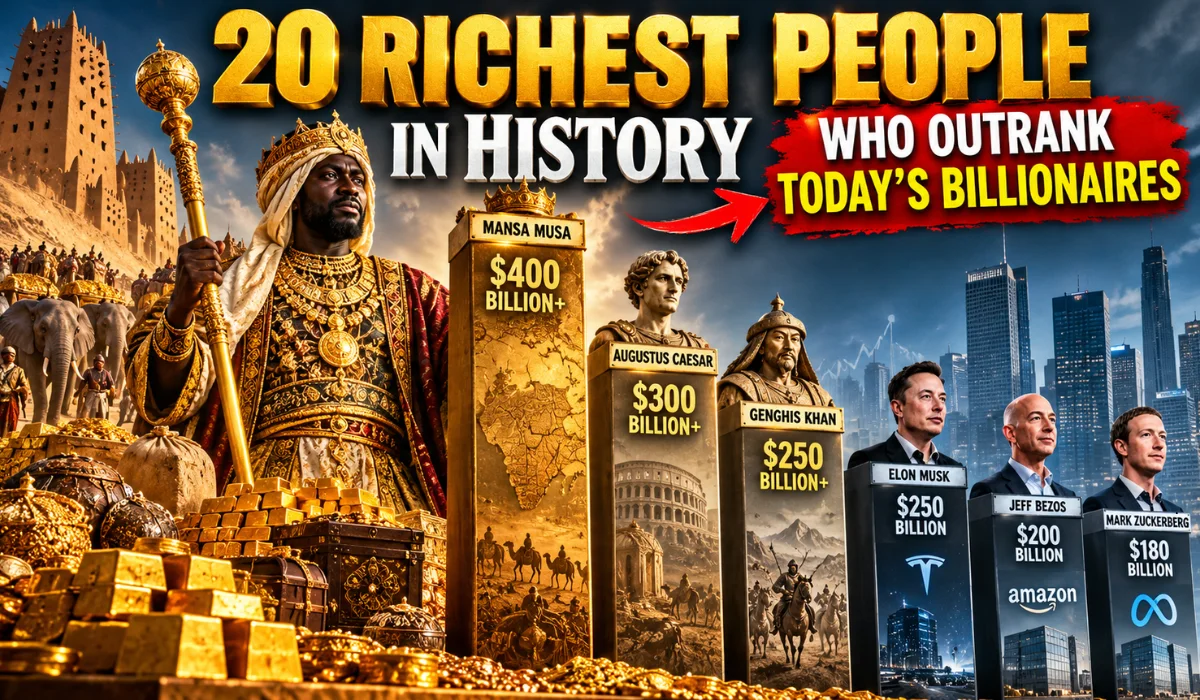
Mansa Musa (c. 1312- c. 1337) ruled as the king of the Mali Empire, and historians consider him to be the wealthiest individual of all time. Mansa Musa controlled West African gold and salt routes which produced more than half of the gold that was in the Old World. In 1324, in the middle of a journey to Mecca, he was said to have handed out so much gold at Cairo that the flow of cash caused inflation which lasted 12 years with one source stating that the world's coinage dropped in value by 50 percent, presumably forever, until he was able to go back to Mali and refill his coffers. Since he held a sovereign monopoly and not a money in stock, it is totally impossible to convert his fortune into today's dollars (but you can imagine).
Rockefeller Was America's First Billionaire
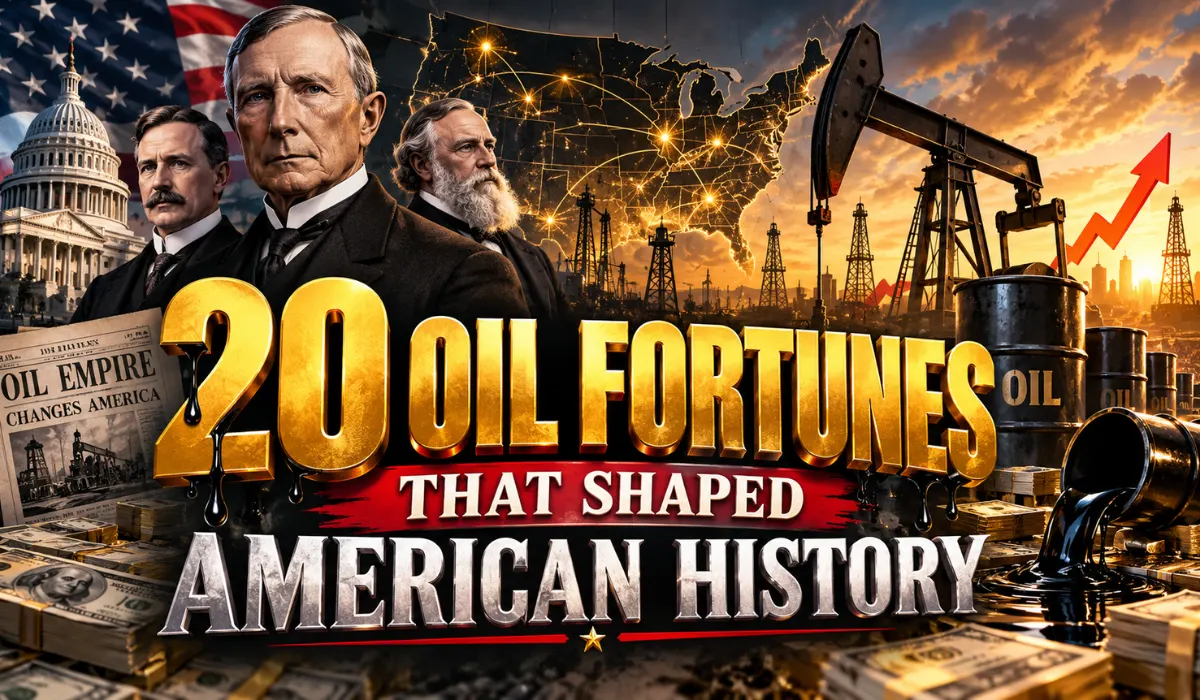
John D. Rockefeller's Standard Oil – which at one point in time accounted for over 90% of American oil – divided into 34 different entities when the US Supreme Court convicted it of illegal monopolism in 1911. At the time, Rockefeller's private stake skyrocketed in worth, because the sum of the divisioned stocks traded at a premium to the sum of the original trust. He became the first US dollar billionaire (at the time) in 1916, and his net worth was estimated at $1.4 billion in 1937, equating to 1.5–2% of US GDP – or 340 billion to 400 billion dollars in today's values! I can hardly wrap my head around that!
Augustus Turned a Nation's Treasury into His Own
Rome annexed Egypt in 30 BCE when Mark Antony and Cleopatra were defeated, and Augustus made it a special province. Grain and taxes from Egypt flowed directly into the emperor's treasury. It has been calculated that Augustus's empire produced 20-30% of the world economy. Augustus didn't own Egypt the way you might own a piece of land, but he ruled over it.
Carnegie Sold His Steel Empire For $480 Million
Bessemer steel magnate Andrew Carnegie (originally from Scotland) founded the largest steel company in the world, Carnegie Steel, which employed the Bessemer process and vertically integrated. When JP Morgan purchased the firm in 1901 for $480 million, Carnegie received $300 million in gold bonds. During its peak, his fortune accounted for over 2.1% of the US GDP, equivalent to a present value of over $310 billion to over $370 billion. Incidentally, if you're curious as to what you might do with that kind of cash, most of it went to charities - Carnegie's own charities, in fact - when he passed away in 1919.
Crassus Built Rome's Biggest Fortune on Fire and Fear
Marcus Licinius Crassus, Roman general and politician. Crassus boasted the largest private fortune ever amassed by a late Roman Republic individual, estimated at 200 million sesterces (equal to the entire annual state budget). His wealth came from slave trading, silver mines, buying up cheaply all confiscated property, and establishing Rome's first private fire brigade: the brigade would go around and offer to buy burning buildings, putting out any flames if the owner was happy with the deal; he also bankrolled the career of a young Julius Caesar. Crassus died in the Battle of Carrhae in 53 BCE. A famous story claims that the Parthians poured molten gold down his throat, which seems just about right for the most unabashedly rich person in history, but it's not true.
Jakob Fugger Bought an Emperor His Crown
Augsburg merchant banker Jakob Fugger secured near-monopoly control of copper and silver mines across Europe by heavily financing the Habsburgs. Fugger's cash helped secure Charles V's ascent to Holy Roman emperor in 1519. That's proof that money can buy (or finance) whatever (or whomever) you desire. When he died in December 1525, his firm was worth a total of 2.1 million guilders, equivalent to about 2% of the entire European economy at that point -- or about $400 billion today.
Astor Swapped Furs For Manhattan Dirt
John Jacob Astor made a national fur monopoly, the American Fur Company. During the 1830s, Astor sold his fur empire and bought Manhattan land which he leased out as the city grew into his land. When he died in 1848, he was worth between $20 million and $25 million that is between 1% of the current US GDP or between $120 billion and $180 billion today. While many multimillionaires have emerged over the years, he was the first American millionaire.
Cosimo De' Medici Ran Florence From A Bank Ledger
A Florentine banker, Cosimo de' Medici, established the Medici "dynasty." He elevated the Medici Bank to the most successful banking house in Europe, established branches in Rome, London, Bruges, and Venice, and earned the privilege of banking for the Papacy itself. The ventures he pursued paid for the leadership of Florence, though he never held a formal position. He also sponsored Brunelleschi's dome, which is, in fact, the largest masonry dome in the world.
Alan Rufus Controlled 7% Of England's Entire Income
As a Breton lord, Alan Rufus assisted William the Conqueror in the rebellion in the north of England and earned more than 250,000 acres in Yorkshire, Cambridgeshire, and East Anglia, on which he constructed Richmond Castle. He valued his estate at £11,000 on his death in 1093, which one model estimates as 7% of the entire national income of England; that's about $180 billion to $195 billion, in today's money. Hardly anyone even knows his name - but, hey, when you've got that kind of coin, who cares?
Richard FitzAlan Stored a Fortune In a Castle Tower
Richard Fitz Alan, 10th Earl of Arundel, funded the English Hundred Years' War against France with wool sales, land rental, and money he borrowed from the English king Edward III. When he died in January 1376, Richard had accumulated 60,000 coins, 30,000 of which were in the High Tower of Arundel Castle. That's over a hundred billion in dollars today. You need a safe when you have an entire tower!
FAQ's
Q: Who is considered the richest historical figure of all time?
A: Augustus Caesar frequently tops historical wealth lists, with an inflation-adjusted net worth estimated around $4.6 trillion because his personal fortune included ownership of the entire Roman Empire.
Q: How did Mansa Musa amass his legendary wealth?
A: As the 14th-century Emperor of the Mali Empire, Musa controlled roughly half of the world's supply of salt and gold, fueling a fortune estimated between $400 billion and $500 billion.
Q: Why do historical figures outrank modern billionaires like Elon Musk or Jeff Bezos?
A: Pre-modern rulers did not separate personal wealth from state assets; they held absolute dominion over entire countries, land, natural resources, and forced labor, whereas modern billionaires own shares in publicly traded companies.
Q: How do historians calculate and compare net worths from centuries ago?
A: Economists and historians measure historical wealth by evaluating a leader's share of a civilization's total GDP, converting historical commodity outputs (like gold, land, and tribute) into modern inflation-adjusted currencies.
Q: Did any historical rulers accidentally crash an economy with their wealth?
A: Yes, Mansa Musa famously destabilized the regional economy of Cairo during his 1324 pilgrimage to Mecca by giving away and spending so much gold that it caused severe inflation which lasted for a decade.