


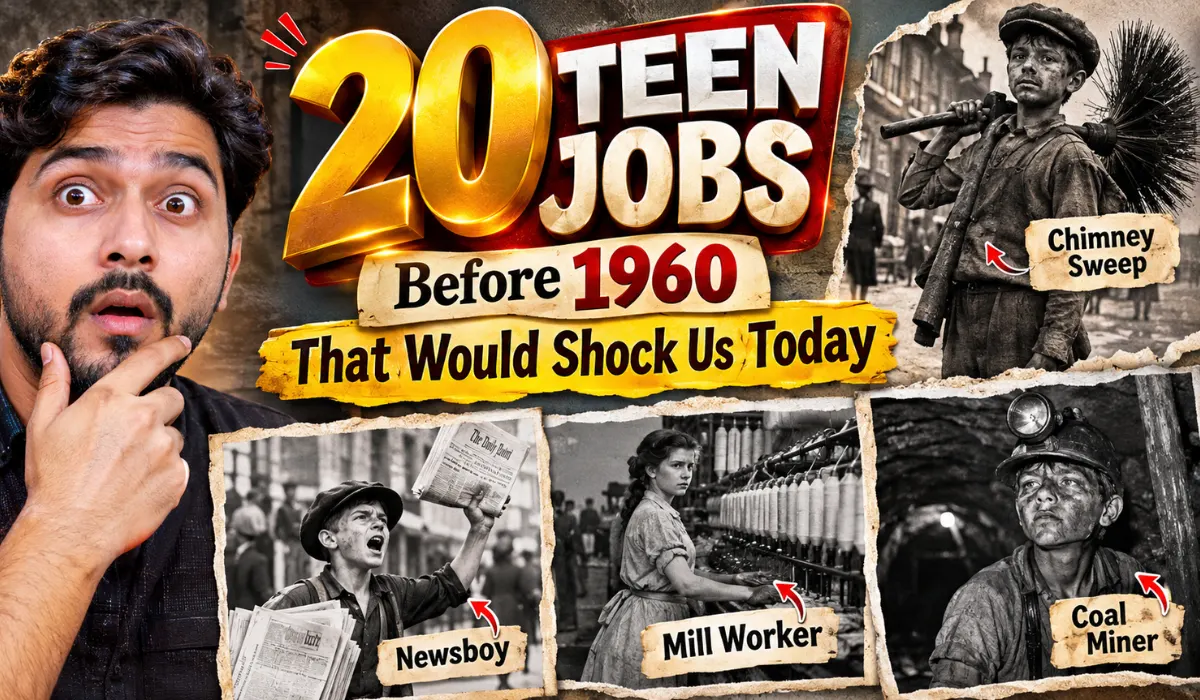
Child labor is a hot topic these days, and we've got quite the history of folks who hired children – and never thought for a second that there was anything odd about it. For teenagers in particular, it was an awkward age: just old enough to work, but not quite old enough for anyone to worry that they might be too old for what they were doing.
Breaker Boys Sorted Coal by Hand, Ten Hours at a Stretch
Some breaker boys sat on ground level within buildings called breakers and peeled the slate off of the crushed coal with their hands for ten hours a day. Often the coal diggers ended up with black lung disease and crushed fingers, and in time, became permanently hunched over. The hiring of children eventually ended when compulsory education laws went into effect, when mechanical slate separators became popular in the 1910s and 20s, and when the 1938 Fair Labor Standards Act outlawed child labor.
Pin boys Reset Bowling Lanes While Dodging Flying Pins
I used to think bowling alleys were magical. How did all those pins get cleared up and back on the pin deck? Before there were automated pinspotters, pin boys had to clear the lanes and find the pins to replace (and dodge the bowling balls that flew down the alley) on the ball return. That makes loud shoes on the ball return and your occasional slip on the buckled wooden floors sound almost humane. In 1948, American Machine and Foundry, an equipment manufacturer, created a pin spotter that saw commercial service starting in 1952, though pin boys still worked the bowling alleys in most of the '50s.
Carhops Started as Boys and Ended Up on Roller Skates
The carhop job started in 1921 at the Kirby's Pig Stand drive-in in Dallas, Texas, where teenaged boys walked out onto the running boards of new cars to take orders. But by the 1940s, most carhops were girls, who wrote down your order and hung a metal tray holder on the window of your car. Roller skates didn't appear until the late 1930s and early 1940s, though a lot of carhops still stuck with standard footwear because they didn't feel very confident balancing a tray of food on wheels—and I can't say I blame them.
A Young Thomas Edison Sold Candy On Trains as a News Butcher
The news butcher walked through the passenger cars selling papers, candy, fruit, and cigars. Butcher was the official period spelling for a peddler. The future inventor Thomas Edison started as a news butcher on the Grand Trunk Railway at age twelve in 1859, as well as ran a small chemistry lab out of a baggage car. Selling candy wasn't enough of a side gig for you, apparently, if you could also make time for a little chemistry. Edison later claimed his deafness resulted from scarlet fever and from a conductor who dragged him aboard by the ears after his chemistry work burned out the baggage car.
Boys Ran the First Switchboards, Then Lost the Job for Rudeness
When the first telephone exchanges opened in the late 1870s, they employed young teenage boys who plugged patch cords into jacks to complete calls. But the boys grew impatient with customers and rudely disconnected calls, which proved to be an effective way to get an entire demographic of workers fired. So on September 1, 1878, Bell Telephone hired Emma Nutt as its first-ever female operator, and the industry began to prefer young women for their politeness. After that, telephone companies mostly never employed boys as operators again.
Whistle Punks Signaled Life-or-Death Logging Commands with a Wire
Around 1880-1940, the steam donkeys (steam-powered winches) of Pacific Northwest logging camps dragged logs across rough underbrush and terrain that the engineer at the controls could not see. A "whistle punk" would pull a wire attached to the donkey's whistle, making a series of coded notes to tell the operator when to pull and when to give slack. Punk was slang for an untrained young worker, and a wrong note could cause cables to snap and injure workers below.
Newsboys Went on Strike Against Two of America's Biggest Publishers
These first newsboys didn't actually get employed by the publisher; they bought the bundles of papers out of their own pocket and covered the expense of the unsold papers. In 1899, newsboys in New York City struck for higher prices for bundles, which the publishers Joseph Pulitzer and William Randolph Hearst instituted, with the publisher later having to buy back the unsold papers. The Fair Labor Standards Act of 1938 excluded newspaper delivery from its regulations. Eventually, the paper-route method changed from the bundle-selling model to that of bike routes.
FAQ's
1. What were the most common hazardous teen jobs before 1960?
Teens frequently worked as coal mine "breaker boys" sorting slate from coal, elevator operators in high-rise buildings, and factory workers operating heavy, unguarded industrial machinery.
2. Did teenagers really work in dangerous industrial environments?
Yes, many adolescents worked full-time in textile mills, foundries, and meatpacking plants alongside adults, often facing severe injury risks before child labor laws were strictly enforced.
3. Were these teen jobs legal at the time?
Many were legally permissible under looser labor regulations or state loopholes, though child advocacy groups fought tirelessly throughout the early 20th century to reform these practices.
4. How much were teens paid for these shocking jobs?
Adolescents were typically paid a fraction of an adult's meager wage, often just pennies an hour, and were expected to contribute directly to their family's household survival.
5. When did these types of jobs finally disappear for teenagers?
The passage and strengthening of the Fair Labor Standards Act in 1938, combined with post-World War II compulsory education laws and stricter labor enforcement by the 1960s, largely phased them out.